
Are Jute Nursery Rugs Practical for High-Use Childcare Spaces?
Sep 29, 2026
Yes, a jute nursery rug is a practical choice for high-use childcare spaces — when the right product specifications are selected. Natural jute fiber is hypoallergenic, free from VOC off-gassing, and inherently non-toxic, making it a safe foundation for infant and toddler environments. For procurement professionals sourcing flooring solutions at scale, understanding which product constructions hold up under daily commercial pressure is essential. This guide walks through material performance, maintenance demands, sourcing strategy, and implementation best practices for childcare flooring buyers.
What Makes Jute Nursery Rugs Suitable for High-Use Childcare Spaces?
Natural Fiber Safety and Hypoallergenic Properties
The Corchorus plant gives jute fiber, and when it is first processed, it does not contain any man-made chemicals. This is important in nurseries where kids with sensitive skin or breathing problems are around all the time. When heated, jute doesn't release chemical residues or build up static electricity as many synthetic alternatives do. This makes it a reliable base material for pediatric flooring.

Durability Relative to Traffic Volume
Independent textile studies have shown that tightly woven natural fiber rugs can handle foot traffic as well as low-pile industrial carpet if they are properly backed. Products made from high-density machine weaving that is 1 cm thick and has a gram weight of 1,000g/m² offer consistent wear performance over long use cycles. These requirements can be measured and checked when the seller is audited.
Texture and Thermal Comfort for Crawling Children
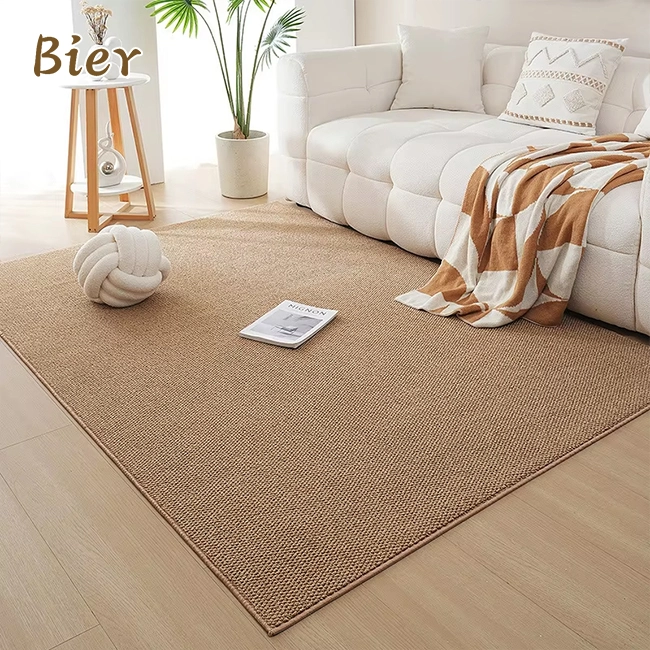
Imitation sisal is a polyester fiber that looks like jute's natural grain. Its surface roughness stimulates the senses in a way that is good for early development. It gives crawling babies traction while still being hard enough for kids to stand on. The surface doesn't flatten out when compressed, so it stays stable underfoot over time.
Comparing Jute Nursery Rugs with Alternative Nursery Rug Options
Jute vs. Cotton and Wool
Cotton baby rugs are soft, but they soak up water quickly, which can lead to mold growth in places with a lot of foot traffic that don't have strict drying rules. Wool is naturally strong, but it costs more per unit, which makes buying it in bulk less cost-effective. When it comes to busy childcare centers, neither of the materials can compare to the sturdiness and ease of spot cleaning of a well-made imitation sisal floor.
Jute vs. Synthetic Rugs
Synthetic Jute Nursery Rug products, which are usually made of nylon or polypropylene, are soft and don't stain easily, but they often have chemical treatments that aren't safe for certified childcare facilities. Products that follow OEKO-TEX Standard 100 and REACH rules have to go through strict testing for substances. Constructions that are based on natural fibers and meet these standards offer a middle ground between the look of organic materials and the consistent performance that commercial buyers need.
Cost Efficiency in Bulk Procurement
When purchasing managers are in charge of big childcare projects, the cost per unit is important for batches of 500m² or more. Imitation sisal mats with TPR bases that can be washed usually need to be replaced less often than cotton options that are used in the same way. This directly leads to lower lifetime costs, which makes the case for buying stronger when going to operations management.
Maintenance and Cleaning Practices for Nursery Rugs in Busy Environments
Routine Care Without Fiber Damage
The best way to take care of natural-fiber nursery rugs is to dry vacuum them every day and use pH-neutral cleaners to treat spots once a week. The weave structure is protected by not cleaning it with soaking wet water. Stain-resistant surface treatment adds a useful layer that cuts down on how often deep cleaning is needed, which saves time and money for staff and supplies.
TPR Washable Base: A Practical Advantage
The TPR (thermoplastic rubber) removable base makes it possible to take the rug out, wipe it down, and put it back down without damaging the base. In addition, this type of backing doesn't slip on hard nursery floors, which is an important safety feature in places where kids move around a lot. This feature lowers the chance of accidents and makes cleaning easier for facility managers.
Waterproof Performance for Spill-Heavy Environments
Nurseries have a lot of spills. A waterproof top layer keeps liquid from getting into the fiber base, which would otherwise keep smells in and speed up wear. When combined with the TPR backing, products that are rated to be waterproof at the surface level give facility managers two points of protection against moisture instead of one.
Procurement Insights: How to Source Quality Nursery Rugs for Commercial Childcare Use?
To find solid nursery floor coverings for business child care centers, you need to look at more than just samples. Here are the main product specs that you should check with any seller before ordering a lot of them:
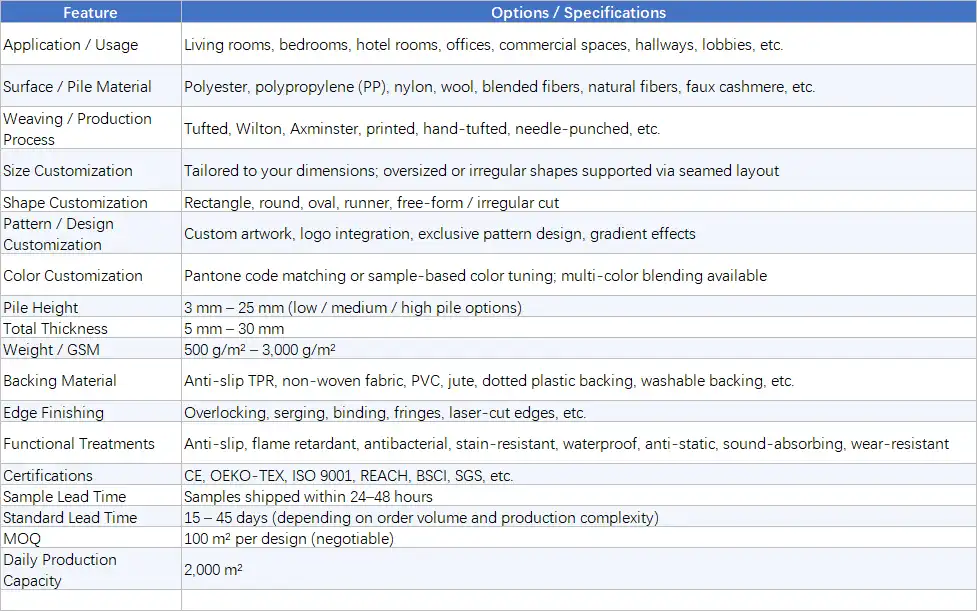
- Surface material: Imitation sisal (polyester fiber) — provides natural-look durability with easier maintenance than raw jute
- Backing: TPR washable base — non-slip, removable, and compatible with standard hard flooring
- Thickness: 1cm total — adequate for cushioning without creating tripping edges
- Gram weight: 1,000g/m² — confirms material density and wear resistance
- Edge finishing: 0.6cm edge-lock binding — prevents fraying that could become a choking hazard
- Certifications: CE, OEKO-TEX, ISO 9001, and REACH compliance for U.S. and international market entry
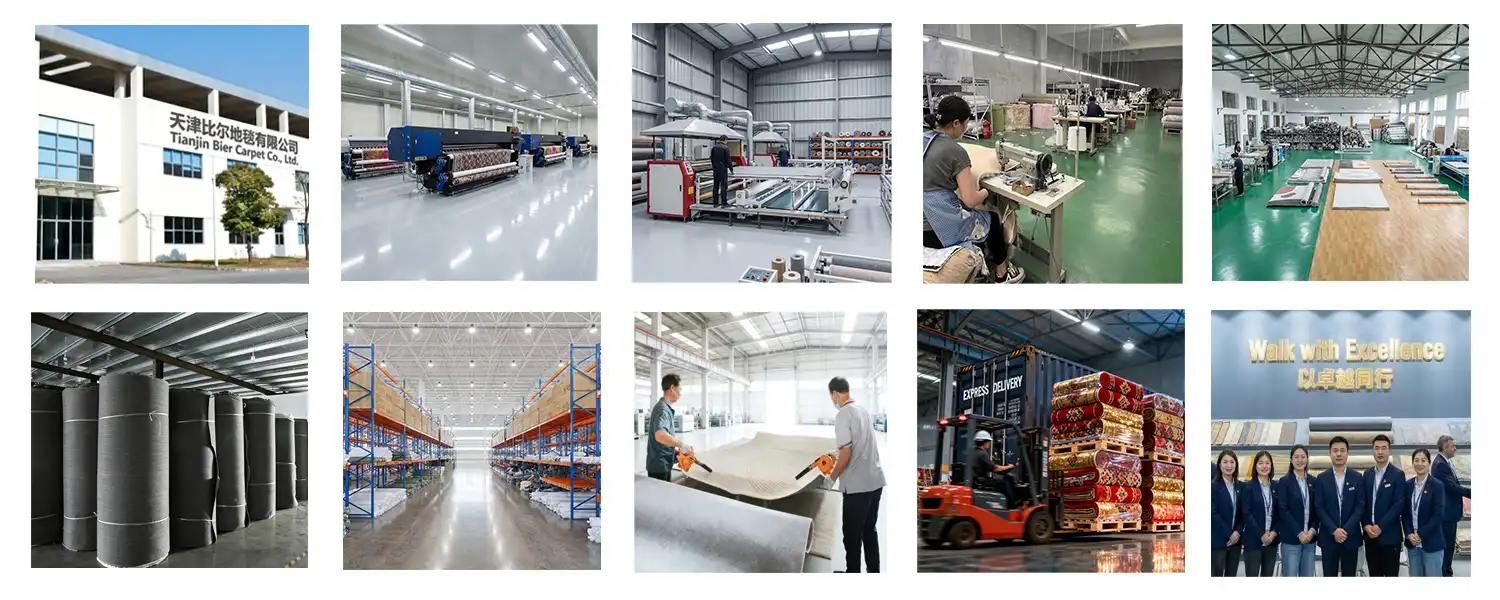
These parameters give QA teams a concrete list of things to check, and they lower the chance that different batches of Jute Nursery Rug products will not be the same across large orders. Procurement teams have more control over product quality and brand alignment when suppliers offer 100% pre-shipment inspection and OEM/ODM customization, which includes size, color, and logo. A daily output of 1,000 m² meets project deadlines that call for delivery within 7–15 days.

Facilities that want to get LEED certification or childcare license updates must check compliance paperwork before buying it. As a standard, ask the seller to give you test results that reference ISO 105-X12 (color fastness) and ISO 14184-1 (formaldehyde content).
Practical Considerations for Implementing Rugs in Childcare Facilities
Placement and Installation for Longevity
Putting rugs in clear activity areas like reading nooks, play areas, and hallways that lead to other rooms reduces wear on specific areas. Do not put it right under equipment that gives out water. With standard and special sizes, facility managers can make sure that rugs fit perfectly in rooms without having to cut them. This keeps the edges safe and secure.
Compatibility With Modern Facility Infrastructure
Flat-profile rugs that are 1 cm thick can still be used with underfloor heating systems because they don't get in the way of the heat flow. Because they are foldable, they can be stored during the off-season in places like event-based childcare centers and show spaces that change the structure of their floors all the time.
ROI Evaluation for Commercial Buyers
A nursery floor covering that is long-lasting, easy to clean, and doesn't tear or scratch often needs to be replaced. When you look at competitive bulk pricing and flexible MOQ structures, the total cost of ownership over a 24-month deployment period is better than cheaper options that need to be replaced every 6–9 months. This cost argument makes sense to operations managers who are in charge of making yearly budgets for repairs.
Conclusion
Jute Nursery Rug products made on fake sisal bases with TPR washable tops are a practical and safe flooring option for childcare areas that get a lot of use. When buying, teams check specs like gram weight, edge finishing, certifications, and surface treatment; this greatly lowers the risk of quality issues. Because they are waterproof, have a non-slip backing, and don't react with chemicals, these items can be used in home, business, and institutional childcare situations. When managing multi-site rollouts or seasonal restocking, B2B buyers should only buy from suppliers whose production capacity and export experience have been checked. This protects both timelines and margins.
FAQ
Is this type of rug safe for allergy-prone infants?
OEKO-TEX-certified products made from fake sisal (polyester fiber) are checked for dangerous chemicals like formaldehyde, heavy metals, and dyes that cause allergies. They don't shed natural fibers like raw jute does, which is good for sensitive baby settings that are worried about airborne particles.
What is the expected lifespan under heavy commercial use?
A 1,000g/m² machine-woven rug with TPR backing can last between 18 and 30 months of daily commercial use, depending on traffic density, as long as it is properly maintained with regular vacuuming, spot treatment, and not being cleaned with water that is too wet.
Can these rugs be customized for specific facility dimensions?
Yes. There are both standard sizes and sizes that are made just for you. Customization of color, size, and logo is part of OEM/ODM services. Within 24 to 48 hours, samples that match the exact production specs can be sent to help with pre-order review.
How does the non-slip backing perform on polished floors?
The TPR backing gives the mat a good grip on smooth, hard surfaces like vinyl, polished concrete, and laminate, which are popular in daycare centers. It doesn't need glue, which makes it easier to put in place and take off for cleaning.
Are these products export-compliant for the U.S. market?
Yes, they can. Goods that meet CE, OEKO-TEX, ISO 9001, and REACH standards and have all the necessary export paperwork are allowed to enter the U.S. Export-standard roll, box, and woven bag packing helps load containers quickly.
Partner With Bier for Commercial Jute Nursery Rug Supply
Bier has been in the business of making things for 10 years, so buyers can be sure of the quality and schedule delivery. We are a reliable source for Jute Nursery Rugs, and we offer full OEM/ODM support, 100% pre-shipment inspection, and a shipping cycle of 7–15 days, all backed by stable production lines. For global markets, every order comes with dedicated account management and compliance paperwork. You can email us at sales@biercarpet.com or go to our website at biercarpet.com to ask for samples and bulk pricing.
References
1. Textile Research Journal. (2021). Mechanical Properties and Durability of Natural and Synthetic Floor Covering Fibers Under Simulated Traffic Conditions.
2. OEKO-TEX Association. (2023). OEKO-TEX Standard 100: Testing for Harmful Substances in Textile Products.
3. Journal of Cleaner Production. (2020). Life Cycle Assessment of Natural Fiber Composites for Interior Applications.
4. International Journal of Environmental Research and Public Health. (2022). VOC Emissions from Floor Coverings in Indoor Childcare Environments: Risk Assessment and Material Comparison.
5. ASTM International. (2021). ASTM D6114: Standard Specification for Jute and Jute-Based Products Used in Commercial Flooring Applications.
6. Indoor Air: International Journal of Indoor Environment and Health. (2019). Allergen Accumulation in Nursery Floor Textiles: Fiber Type, Backing Material, and Cleaning Frequency as Determinants.
Send Inquiry
Related Industry Knowledge
- Chunky Loop Carpet Adds Texture to Commercial Interior Projects
- Nursery Circle Rug: The Ultimate Guide to Choosing the Best One
- What Features Matter When Buying Long Corridor Carpet for Hotels?
- Chunky Loop Carpet Provides Strong Texture and Long-Term Commercial Performance
- How Do Buyers Select Quality Modern Boho Area Rugs for Projects?
- Christmas Runner Rugs for the Kitchen Trends for This Christmas Season
- Why Choose a Textured Round Rug for Christmas Decoration?
- Faux Cashmere Rug Supplier for Hotels and Commercial Use
- What is a Silica thread rug? Material, Benefits and Placement
- Wool and Silk Rugs: What the Fiber Blend Changes in Real Interiors