
Japanese Print Rugs Add Distinctive Style to Boutique Interiors
Sep 23, 2026
A well-chosen Japanese print rug does more than cover a floor — it communicates a design philosophy. Rooted in centuries of Japanese artistic tradition, this category of decorative floor covering brings cultural depth and visual precision to boutique spaces. Whether you manage a high-end retail store, a hospitality property, or a commercial showroom, sourcing the right Japanese print rug directly shapes how customers perceive your brand. This guide walks procurement professionals through every stage of the buying process, from design selection to logistics.


Understanding Japanese Print Rugs: Origins, Design, and Craftsmanship
What Defines This Style?
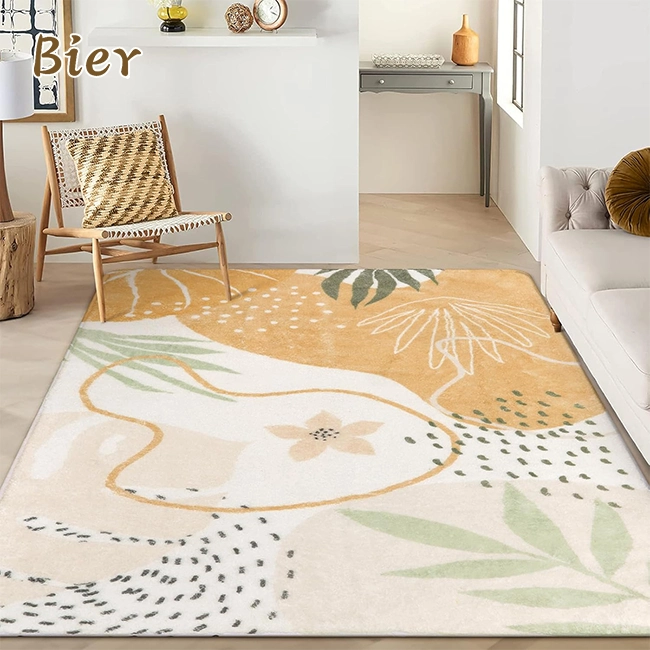
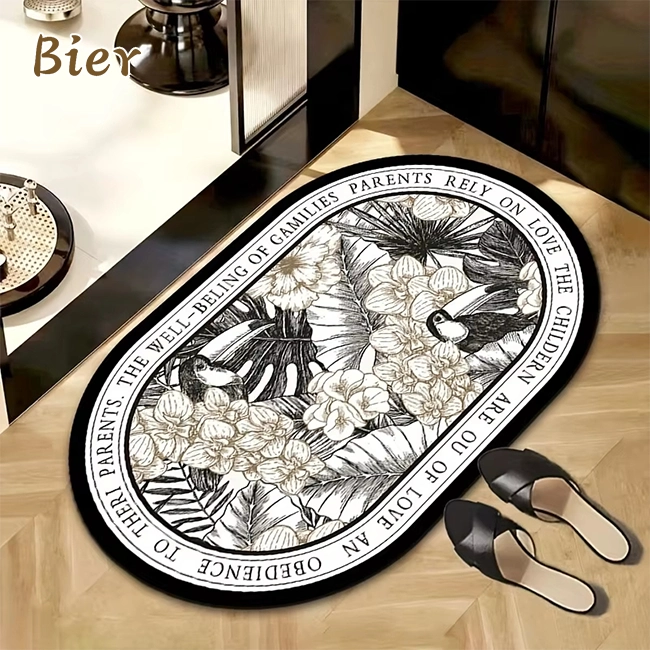
Japanese print rugs use a lot of different visual styles. Some common ones are Seigaiha wave patterns, Wabi-sabi minimalism, and Ukiyo-e-inspired motifs. Persian and Moroccan styles use regular mathematics a lot. Japanese floor covers, on the other hand, feature asymmetry, negative space, and pictures of nature. This gives them a calmer confidence that goes well with modern boutiques that purposely keep things simple.
From Traditional Craft to Modern Production
In the past, Japanese cloth art required a lot of work and was unique to each area. Today, those looks can be made on a large scale with high-density machine weaving and heat transfer printing technology. At the molecular level, polyester fiber locks in color, getting a Grade 4+ on ISO 105-B02 light fastness tests. This means that the pattern will still look good even after a lot of walking on it and being cleaned many times.

How It Compares to Other Rug Styles?
When compared to hand-knotted Oriental rugs, Japanese-style printed floor covers are more affordable while still having a strong visual style. Also, when it comes to design accuracy, they are better than regular machine-made rugs. For business-to-business buyers who need to buy from more than one shop, this mix of consistent style and scalable production is a big plus that handmade options just can't match when it comes to volume.
Selecting the Perfect Japanese Print Rug for Boutique Interiors
Material and Construction to Prioritize
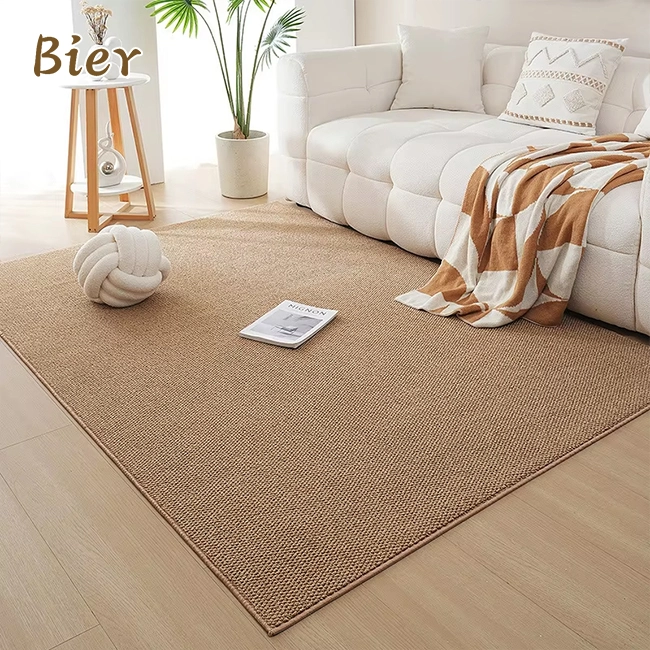
Imitation sisal made from polyester fiber is the best mix for business settings. In terms of stain resistance and durability, it is better than natural sisal and has the same texture. The density needed for floors with a lot of foot traffic is 1,000 g/m². When you put this on top of a TPR clean base, you get a surface that is waterproof, won't slip, and can be washed in a machine. This is perfect for hotel lobbies, store floors, and show halls.

Size, Thickness, and Fit Considerations
With a total width of 1 cm, these rugs can be used in places with low-clearance doors and raised floor sections, like small shops. Standard sizes are good for most layouts, but special sizes can be made for setups that don't follow the standard sizes or that use a different brand. With an edge-locking width of 0.6 cm, the finish is smooth and looks professional from the moment a customer walks in the door.
Maintenance and Long-Term Value
Floors that get a lot of use need to be easy to clean. The surface of this Japanese print rug is treated to prevent stains, and the TPR washable base makes regular cleaning easier without the need for special products. Solid color choices keep things looking the same even as traffic patterns change over time. When purchasing managers look at the total cost of ownership, the ability to resist scratches, tears, and washing in a machine makes items last longer and need to be replaced less often.
Advantages of Japanese Print Rugs in Boutique and Retail Environments
When boutique owners add Japanese-style print rugs, they always say two things happen: the space feels more unique, and the floors are easier to clean. These rugs' simple designs make a room feel more stable without getting in the way of furniture or displays.
Here are the main performance benefits of this type of product that make it a good choice for business use:
- Heat transfer printing with color lock technology ensures that pattern fidelity stays consistent across all units in a bulk order, which is critical for chain retailers and franchise environments where visual uniformity is non-negotiable.
- TPR non-slip base combined with a waterproof surface provides dual protection — safety for customers and easy cleanup for operations staff. Both properties meet the practical demands of daily commercial use.
- Scratch-resistant and tear-resistant construction means the rug performs well in pet-friendly retail spaces or any environment where floor coverings face mechanical stress from furniture and foot traffic.
- Foldable and lightweight design at 1 kg/m² makes these rugs easy to reposition, store, and ship, which matters for event organizers and exhibition builders who need fast setup and teardown cycles.
All of these benefits help procurement teams deal with the real practical pressure they face: keeping commercial places looking good without having to constantly replace things or take time off for maintenance.

Procurement Guide: How to Source Quality Japanese Print Rugs for Your Business?
Evaluating Supplier Capability
When buying a lot of Japanese print rugs, the production capacity is just as important as the quality of the samples. A factory that can make 1,000 m² per day gives big commercial projects and store rollouts the schedule reliability they need. Look for providers that can make samples in 24 to 48 hours, make sure that samples and mass production runs are exactly the same, and do a 100% review process before shipping.
Custom Order and OEM/ODM Options
You can place logos, change colors, create patterns, and change the size with full OEM and ODM support for Japanese print rugs. This feature is very helpful for brand managers and visual marketing teams that need floor covers that match brand color schemes or seasonal design guidelines. Smaller boutique owners can use the same high-quality infrastructure as big wholesale buyers thanks to MOQ policies that are easy to change.
Logistics and Compliance for Global Buyers
Export-standard roll packaging, carton packaging, and woven bag packaging all help containers load quickly and protect goods during transit. Products meet CE, OEKO-TEX, ISO 9001, and REACH standards, which makes it easier for buyers to get their goods through customs in the US and Europe. With delivery cycles of 7–15 days and established relationships with freight forwarders, project timelines are always clear.
Caring for Your Japanese Print Rugs: Maintenance and Longevity Tips
Routine Cleaning Best Practices
Vacuuming with a standard upright or robot vacuum that works with the 1 cm pile profile every day gets rid of surface dirt without hurting the fiber structure. Because the surface is treated to not stain, most spills can be cleaned up quickly with a damp cloth and light soap.
Machine Washing Guidelines
Most units can handle washing the rug at 30°C as long as it is dried flat afterward. By doing this, the TPR base keeps its shape and stops the edges from bending. Wet-rubbing tests according to ISO 105-X12 show that there is no pigment movement when the item is washed, so the color stays the same even after many washings.
Avoiding Common Damage Patterns
Most floor coverings fade over time when they are exposed to direct sunlight for a long time, but these rugs' heat-set dye method gives them Grade 4+ light fastness, which lowers the risk of fading. If you fold rugs to store them for a long time, the backing may get permanently creased. If you ship something with creases, the TPR backing will level itself in 48 hours at room temperature.
Conclusion
When used in boutiques, Japanese print rugs add a level of design intention that regular floor coverings just can't match. They are made to look like sisal, have a TPR backing that can be washed, are waterproof and stain-resistant, and can be fully customized to meet the needs of business settings. This type of flooring is a good long-term investment for procurement professionals who are in charge of projects that span multiple locations or brand-consistent retail rollouts. It is produced on a large scale, meets compliance standards, and is delivered on time.
FAQ
How do Japanese print rugs differ from Persian or modern rugs?
Japanese printed floor covers feature natural patterns that aren't symmetrical and simple plans, while Persian rugs use a lot of symmetrical geometry. Abstract designs are often the main focus of modern mats. Japanese prints are culturally specific but not too busy. They look great in places like boutiques and hotels where the floor needs to go with the general design instead of being in competition with it.
Can I order custom sizes and patterns for a large boutique installation?
Yes, you can change the size, color, name, and pattern completely. Samples are made in 24 to 48 hours, and mass production stays exactly the same as approved samples. This makes it possible to handle large-scale projects in many places without having to worry about visual differences between batches.
What is the standard delivery timeline for bulk orders?
Depending on the number of orders and the level of customization, production and shipping are usually done in 7–15 days. Freight forwarders with whom you have a history of working can handle both FCL and LCL packages with predictable wait times.
What happens if quality defects appear in a bulk shipment?
Every unit goes through a 100% check before it is shipped. If there are problems with the printing, cutting, or measurements, the supplier will either fix them for free or send a new one. They will also pay for the shipping.
Are these rugs compliant with U.S. and European market standards?
Yes, the products meet the standards set by CE, OEKO-TEX Standard 100, ISO 9001, and REACH. They also come with full test reports and export paperwork to help with customs clearance.
Request a Quote from Bier — Your Japanese Print Rug Supplier for Commercial Projects
Bier has been making things for 10 years and adds that skill to every order. We are a reliable Japanese company that makes Japanese print rugs for hotels, retail chains, and business project contractors in the U.S. and around the world. We offer OEM/ODM services, sample production in 24–48 hours, and shipping times of 7–15 days. CE, OEKO-TEX, ISO 9001, and REACH all say that our goods are safe. To get samples and bulk prices right away, email our team at sales@biercarpet.com or go to biercarpet.com.
References
1. Textile World — 2022. "Performance Standards for Commercial Floor Coverings in High-Traffic Retail Environments."
2. Contract Magazine — 2023. "How Hospitality Designers Are Sourcing Custom Floor Textiles for Brand Alignment."
3. Journal of Interior Design — 2021. "Cultural Motif Integration in Contemporary Commercial Interiors."
4. OEKO-TEX Association Annual Report — 2023. "Global Textile Certification Trends and Consumer Safety Standards."
5. Floor Covering News — 2022. "Machine-Made Rugs vs. Hand-Knotted: Cost, Quality, and Commercial Viability."
6. Home Textiles Today — 2023. "B2B Procurement Shifts in the Decorative Rug Segment: OEM/ODM Demand and Supply Chain Reliability."
Send Inquiry
Related Industry Knowledge
- Are jute rugs good for high traffic areas?
- Textured Loop Carpet for Durable Office and Hospitality Flooring
- Faux Cashmere Rug Options for Luxury Hospitality Interiors
- Premium Crystal Velvet Rug Creates a Refined Look for Luxury Spaces
- Crystal Velvet Carpet Advantages and Maintenance Tips Explained
- Long Corridor Carpet Provides Durable Flooring Solutions for Hospitality Projects
- Petal Rugs Bring Artistic Patterns to Luxury Hotels and Retail Spaces
- Why Choose Modern Washable Area Rugs for Hotels and Rental Properties?
- Ruggable Bedroom Ideas: Sizes, Placement & Styling Guide
- The best jute rugs : how to make the ideal choice for your interior design project?