
Chunky Loop Carpet Styles for Contemporary and Minimalist Spaces
Jul 23, 2026
The chunky loop carpet style stands out for its bold texture and useful features, making loop pile carpeting a key component of modern interior design. The thick, looped yarn structures in these floor coverings give them depth while keeping the clean lines that are important to a minimalist style. When procurement managers are looking at loop pile solutions for business or residential projects, they need to know how the performance is affected by the type of material used, the quality of the building, and the treatment of the surface. This style is both simple to look at and strong, as it provides sound absorption, heat insulation, and long-lasting wear resistance that is needed in high-traffic areas.


Understanding Chunky Loop Carpet: Texture, Materials, and Benefits
There is a unique feel to the loop pile structure that is different from standard cut pile options. The structure of the looped fibres makes the surface naturally resilient, spreading weight evenly across the surface and keeping it from getting crushed by heavy furniture or foot traffic. This architecture method for flooring design is appealing to modern designers because it is both aesthetically pleasing and useful.
Material Composition and Performance
The stability of its dimensions and ability to keep its colour have made polyester fibre the most popular choice for industrial loop pile carpets. Better than natural fibres, this man-made material doesn't shrink or deform, so it keeps its original look even after years of use. Quality loop design has a tight cluster pile structure that makes it more resistant to wear. This means that these goods can be used in public areas, hallways, and doors where durability is important.

For professional setups, high-density pleated structures that weigh around 900g/m² are the right choice. The backing system is very important for stability. Plastic or PVC dot backings with points stop the mat from moving and give it grip on hard surfaces without the need for extra padding. With a total thickness of 6 mm, these rugs are still thin enough to fit under doors without being squished, but they have enough pile height to really trap dirt.
Acoustic and Thermal Properties
Chunky loop carpet keeps cold air from moving through concrete or tile floors because of the dense looped pile fibres. This makes rooms warmer in the winter. This thermal efficiency makes climate-controlled places more comfortable for people while also lowering their energy costs. The same fibre density that keeps out cold also soaks up sound waves. This lowers the level of echo and background noise in open-plan offices, hotel halls, and stores, where better sound control makes the customer experience better.
Maintenance Advantages for Commercial Buyers
Surface treatments like anti-slip and stain-resistant coatings make loop pile goods last longer and require less upkeep, which saves money on labour. The tight weave structure naturally stops deep dirt penetration, so regular cleaning can get rid of most of the debris. Cut-pile options show wear and need to be shampooed often, but loop designs keep their look with little work, which makes them a cost-effective choice for facilities managers in charge of big installations.
Chunky Loop Carpet vs. Alternative Carpet Styles: A Comparative Insight
Clear differences between types of flooring help people make decisions about what to buy. Cut pile, plush, and shag carpets are very different from loop pile rugs in how they are made, how well they work, and where they should be used.
Texture and Visual Impact
Berber carpets are usually made from wool with unique bits. They have a loop structure like current synthetic carpets, but the weave is usually flatter and tighter. Modern loop pile products build on this base by using thicker yarns and lower stitch densities to make a noticeable texture that makes simple rooms more interesting to look at without adding too much design complexity.
Shag rugs are the exact opposite. They have long, free fibres that give them a casual, retro look. Even though shag floors are soft, they trap dirt deep in the pile and need to be professionally cleaned to meet cleanliness standards, so they can't be used in business settings.
Durability in High-Traffic Environments
The choice of material also affects how long something will last. Polyester fibre is very resistant to wear and colour fastness, and it meets ISO 105-B02 standards for fading caused by light. This choice is made of synthetic materials, which are less expensive than wool but work just as well in business settings where durability is more important than extreme softness.

Customization Capabilities for B2B Projects
Modern industrial technologies make it possible to customise a lot of things without slowing down production. Heat transfer printing locks bright colours into polyester fibres, making patterns that range from simple neutrals to intricate logos. With high-precision laser cutting, edges are kept clean and forms can be made to order for things like door mats, runners, and area rugs.
This adaptability helps keep the brand consistent across store chains, hotels, and company offices. Manufacturers that offer OEM and ODM services can work directly with facilities that need logo integration, special colourways, or customized chunky loop carpet designs. Within 24 to 48 hours, facilities can receive samples that correctly represent the final production quality. This kind of fast prototyping cuts down on project timelines and lets people see real models before committing to large orders.
Procurement and Maintenance: Ensuring Quality, Affordability, and Longevity
There are many factors besides the original buying price that affect the success of a project. Purchasing managers can reduce risk and get the best total cost of ownership by evaluating sellers on their quality control systems, shipping reliability, and assistance after the sale.
Supplier Selection Criteria
Manufacturers with well-established quality control systems for chunky loop carpet can provide the stability needed for rollouts in more than one place. Facilities that are certified to ISO 9001 standards show that they are dedicated to process control and ongoing growth. This makes it less likely that there will be problems with the printing, cutting, or measurements. Following OEKO-TEX, CE, and REACH rules makes sure that goods meet safety and environmental standards for foreign markets. This makes clearing customs easier and lowers regulatory risk.
Production capacity directly affects delivery reliability. Facilities that make 2000m² of goods every day can handle both pressing requests and regular demand spikes without lowering the quality. Buyers can safely plan installation times with transparent order scheduling systems, which avoid delays that push back project finish dates.
Sample Evaluation and Bulk Ordering
Before agreeing to large amounts, physical samples are still needed to check the texture, colour accuracy, and building quality. Suppliers who give free sample production show that they are confident in their ability to make things, and buyers save money by not having to pay for evaluations. As close as possible to the production materials and methods, samples should be used to make sure they are exact copies of what will be given.
Different suppliers have different minimum order amounts, and these amounts can be adjusted to fit projects of all sizes. Standard export packing in the form of rolls, cartons, or woven bags keeps goods safe during international shipping and makes the best use of container space. Professional freight relationships and assistance with paperwork help streamline customs processes. This is especially important for international retailers and cross-border e-commerce sellers who need to manage complex supply chains when sourcing products such as chunky loop carpet.
Maintenance Protocols for Long-Term Performance
Loop pile structures last a lot longer if they are properly cared for. Regular cleaning with equipment that only uses pressure gets rid of surface dirt without hurting the structure of the fibres. Rotating brushes can stir twisted yarns too much, which can cause fuzzing or pilling that makes the yarn look bad. Every once in a while, moving or beating entrance mats can get rid of trapped dirt that could be tracked into rooms inside.
Cleaning up spills right away with spot cleaning stops stains from getting into the fibres. Instead of rubbing, blotting stops liquid from spreading, and cleaning products with no added acidity protect surfaces that don't colour. Professional cleaning once a year returns the look of high-traffic areas, though quality loop designs usually don't need to be cleaned as often as cut pile options.
Furniture protectors spread the weight of chairs and tables' legs so that there aren't any lasting marks of tension. Some of the best places to use these cheap add-ons are under rolling office chairs and big display cases in stores.
Choosing the Perfect Chunky Loop Carpet Style for Contemporary and Minimalist Spaces
For modern designs, choosing flooring that looks good and works well is two things that come together. The minimalist design theory stresses moderation and prefers materials that add slight texture without making the design look cluttered. This instruction can be met by loop pile carpeting, which also provides warmth and sound control that hard surfaces don't have.
Color Selection for Neutral Palettes
Neutral colour choices are common in modern rooms because they let the architecture and furniture stand out. Carpets in shades of grey, brown, charcoal, and taupe go well with this style and provide a base without being too busy. Solid colours keep the look of a large display consistent, which makes the room look bigger and more connected.
Custom colour matching makes it possible to perfectly match colours to brand rules or current interior finishes. With heat transfer printing, Pantone values are reproduced correctly, so the final product will be the same from one production run to the next. This feature is very important for retail chains that have dozens or hundreds of sites and need to keep their brand name consistent.
Texture as Decorative Element
Texture adds visual interest to chunky loop carpet without being too complicated, while sparse spaces avoid busy patterns. Because the loop pile structure is three-dimensional, it forms a subtle play of light and shadow that changes as the day goes on and natural light changes. This natural variation gives one-color schemes more depth without adding design elements that might clash with furniture or art.
How well an edge is finished affects how skilled it is seen to be. Laser-cut sides stay straight and don't fray over time, so the changes between carpet and hard floors stay clean. Edge-locking widths of 0.6 cm keep carpets from coming apart while still being unnoticeable to the eye. This is especially important in open-plan rooms where carpet edges are visible instead of hidden under borders.
Application-Specific Recommendations
The sound-absorbing qualities of loop pile are useful in offices, especially in open areas where reducing background noise helps people get work done. When used with the right floor mats, high-density constructions are strong enough to handle rolling wheelchair traffic, and anti-slip backing keeps the mats from moving around while they're being used.
In hospitality settings, floors need to be both aesthetically pleasing and very durable. Hotel hallways, restaurant eating areas, and meeting rooms are all constantly used, which quickly shows where things aren't working well. Because loop pile doesn't break easily, it stays looking good even when it's being walked on a lot, and treatments that make it stain-resistant keep food and drink spills from happening.
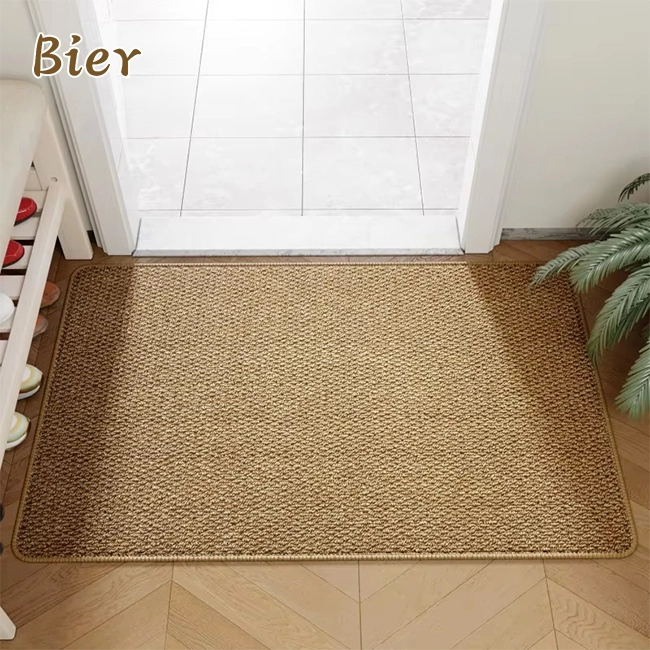
Retail shops use entrance mats made of chunky loop carpet to keep wetness and dirt from tracking into the floors inside. Loop pile door mats with PVC dots on the back stay in place on tile and concrete floors and do a good job of collecting dirt. Custom sizes can fit through doors of different sizes, and unique designs with names help customers remember who you are as soon as they walk in.
Exhibition and event areas need flooring options that can be put down fast and handle a lot of foot traffic during short events. Loop pile goods that are light and easy to move can be laid flat right away without needing long amounts of time to adjust. When the events are over, these rugs can be rolled up small to be stored and used again at other events.
Future Trends and Innovation in Loop Pile Flooring for B2B Markets
Flooring technology keeps changing because performance needs and environmental concerns are always changing. When companies spend money on research and development, they make goods that meet new needs and make benefits that already exist better.
Sustainable Material Development
Environmental awareness affects buying choices in all kinds of businesses. Polyester fibre made from recovered PET bottles lowers our reliance on new oil sources while still performing the same as regular synthetic yarns. Companies that are trying to get LEED approval or other green standards, like manufacturing methods that use less water and chemicals.
Enhanced Surface Treatments
Antimicrobial treatments stop germs from growing on carpet surfaces, which is good for places like hospitals, food service areas, and places where people touch the carpet a lot. Silver ion technology and other related methods protect fibres for a long time without changing their colour or structure. These treatments go along with regular cleaning, making places cleaner that are less likely to spread illness.
Smart Manufacturing and Customization
Digital printing makes design options bigger by making it possible to print photographic-quality pictures and complicated patterns on loop pile surfaces. While minimalist styles tend to favour basic colours, this technology makes it possible to customise the flooring for a particular site by adding things like wayfinding elements, brand messages, or artistic expressions.
Automated cutting systems can make complicated forms with millimeter-level accuracy, which lets you make elaborate border patterns and fitted installations that make the best use of the material. These improvements cut down on waste during production and installation, and they also lower the cost of making unique setups.
Conclusion
Modern design goals are perfectly aligned with chunky loop carpet flooring, which offers an appealing mix of aesthetically simple design and practical performance. Looped yarn construction creates a textured surface that adds tactile interest to simple spaces without making them look more complicated. The practical qualities of the material, such as its ability to absorb sound, keep heat in, and last for a long time, make it useful in both business and domestic settings. When purchasing flooring, it's helpful for purchasing managers to know how different building methods, materials, and finishes affect the flooring's long-term performance and upkeep needs. This helps them make decisions that balance the initial investment with the total cost of ownership over the flooring's expected service life.
FAQ
What distinguishes loop pile construction from other carpet types?
Loop pile rugs have continuous yarn loops that are fixed into the backing material. This makes a textured surface that doesn't get crushed and keeps its look even after a lot of use. Cut pile options cut these loops off at their highest points, making textures that are softer and more obvious wear patterns. Because circles are structurally sound, they spread weight across multiple anchor points, which makes them last longer in business settings.
Can loop pile products be customized for specific brand requirements?
Modern production techniques allow for a lot of customisation, such as matching colours to brand standards, adding logos through heat transfer printing, and making items the exact size you need through precise laser cutting. Samples made within 48 hours correctly show the quality of the end product, so stakeholders can see the real thing before placing large orders. When you use OEM or ODM services, you can get specifics about things like thickness, backing type, and edge finishing.
How do polyester fibers perform compared to natural wool?
Polyester has better dimensional stability than wool because it doesn't shrink or bend as much when it's wet outside. Colour fastness meets ISO 105-B02 standards for light exposure, so it doesn't fade in places that get a lot of sun. Wool naturally resists flames and is very soft, but polyester is just as durable and costs much less, so it can be used for business projects that need a lot of it but don't want to spend a lot of money.
Partner with Bier for Your Loop Pile Flooring Needs
For flooring options to be of high quality, they need production partners who know how the products work and how to manage the project. Bier has been making things for ten years and has quality control systems that meet CE, OEKO-TEX, ISO 9001, and REACH standards. This makes sure that every order is the same. Our heat transfer printing technology locks bright colours into polyester fibres so they won't fade over time. Laser cutting gives you straight, fray-free lines. With a daily production capacity of 2000m², tight deadlines are no problem. Delivery times range from 7 to 15 days, and returning buyers get personal account management. We offer OEM and ODM services that are flexible enough to meet your needs, whether you need entrance mats for stores, hallway runners for hotels, or custom-branded goods for businesses. Get in touch with our sales team at sales@biercarpet.com to talk about your project needs and ask for samples that show why purchasing managers in the home furnishings, hotel, and retail industries trust Bier as their loop pile carpet provider.
References
1. Carpet and Rug Institute. (2021). The CRI Technical Bulletin Series has information on "Commercial Carpet Performance Standards and Testing Protocols."
2. Jones, M. & Williams, R. (2020). In the Journal of Interior Design Research (45(3)), pages 78–94, it says, "Textile Flooring in Contemporary Architecture: Material Selection for Minimalist Interiors."
3. There is an American Society for Testing and Materials. (2022). "ASTM D6859: Standard Specification for Pile Floor Coverings." This is a standard set by ASTM International.
4. News about environmental building. (2023). BuildingGreen Publications has a report called "Sustainable Flooring Materials: Life Cycle Assessment of Synthetic and Natural Fibres."
5. Peterson, K. (2019). In Building Services Engineering Research and Technology (40(2)), 156–171, they wrote about the "acoustic performance of loop pile carpeting in open-plan commercial spaces."
6. The National Association for Floor Coverings. (2022). The 8th edition of the NFCA Technical Manual has "Installation and Maintenance Guidelines for Commercial Loop Pile Carpet Systems."
Send Inquiry
Related Industry Knowledge
- Where Can You Use Chunky Loop Carpet in Home Interiors?
- Everything You Need to Know About a Jute Nursery Rug
- Is a nursery rainbow rug safe for toddlers and babies?
- How to Choose Easy Care Carpet for High Traffic Areas
- Chunky Loop Carpet Buying Guide: Texture, Durability & Design
- Ruggable Bedroom Ideas: Sizes, Placement & Styling Guide
- How Do Petal Rugs Transform Your Home Décor?
- Dimensional rugs: Materials, Dimensions & Styling Principles Explained
- Non-Slip Silica Thread Rug for High Traffic Areas
- Wool and Silk Rugs: What the Fiber Blend Changes in Real Interiors