
How to Choose The Right Nursery Circle Rug Size for Nursery?
Jul 17, 2026
Finding the right circular rug for your baby means finding the right balance between safety, style, and usefulness. Based on the size of the room, the nursery circle rug should be the right size to cover the floor for play and rest. The best size relies on the child's age, the size of the room, how the furniture is set up, and how they move around. Smaller rooms can use rugs with a diameter of 3 to 4 feet to make cosy spots, while large nurseries can use rugs with a diameter of 6 to 8 feet to make play areas. In addition to sizes, you should think about non-slip backing, sensitive materials like crystal velvet, and stain-resistant finishes that make upkeep easier for busy facility managers and carers.
Understanding Nursery Circle Rugs and Their Importance
When used in places where babies and toddlers play, nursery circle rugs are much better than regular ones. The lack of sharp corners lowers the risk of injury during the early stages of crawling and walking. This is a major safety issue for childcare center managers and interior designers. These specialized rugs do more than just look nice. They keep floors from getting too cold, cushion babies' falls during important developmental stages, and create visual lines that help them understand where they can play.
Safety-Focused Design Features
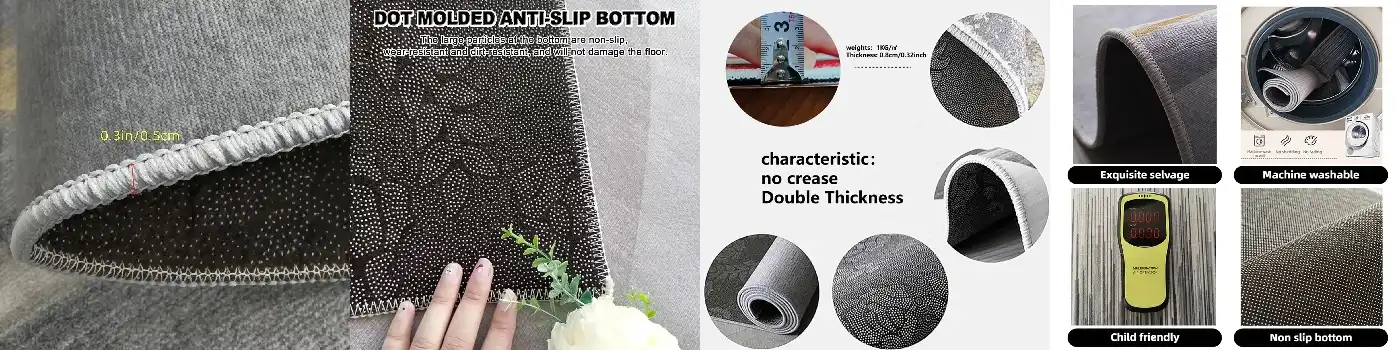
Several safety features built into modern nursery circle rugs made for children are in line with international safety standards. The smooth edges get rid of the dangers that come with corners, which is especially helpful in places with lots of kids, where movement makes accidents more likely. High-quality options have a dot plastic backing that stays in place on different types of floors, keeping kids from slipping when they move from moving to walking on their own. Materials are put through a lot of tests to make sure they don't lose their colour in spit and sweat. This keeps the dye stable during the expected oral contact phases.
Developmental and Sensory Benefits
When you touch high-end materials like crystal velvet, it helps your senses grow during the first few months of life. Tummy time, a basic exercise that develops neck and shoulder muscles, is best done on soft, skin-friendly surfaces. Good goods usually have a thickness of 5 mm, which is thick enough to protect growing skulls from hard floor impacts while still being thin enough not to be a tripping danger at doors. Thermal shielding keeps the surface at a safe temperature, which encourages exploring on the floor, which improves motor skills and spatial awareness.
Key Factors to Consider When Choosing Nursery Circle Rug Sizes
The size of the room is the most important thing to think about when choosing the right nursery circle rug width. After taking into account where furniture will go, how far doors can swing open, and how people will be moving through the room, procurement managers and interior designers have to figure out how much floor space is available. A balanced method makes sure that the rug supports the room without making it too big or pushing furniture against the walls in strange ways.
Assessing Room Layout and Furniture Placement
First, figure out how big the nursery is and make a list of set items like cribs, changing tables, and storage units. The nursery circle rug should go beyond important groups of furniture to make visual zones that flow together. A common rule for specifications is that at least the front legs of chairs should sit on the edge of the rug. This creates conscious design relationships. A 5–6-foot-diameter rug usually covers a 10x10-foot room evenly, while a 7-8-foot rug can fit in a 12x12-foot room without being too crowded.
Child Development Stage Considerations
The baby's current level of movement has a big effect on what size they need. Infants who aren't yet moving need very little coverage—often just 3–4 feet—and should be grouped near where the main carer is sitting. As babies get better at crawling and walking, they need more covers to protect their knees and make play areas safer. For toddlers who like to play active games, bigger widths are better because they let them use building blocks, arrange toys, and do movement-based activities without having to keep moving off the soft surface.
Material Performance and Safety Standards
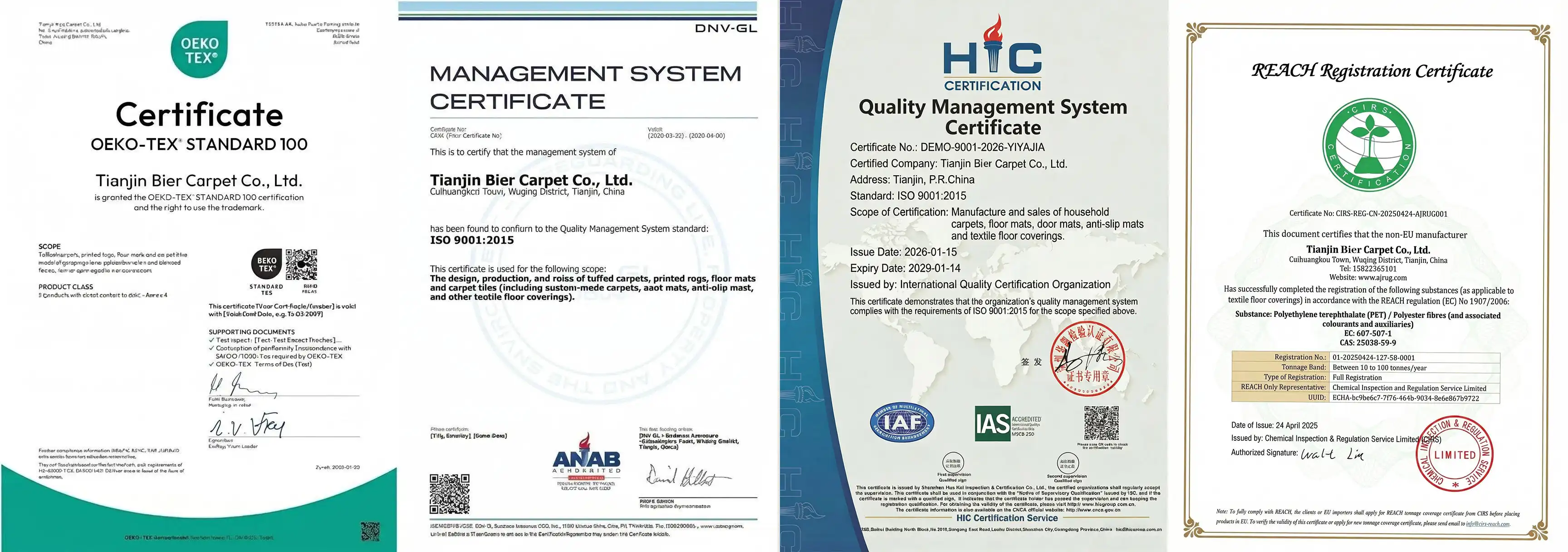
Products that are going into nurseries have to have hypoallergenic qualities. Polyester fibre surfaces treated with stain-resistant technology keep up with cleanliness standards that are important in childcare situations where mistakes and spills happen all the time. The dot plastic backing must stay non-slip on all types of floors, including tile, hardwood, and laminate. Companies that make good products show proof that they follow the rules set by CE, OEKO-TEX, and REACH. This makes sure that the products they make meet strict limits on VOC emissions and heavy metals that are important for babies.
Nursery Circle Rug Size Guidelines and Recommendations
There are standard levels of diameter choices that are used for different types of applications. By understanding these groups, procurement experts can better match inventory to the needs of their target market and increase the speed of loading containers for bulk shipping. Selecting the appropriate nursery circle rug becomes easier when following these standardized ranges.
Small Diameter Options (3-4 Feet)
Small nursery circle rugs can be used as accents in nurseries that are short on space or as extra pieces in rooms that are bigger. These sizes work well in city nurseries, reading nooks, or as extras for nursing stations. The building is very light (750 to 850g per square metre), which makes it easy to move and clean. Stores that want to sell to people in cities who don't have a lot of room often focus on this size group because it's flexible and affordable.
Medium Diameter Standards (5-6 Feet)
This range is the most commonly used standard for 10x12-foot nurseries that are used in businesses. The coverage area is big enough for the main types of play, but there is still enough empty space around the edges for furniture and moving paths. Medium choices strike a good balance between the cost of materials and the range of functions they can provide. This makes them appealing to both individual customers and businesses on a budget. This size range is where production efficiency is at its highest, which means that wait times for basic colour and pattern choices are often faster, between 7 and 10 days.
Large and Custom Diameter Solutions (7-8+ Feet)
Large nursery circle rugs make statement flooring installations in nurseries that are spread out in residential areas, boutique hotels, or high-end child care centers. Because of the way the measurements are rolled and the weight, these specs need careful planning for logistics. For longer durability, gram weights often hit 1000–1100g per square metre. Custom sizing lets you take into account building features like bay windows or room plans that are shaped like a circle. Advanced heat transfer printing technology makes it possible to reproduce big patterns with uniform colour saturation across the entire diameter. This keeps the visual effect that is important for high-end business uses.
The table below illustrates typical size-to-room correlations based on industry best practices:
| Rug Diameter | Nursery Size | Typical Application |
|---|---|---|
| 3-4 feet | 8x8 to 9x10 feet | Accent zones, small apartments |
| 5-6 feet | 10x10 to 12x12 feet | Standard residential nurseries |
| 7-8+ feet | 12x14+ feet | Luxury homes, commercial childcare |
Custom manufacturing can handle projects with unusual needs, like setups that are too big for a school or brand-specific size requirements for chain stores.
Material and Maintenance Tips for Nursery Circle Rugs
In business buying situations, the choice of material has a direct effect on how long a product lasts, how satisfied customers are with it, and the total cost of ownership. Recently, crystal velvet has become a popular surface fibre for nursery circle rugs because it is soft, long-lasting, and easy to clean.
Crystal Velvet Performance Characteristics
This material is made of polyester and feels as soft and smooth as natural fibres. It also resists stains better and keeps its shape better. The high-density machine weaving process, which can cover up to 3000 square meters per day in modern factories, makes pile structures that are tightly packed together and won't break under the weight of furniture. The edge-locking width of 0.6 cm stops fraying and keeps the finished look of the product for its entire life. The ability to soak up water and dry quickly solves the problem of managing spills that come up in nurseries, cutting down on the time needed for cleaning and reusing.
Cleaning Protocols and Maintenance Schedules
It is possible to clean specific areas without causing too much trouble in business settings where access at all times is important. Most spills can be cleaned up with a damp cloth and a light soap solution on surfaces that have been treated so as not to stain. The 5mm profile lets you vacuum without any special devices, so it fits right in with regular building care procedures. Childcare providers usually do deep cleaning shifts once a week during off-hours, and for high-traffic areas, a professional extraction is done every three months. Multiple wet cleaning processes don't delaminate the dot plastic backing, so it stays structurally sound even after years of heavy use.
Proper care greatly increases the useful life, which is especially important for bulk buyers who are looking at per-unit prices over multiple procurement rounds. Products that meet ISO 9001 quality standards work consistently, which helps with lifecycle cost modelling and planning for chain activities that run more than one site.
Where and How to Source Nursery Circle Rugs for B2B Procurement
To help wholesalers, stores, and commercial workers keep their businesses going, good sourcing strategies for nursery circle rugs look at suppliers, make sure they can customise products, and make sure they can rely on logistics.
Evaluating Manufacturer Capabilities
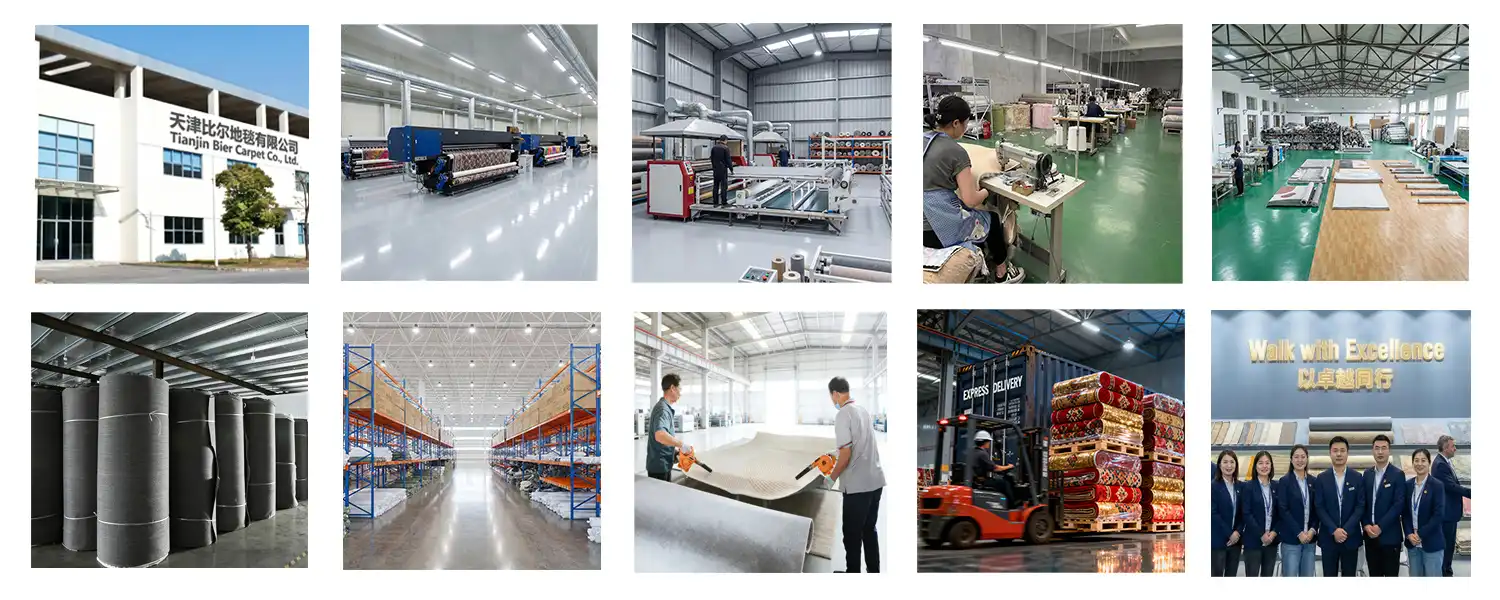
Qualitative makers set themselves apart in a number of real ways. Making samples quickly (within 24 to 48 hours) speeds up the design review and client approval processes, which shortens the total project timeline. The ability to make models that are exactly the same as the mass production version cuts down on costly changes and problems with alignment. Facilities with their own heat transfer printing technology can print colours that won't fade, so your brand stays consistent across big sales and repeat shipments. High-precision laser cutting makes sure that the edges are clean and free of burrs and fraying, meeting the high-quality standards of luxury market groups.
Customization and OEM/ODM Services
Unique pattern designs and custom specs are becoming more and more important for brands to stand out. Retailers can make their own collections with the help of flexible OEM partnerships, which stop customers from directly comparing prices with competitors. Pattern customisation includes both printed graphics and woven backgrounds. For accepted patterns, the lead time is usually between 10 and 15 days. Logo integration choices are useful for business and institutional buyers who need branded goods to keep their franchises consistent. Size flexibility takes into account the needs of different markets. For example, buyers in North America usually ask for imperial measures, while buyers in Europe ask for metric measurements.
Logistics and Compliance Considerations
Export-standard wrapping keeps the quality of the product safe during foreign shipping and makes the best use of container space. Professional providers figure out how to load containers most efficiently to keep per-unit freight costs as low as possible, which is a key part of keeping landed prices reasonable. Freight forwarders with whom you've done business before can guarantee that both full container loads and less-than-container loads will arrive at their destinations on time. Help with all the paperwork, like CE certificates, OEKO-TEX reports, and material safety data sheets, speeds up the customs process and lowers the risk of being held at a port. Suppliers who have been making things for ten years or more usually keep compliance files that cover a lot of different legal areas. This makes it easier to distribute products to many different markets.
Bulk purchasing advantages extend beyond unit price reductions. Volume agreements guarantee priority ordering for production, which protects against seasonal capacity issues that cause spot orders to be delayed. Dedicated account management speeds up the order handling for repeat purchases, cutting down on the need for multiple reviews and approval processes that use up valuable organisational resources.
Conclusion
To pick the right nursery circle rug size for a nursery, you need to carefully consider the room's measurements, safety needs, and the rug's performance qualities. The basic size guidelines are set by the room's measurements and furniture setup, while the useful coverage needs are based on the child's developmental stages. Durability and cleanliness are important in childcare settings, so high-quality materials like crystal velvet with stain-resistant treatments and non-slip backing are used. When B2B procurement experts work with makers who offer quick customisation, compliance paperwork, and reliable logistics support, they can complete projects successfully and keep clients happy for a long time.
FAQ
What diameter works best for a 10x10-foot nursery?
A nursery circle rug with a diameter of 5 to 6 feet is usually the best size for a normal 10x10-foot nursery. This lets you put furniture around the edges while still making a clear play area in the middle. This size is good for beds, change tables, and chairs without taking up too much room.
How does a circular shape improve safety compared to rectangular rugs?
Since circular shapes don't have any sharp edges, they are less likely to cause accidents when children are just starting to walk and often lose their balance. Rounded sides get rid of the impact points that can cause cuts or bruises that are common in rectangular rug corners.
What cleaning frequency is recommended for commercial nursery settings?
High-traffic childcare centers keep cleanliness standards up by doing deep extractions every three months and spot cleaning once a week. Because the crystal velvet surface doesn't stain easily and dries quickly, there isn't much downtime between cleaning processes, which meets the needs for business continuity.
Partner with Bier for Premium Nursery Circle Rug Solutions
Our manufacturing skills give procurement workers exactly what they need: nursery circle rugs that can be customised and are made from materials that are safe for children. Our special heat transfer printing keeps the bright colours in place even after years of use, and the crystal velvet surface is soft and gentle on the skin. High-precision laser cutting makes sure that every unit has clean edges, and strict pre-shipment checking procedures make sure that there are no quality shocks. It can be hard to keep track of a lot of orders at once. That's why our 7–15 day shipping cycles and dedicated account management keep your projects on track. You can use our OEM/ODM services to get exactly what you need, whether you're looking for supplier inventory for retail chains or custom specs for business childcare projects. Get in touch with us at sales@biercarpet.com to talk about customising patterns, getting compliance paperwork, or finding export packing options that fit your needs.
References
1. Anderson, M. & Roberts, K. (2021). Interior Design Standards for Early Childhood Environments. Architectural Press.
2. Chen, L. (2020). "Material Safety and Performance Testing in Childcare Furnishings." Journal of Textile Safety Research, 14(3), 127-145.
3. Global Home Textiles Association. (2022). B2B Procurement Best Practices for Nursery Products. Industry White Paper Series.
4. Martinez, S. (2019). Space Planning Guidelines for Residential Nurseries. Design Publications International.
5. National Institute of Child Safety. (2023). "Impact Absorption Standards for Infant Floor Coverings." Childhood Safety Quarterly, 8(1), 34-52.
6. Thompson, R. & Liu, J. (2022). Sustainable Manufacturing in Home Textile Production. Industrial Press.
Send Inquiry
Related Industry Knowledge
- Ultimate Guide to Choosing a nursery rainbow rug
- Our Top Tips For Choosing The Right Nursery Circle Rug
- Japanese Print Rug Ideas To Add Balance To Your Space
- How To Choose The Perfect dimensional rugs?
- Premium Silica Thread Rug for Modern Interior Spaces
- Faux Cashmere Rug with Plush Feel and Easy Care
- How Jute Rugs Are The Best Option For Your Home This Summer?
- What You Need to Know About Silica thread rug
- Discover the Beauty and Durability of Silica thread rug
- Transforming Hallways with Long Runner Rugs