
Japanese Print Rug Ideas To Add Balance To Your Space
Jul 02, 2026
When decorating a room, it's often best to start at the bottom and work your way up. Whether you're decorating a small hotel entrance, a corporate office, or a busy retail store, a Japanese print rug adds a special touch of traditional aesthetics and cutting-edge usefulness to any space. These floor covers combine traditional Japanese design ideas with modern, high-tech production methods to create a peaceful look that lasts for a long time. These mats are based on the wabi-sabi style of simplicity and balanced composition. They make rooms feel planned, calm, and properly put together.
Understanding Japanese Print Rugs: History, Styles, and Craftsmanship
The Cultural Roots of Japanese-Inspired Floor Coverings
Japanese traditional interior design has long praised natural textures and simple beauty. In the past, flooring options like tatami mats showed off the skills and knowledge of the local season. Modern floor covers with Japanese designs carry on this tradition while also meeting the needs of today. Patterns that are based on Ukiyo-e woodblock prints, Seigaiha wave patterns, and simple Zen gardens look good for a long time. These patterns aren't just for looks; they also communicate ideas of balance, continuity, and respect for empty space, which are important in both business and home design.
Advanced Manufacturing Meets Artistic Tradition
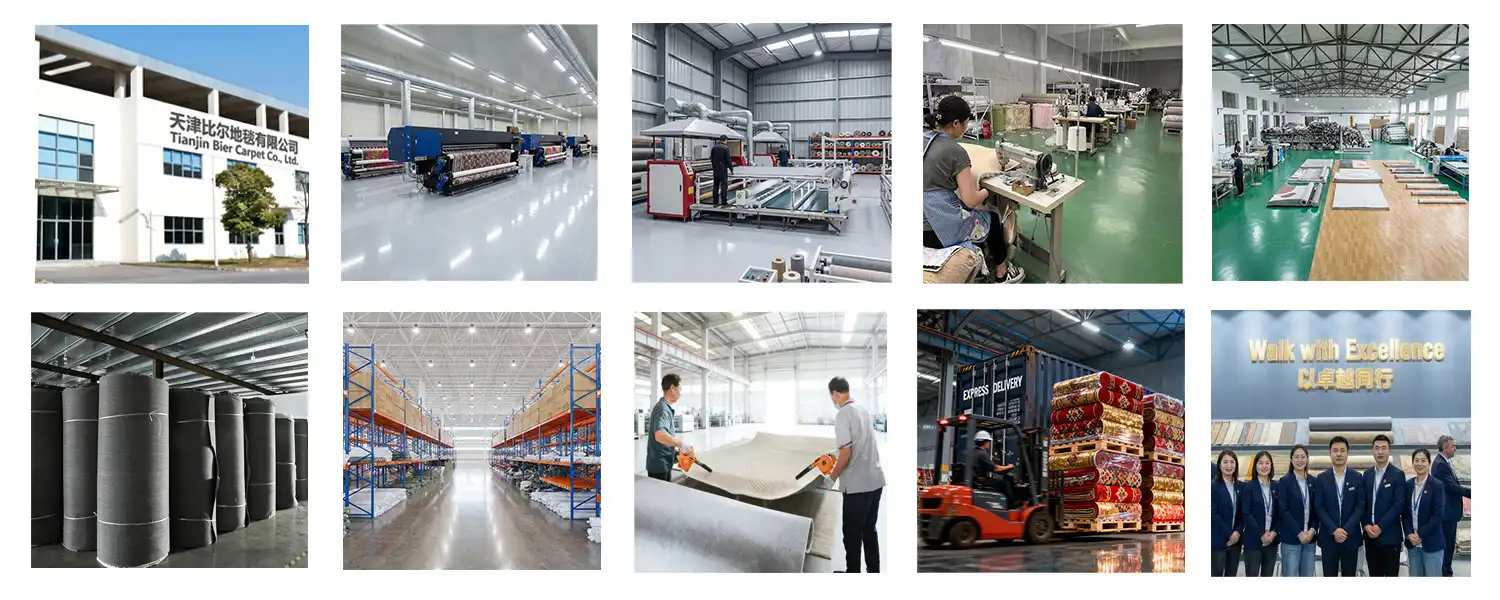
With today's production methods, intricate patterns inspired by Japan can be accurately recreated on long-lasting materials. High-definition heat transfer printing technology can show vivid colors and fine details that are sometimes hard to achieve with weaving. At Bier, we use our own printing methods that lock pigments into polyester fibers at the molecular level. This way, designs stay bright even after years of heavy use. With a 0.6cm edge-locking width, our laser cutting process creates clean, sealed edges that won't break and will keep their shiny look for a long time.
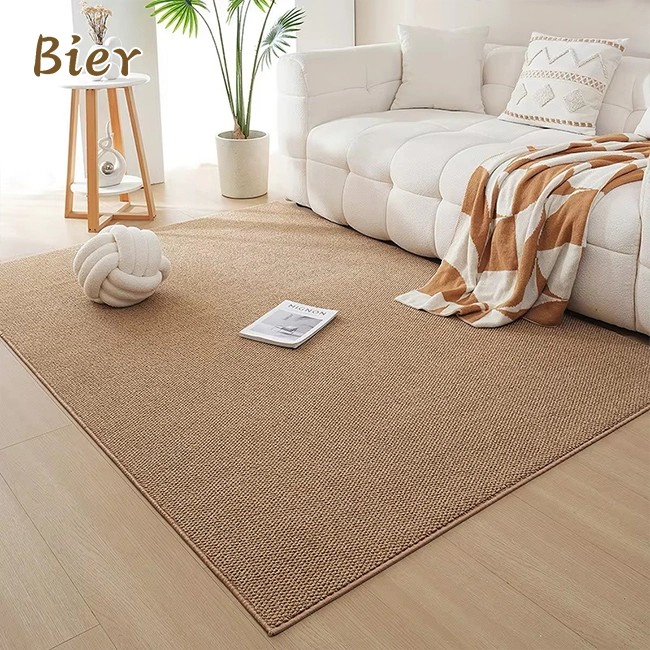
The structure below is just as important as how the top looks. Made from high-density polyester fiber, our imitation sisal surface has the natural feel of natural materials and is better at resisting stains and keeping its shape. Below this is a 1 kg/m² TPR washable base that gives a good grip on different types of floors without the need for glues or underlays. This total thickness of 1 cm is just the right amount of solidity to absorb sound and make the floor comfortable to walk on, but it's also thin enough to fit through doors and keep people from tripping in business settings.
Material Innovation for Professional Applications
When purchasing managers look at different floor covering choices, they need to know that the materials will work the same way in all batches and places. Our imitation sisal construction gives it a gram weight of 1000g/㎡, which is dense enough to not get crushed in high-traffic areas but still light enough to ship and install easily. The polyester fiber makeup naturally resists stains and dries quickly, which cuts down on upkeep time in store and hospitality settings. Natural fiber choices can hold on to moisture and allergens, but this synthetic option keeps up with cleanliness standards that are necessary for business compliance.
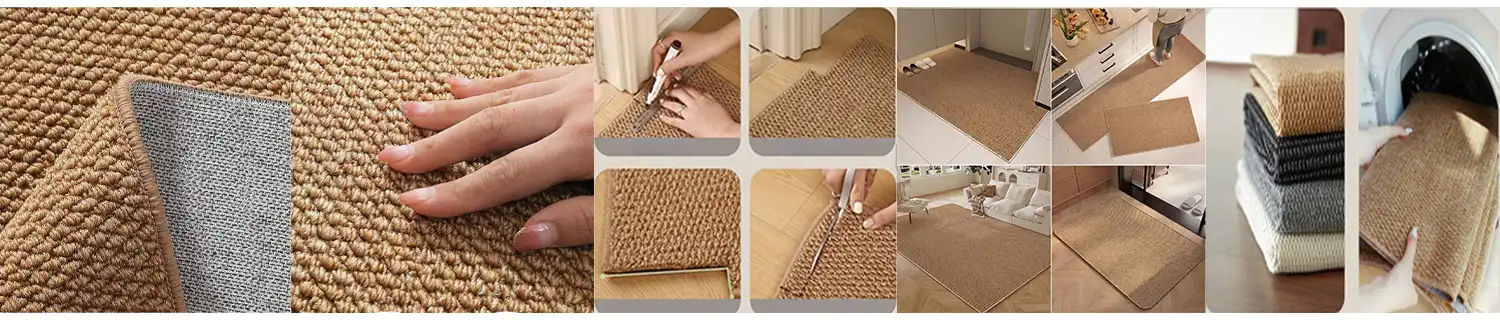
The waterproof feature of our backing system solves a common problem in business flooring: spills and water damage that happen out of the blue. Hotels, restaurants, and show halls can all benefit from floors that can be cleaned regularly without coming loose or losing their backing. Our TPR base stays flexible and safe even after being washed many times, which supports the 100% inspection process we use before shipping.
How to Choose the Right Japanese Print Rug for Your Space: A Decision Support Approach
Matching Application Requirements with Product Specifications
In different business settings, certain success traits are needed. The soundproofing and design of hotel hallways must be the same in all dozens of rooms. Store floors need to be able to stand up to a lot of foot traffic and still look good. Designs that help people focus and keep their eyes from getting tired are good for office spaces. Knowing these application-specific needs helps buying teams choose the right styles, sizes, and ways to customize them.
Evaluating Supplier Credentials and Quality Assurance
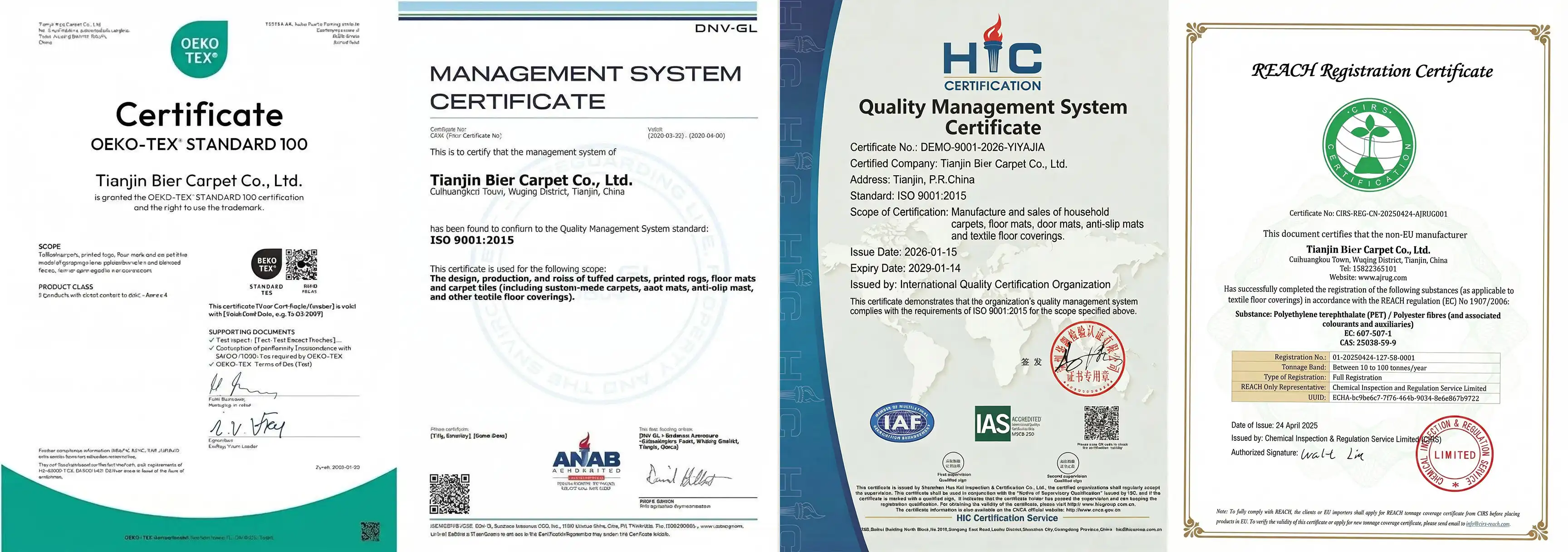
Quality standards that can be checked and clear processes are the foundations of reliable buying partnerships. Our factories follow the rules set by CE, OEKO-TEX, ISO 9001, and REACH to make sure that the goods we make meet international standards for safety and the environment. Every production run goes through chromatic consistency testing to make sure that the ΔE variance stays below 1.0. This makes sure that colors match between orders that are made months apart.
It's impossible to say enough about how important sample review is in business-to-business deals. With our fast prototyping service, we can make full-size models in just 24 to 48 hours. This lets project managers check the texture, color accuracy, and fit of the dimensions before placing large orders. These samples exactly match the specs for mass production, so there are no costly mistakes during installation. Clear lead times—usually 7 to 15 days for normal orders—allow for accurate project planning and lower the chance of building delays.
Cost Analysis for Large-Scale Procurement
When buying industrial flooring, you need to think about more than just the unit price. Logistics costs, the difficulty of placement, and costs over the product's lifetime all affect the total investment. Our export-standard roll packing makes the most of the space inside containers, which means that foreign buyers pay less per unit for shipping. The base can be washed, so there's no need for extra padding or glue. The lightweight but durable construction means it costs less to ship than standard carpets.
When maintenance is done well, it saves money over time. Because our polyester construction is scratch- and tear-resistant, you won't have to change it as often. This is especially helpful in pet-friendly hotels or show halls with a lot of foot traffic. The non-slip TPR backing stays in place without leaving behind any sticky residue, making it easier to move when the space is rearranged. Cost-effectiveness is higher over longer operational times when these real benefits are taken into account.
Integrating Japanese Print Rugs to Add Balance and Harmony to Your Space
Design Principles for Spatial Equilibrium
Japanese aesthetics says that balance doesn't come from harmony, but from careful measurement and empty space. Utilizing floor covers that are based on these ideas helps make spaces that feel planned rather than jumbled. A simple welcome area can be held together by a Japanese print rug with soft wave patterns that draw the eye downward and give the room a sense of security. Solid color choices in earth tones or soft blues go well with clean-lined furniture without drawing too much attention to themselves.
Pattern arrangement changes how big a room seems and how people move through it. Larger, unified patterns make small rooms feel bigger, and sectioned designs can separate useful areas in open floor plans. When used in businesses, strategically placing rugs helps people move around and draws attention to important areas like product displays or welcome desks. Our rugs are easy to move around for weather changes or sales events because they are made with low-pile materials and can be folded up.
Case Applications Across Commercial Sectors
The mix between aesthetic kindness and functional upkeep is especially helpful in hospitality settings. We provided custom-sized runners in the guest hallways of a boutique hotel in the Pacific Northwest. The hotel chose a soothing indigo design that was based on traditional Japanese textiles. The waterproof backing kept spills from guests from getting on the flooring below, and the stain-resistant top kept its look by being vacuumed every day and machine-washed every so often. Management said that maintaining the corridors took 40% less time than when they had wool flooring.
Managers of retail brands like how matched floor coverings, such as Japanese print rugs, make visual marketing stronger. Our customizable solid-color rugs were used in 23 franchise locations by a natural lifestyle brand. They chose a sage color and added modest name embossing at the entrances. The consistent look helped people recognize the brand, and the quick 7-day turnaround for reorders ensured that new stores launched on time. The non-slip backing was especially important in high-traffic areas like checkout zones, and it met safety standards in many regions.
Professionals in exhibitions and events like how it looks and how easy it is to set up. The trade show booth designers we work with often order unique patterns that match their clients' brands because they know that our 1000㎡/day production capacity can meet short event schedules. It's easy to move from one venue to another because it's foldable and light, and the TPR base sticks firmly to temporary flooring without tape or tacks, which could be against the rules of the venue.
Maintenance Strategies for Longevity
Maintaining the beauty of Japanese-style floor covers demands knowing about the properties of their materials. When spills are cleaned up quickly by blotting instead of rubbing, our polyester fiber construction will fight the most common spots. As part of routine upkeep, the vacuum should be set to a flexible height so that it doesn't pull too hard on the low-pile surface. To keep the backing in good shape, it can be deep-cleaned every so often by washing it in a machine at 30°C and then laying it flat to dry.
The edge-locking design keeps the clothes from coming apart while they're being washed, and the heat-set dye process makes sure that the colors stay true through many washes. Facilities teams should not use strong chemicals to clean because they could damage the TPR backing. Instead, they should use light pH-neutral solutions that work well. Asymmetrical areas can be used to set up rotation plans that extend the life of products by spreading out wear patterns across the rug's surface.
Purchasing and Procurement: Seamless Transaction Processes for Japanese Print Rugs
Sourcing Channels and Verification Protocols
Building ties with verified manufacturers lowers the chance of buying things and ensures that the standard is always the same. Direct manufacturer relationships cut out the middleman and their markups, and they give you access to customization options that you can't get through distributors. When purchasing, professionals are looking at possible sellers; they should ask to see proof of quality certifications, information on production capacity, and recommendations from clients who have bought from similar companies before.
As part of our clear communication standards, we have specialized account managers who keep output records and make it easier to reorder. Pattern archiving helps long-term partners because it lets us reorder without having to go through multiple sample iterations. We store accepted designs and specs. This consistency is especially helpful for hotel chains and store chains that are planning phased expansions.
Customization Workflows for Brand-Specific Requirements
From the idea to the finished result, there are several stages where people work together. Initial talks make clear the needs of the application, the priorities for performance, and the design goals. Design teams can send in artwork, color swatches, or pictures that inspire them to help with pattern creation. Our heat transfer printing and laser cutting methods let you make almost any kind of design, from complex, multicolored designs to simple geometric patterns with sharp edges.
Sample acceptance is a very important step. Stakeholders can check the color accuracy, texture, and size fit in the intended setting by getting a full-size sample that was made according to production specs. Any changes that need to be made before bulk production starts are based on feedback from this stage. Our MOQ policies are open enough to allow for both small-scale trials and large-scale deployments. This is because we know that procurement methods change depending on the type of project and the size of the company.
Logistics Coordination and Compliance Support
When you buy something internationally, such as a Japanese print rug, you have to deal with customs rules, shipping issues, and paperwork requirements. Because we have long-term relationships with freight forwarders, we can guarantee that both FCL and LCL packages will arrive on time. To make customs clearance go more smoothly, we offer complete paperwork packages that include business bills, packing lists, and compliance certificates that are specific to each country.
Packaging methods protect the goods and make the case work well. Export-standard roll packing keeps the goods from wrinkling or getting wet while they're traveling by water, and carefully planned loading patterns make the best use of each cubic inch. For projects that need deliveries at different times, we plan phased shipments that work with building schedules. This cuts down on the need for on-site storage and keeps materials safe from the conditions of the job site until they are installed.
Top Japanese Print Rug Trends and Brands to Watch in 2024
Emerging Design Directions in Commercial Flooring
According to recent market research, people are becoming more interested in nature-inspired simplicity that fits with wellness-focused office design. More and more, business and hotel requirements use patterns that look like natural things, like flowing water, bamboo groves, and mountain shapes. Color schemes have changed to include warmer neutrals and soft earth tones that go well with biophilic design elements without being too much for the senses.
Sustainability now plays a role in all kinds of buying choices. Natural fiber rugs have environmental benefits, but modern synthetic options are more durable and perform better over their entire lifetime. Our polyester construction lasts a long time and doesn't need to be replaced as often as natural options that do need to be replaced more often in high-traffic business settings. This means that less waste is created overall.
Innovation in Manufacturing and Customization
As technology keeps getting better, design options keep growing. Better digital printing quality makes it possible to copy fine artistic details that could only be done by hand before. Precision laser cutting makes it possible to make forms and sizes that aren't standard, and it doesn't have the edge-finishing problems that older production methods did. These features make it easier for everyone to get access to complex plans for mid-market business projects that might have used standard choices before.
Another important trend is the combination of speed features with customization options for how things look. Now, antimicrobial treatments, better stain shields, and flame-retardant requirements can be added without limiting the design options. More and more, procurement teams are looking for providers who can meet both visual and functional performance standards with a single product offering.
Strategic Considerations for Procurement Professionals
To stay competitive in business design, you need to know about new materials and what your suppliers can do. Getting to know manufacturers who offer stable quality, good contact, and easy customization makes it possible for procurement teams to move quickly on project possibilities. In bid cases, being able to define unique designs while keeping costs low and delivery dates predictable gives you a competitive edge.
Our ten years of experience making things have helped us improve processes that support these strategy objectives. We've built our business around the practicalities of commercial buying, from making samples quickly to producing large quantities on a large scale and shipping goods internationally in a way that is legal. Our dedication to quality assurance, which includes that important 100% pre-shipment inspection, shows that we know that your image depends on how well the goods you specify work.
Conclusion
FAQ
How can I verify the quality consistency across large bulk orders?
Systematic checking procedures are needed to make sure the quality of orders on a large scale. Manufacturers with a good reputation use spectrophotometric analysis to test batches and make sure that the color uniformity is below measurable levels. Ask for pre-production samples from each dye lot and be clear about what you want to see as acceptance criteria, such as pile density, accuracy in measurements, and backing binding strength. Our 100% pre-shipment checking process keeps records of every production run's compliance. Customers can look at picture records of these records before giving the go-ahead for shipping.
What customization options support brand-specific design requirements?
These days, production options go far beyond just choosing a color. With heat transfer printing technology, complicated designs, unique patterns, and even photos can be copied with great detail and color accuracy. Laser cutting devices can handle forms that aren't square or rectangular and exact measurements. Working with makers that offer OEM/ODM services lets buying teams create unique designs that are covered by secrecy agreements. This way, rivals can't copy your brand's look.
How does waterproof performance affect long-term maintenance costs?
Waterproof backing systems keep water out of subfloors, where it could damage them or help microbes grow. This feature is especially useful in places like food service, hospitality, and high-humidity areas where spills happen a lot, and regular carpets can't handle them. The ability to wet mop and machine wash increases the life of the equipment and lowers the cost of hiring an expert cleaner. To truly compare waterproof synthetic choices against traditional ones, you should figure out the total cost of ownership, which includes maintenance labor, cleaning supplies, and how often the items need to be replaced.
Partner with Bier for Your Japanese Print Rug Supplier Needs
We understand the complexities of commercial flooring procurement—balancing your budget with your aesthetic goals, managing foreign logistics while staying on schedule, and making sure that the quality is the same in all of your sites. Bier provides the technical know-how and quick service your projects require as an established Japanese print rug maker with ten years of production development. Our customization options turn design ideas into production-ready specs. We also offer fast sampling and variable MOQ policies that let you do both small-scale setups and large-scale deployments.
Quality assurance remains non-negotiable throughout our process, from material selection through final inspection. Every rug leaving our facility meets international compliance standards, including CE, OEKO-TEX, and ISO 9001 certifications. Our dedicated account management ensures seamless reorder processing and proactive communication throughout production cycles. Contact our team at sales@biercarpet.com to discuss how our Japanese print rug solutions can support your upcoming projects with customized patterns, reliable delivery schedules, and the technical support that transforms procurement challenges into competitive advantages.
References
1. Tanizaki, Jun'ichirō. In Praise of Shadows: Essays on Japanese Aesthetics and Culture. Leete's Island Books, 1977.
2. Nitschke, Günter. Japanese Gardens: Right Angle and Natural Form. Taschen, 2007.
3. Bognar, Botond. Material Immaterial: The New Work of Kengo Kuma. Princeton Architectural Press, 2009.
4. Riley, Terence, and Reed, Peter. The Changing of the Avant-Garde: Visionary Architectural Drawings from the Howard Gilman Collection. Museum of Modern Art, 2002.
5. Coaldrake, William H. Architecture and Authority in Japan. Routledge, 1996.
6. Yagi, Koji. A Japanese Touch for Your Home. Kodansha International, 1992.
Send Inquiry
Related Industry Knowledge
- Are Japanese Print Rugs Suitable for Pet Friendly Homes?
- What Materials Are Used in Japanese Print Rug Production?
- What Are Cartoon Flower Rugs and How Are They Used
- Premium Silica Thread Rug for Modern Interior Spaces
- Affordable Flannel Carpet Supplier for Bulk Orders
- What is a Silica thread rug? Material, Benefits and Placement
- How do flannel carpets compare to crystal velvet or faux cashmere?
- Luxury Silk and Wool Area Rugs in Modern Persian Styles
- The best jute rugs : how to make the ideal choice for your interior design project?
- Faux cashmere rug: what does it look like? How to choose the right artefact according to the decor of the room?