
What Materials Are Used in Japanese Print Rug Production?
Jun 29, 2026
High-performance synthetic fibers are mostly used to make modern Japanese print rugs. Imitation sisal made from polyester fiber is the most popular choice. These materials allow for vivid heat transfer printing and precise laser cutting while still being long-lasting and simple to clean. Advanced backing systems, such as TPR washable bases, make these rugs safe, non-slip, and waterproof. This means they can be used in a wide range of business and domestic settings where natural fibers would not be strong enough.


Overview of Materials Used in Japanese Print Rug Production
Japanese-style floor coverings have changed over time to show a smart balance between cultural aesthetics and real performance needs. In the past, cotton, silk, and wool were used to make clothes with real feel and visual depth. These days, however, manufactured goods use engineered fibers that solve important problems with sourcing.
Today's production environment values materials that can reproduce colors consistently across big orders, which is hard for natural fibers to do because they vary naturally. For example, polyester-based fake sisal has better dimensional stability than other materials. This is especially important for business projects that need to look the same in multiple places. Concerns about ecology are also addressed by the move toward synthetic materials, which use recyclable fibers and less water during production.
When business-to-business buyers look at material specs, they should know that modern Japanese print rugs get their unique look from advanced printing technologies, not just the fibers they are made of. The vivid designs that are printed with heat transfer printing are locked into synthetic substrates with color fastness grades above Grade 4 on ISO 105-B02 standards. This makes sure that the prints last longer than natural dyes on organic fibers. With this new technology, producers can accurately copy complicated traditional patterns like Seigaiha waves or cherry flowers that were once only possible through time-consuming hand-weaving methods.

Breakdown of Core Material Types Commonly Used in Japanese Print Rugs
Knowing the exact fiber mixtures used in production helps people who buy things match the qualities of materials to the uses they'll be used for and the budget they have.
Polyester Fiber as Surface Material
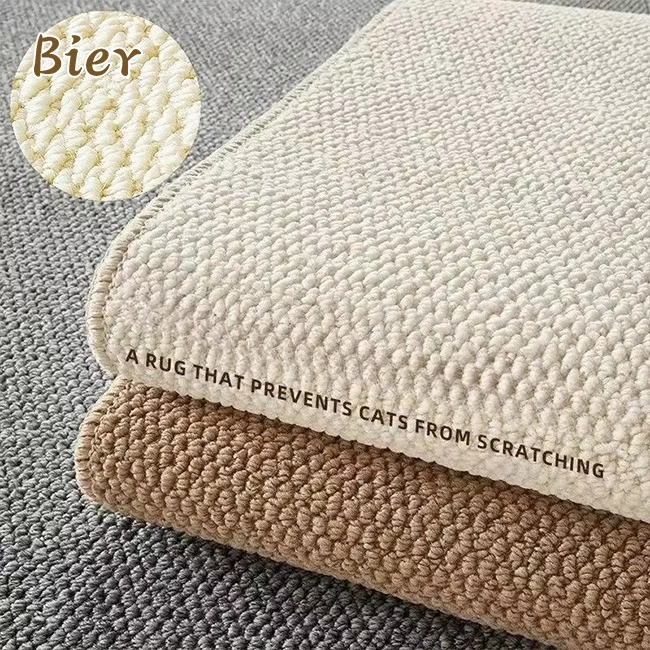
Polyester is used to make most modern Japanese print rugs because it is so good at holding dyes and keeping its shape. Imitation sisal made from polyester fibers has a gram weight of 1000g/㎡, which is very dense and doesn't get crushed in places with a lot of foot traffic. The fiber doesn't stain easily, which saves money on upkeep costs for hotel clients. It can also be washed in a machine at controlled temperatures, which helps healthcare and food service settings meet cleanliness standards. High-density machine stitching makes fibers interlock tightly, which stops shedding, which is a typical problem with wool options that aren't natural.
TPR Washable Base as Backing Material
Compared to standard jute or latex methods, thermoplastic rubber backing is a big improvement. This 1cm thick foundation protects against water damage and keeps subfloors from getting wet, which is very important for store setups on the ground level and in basements. Because the material doesn't slip, it meets safety standards without the need for extra rug pads, which lowers the overall cost of installation. Natural backing materials break down when they get wet, but TPR stays structurally sound even after being washed many times. This means that products made in places that need to be cleaned often will last longer.
Comparative Analysis of Material Performance
Several performance measures show that engineered materials are better for business uses than natural options when comparing manufactured compositions. Polyester fibers are better at blocking UV rays than silk, which turns yellow when exposed to sunshine for a long time. Because they are dimensionally stable, synthetic rugs don't curl at the edges like cotton ones do, so there are no trip risks in office hallways. According to statistics from the hotel industry, synthetic materials need 40% less upkeep work over five years than wool equivalents. This is important for procurement managers who are looking at the total cost of ownership.
How Materials Influence Japanese Print Rug Designs and Patterns
Material choice has a direct effect on how Japanese print rugs inspired designs look and how true they are to the culture, so it's an important thing to think about beyond how well they work.
Interaction Between Fiber Type and Printing Technology
Polyester fibers are great for high-definition heat transfer printing because they have a smooth surface. Natural sisal has a rough texture that makes ink spread out, and patterns blur. Synthetic fake sisal, on the other hand, can hold printed patterns with edges that are as sharp as digital displays. This level of accuracy lets you copy fine details from ukiyo-e woodblock prints that would be lost on rougher natural fibers. Polyester doesn't absorb color well, so pigments stay on the fiber surface instead of entering unevenly, as they do with cotton. This makes colors brighter, which is in line with Japanese style tastes for strong contrast.
Material Compatibility with Traditional Motifs
Some design elements that are usually found in Japanese floor coverings rely on the properties of the material to be true to life. To keep the clean shape of Seigaiha wave patterns, the pile height needs to stay the same. This can be done with synthetic fiber extrusion, but it's hard to do with hand-spun wool. Gradient shading techniques that use modern heat transfer methods can imitate the fine color differences seen in historical indigo dyeing. This is an effect that can't be achieved cost-effectively on natural fibers used for bulk production. Because of this technological synergy, designers can respect cultural history while also meeting modern quality standards.
Edge Finishing and Material Structure
When laser cutting polyester materials, the 0.6 cm edge-locking width makes finished edges that won't break without any other binding treatments. This accuracy supports the minimalist design ideas that are important to Japanese culture. In Japanese aesthetics, space unity is defined by clean lines and smooth changes. Natural fiber alternatives need to have edges sewn on, which makes them look bulkier and increases the risk of tripping. This makes it harder to achieve the low-profile integration that modern builders want for smooth floor changes.
Selection Criteria for Japanese Print Rug Materials in B2B Procurement
Industrial buyers have to compare the technical specs of materials for a Japanese print rug with a number of operating needs to make sure the product meets the needs of the project and follows all the rules.
Durability Standards for High-Traffic Applications
Materials used in businesses need to be able to handle a lot of use without breaking down. Polyester-based products have an abrasion strength of more than 50,000 Martindale cycles, making them good for places like hotel hallways and store entrances where a lot of people walk by quickly, wearing down weaker materials. Imitation sisal is great because it doesn't get scratched easily. This is especially useful in pet-friendly hotels, where claw damage would destroy natural fiber surfaces in months. Tear resistance measurements for synthetic materials are about 60% higher than those for wool, which means they don't need to be replaced as often in event areas where furniture is moved around a lot.
Compliance and Certification Requirements
To make it easier to get goods through customs and meet customer needs, materials must meet international safety and environmental standards. The OEKO-TEX Standard 100 approval proves that polyester fibers and printing inks do not contain any harmful chemicals. This helps address health issues in schools and hospitals. CE marking shows that a product meets European safety standards, and REACH compliance makes sure that EU markets follow chemical substance limits. Suppliers with ISO 9001 quality management certification use structured production controls to make sure that each batch is the same. This is important for multi-location store rollouts that need the same look in all areas.

Supplier Evaluation and Sourcing Transparency
Professionals in charge of buying things should check how well suppliers can customize materials and make sure the supply chain works reliably. When manufacturers offer flexible MOQ for big sales, it's possible to test new products without spending a lot of money. This lowers the risk of losing money when trying out new product categories. Scalability for time-sensitive business projects is shown by production capacity indicators like 1000㎡/day output. Export-standard packing options, such as moisture-proof carton packaging and optimal container loading, keep materials safe during foreign shipping and lower logistics costs per unit by making better use of space.
Care and Maintenance Tips Based on Rug Materials
Using the right upkeep methods for the Japanese print rugs material can make a product last longer and keep its good looks, which has a direct effect on customer happiness and the total cost of ownership.
Cleaning Protocols for Synthetic Fiber Surfaces
If you make imitation sisal out of polyester fibers, it can handle harsher cleaning methods than real sisal, which makes upkeep easier. Unlike wool, which needs special low-suction settings to keep it from pulling, regular cleaning with normal industrial equipment gets rid of surface debris without damaging the fiber structure. The surface is treated to be stain-resistant during production, so light detergents can be used to clean spots. This means that you don't have to hire an expert cleaner like you would for natural silk. For deep cleaning, machines that can wash at 30°C let smaller pieces be washed in-house, which cuts down on downtime compared to sending cotton blankets to be cleaned somewhere else.
TPR Backing Maintenance Considerations
The TPR base can be washed and dried flat, so it keeps its non-slip qualities even after being cleaned several times. This is different from rubber alternatives, which tend to lose their backing over time. Because it is waterproof, the natural jute backing doesn't get wet, which would cause mildew. This means that there are no smell problems in humid coastal areas or basement installations. The backing's ability to be folded up makes it easy to store in a small space when moving venues, which is useful for show managers who change the layout of the floor covering. TPR is more flexible than natural fiber backings, which crack when bent. It can be folded over and over again without damaging the structure.
Lifespan Extension Through Material-Aware Usage
Making strategic placement choices based on the qualities of the material maximizes return on investment. Synthetic rugs work best in high-moisture areas like building entrances because they are waterproof. Natural fiber rugs, on the other hand, should be kept in climate-controlled indoor spaces where they are less likely to be damaged. Moving the rug around every six months makes sure that the wear is spread out evenly across the surface. This is especially important in office hallways where heavy foot traffic causes stress to build up in certain areas. Because they are made to last, polyester-based products keep their good looks for 7–10 years in business settings, while natural wool products only last 3–5 years in the same situations.
Conclusion
The choices of materials used to make Japanese print rugs have changed over time to meet strict business needs while still maintaining their aesthetic appeal. It is better to use synthetic materials like polyester-based fake sisal with TPR backing systems because they last longer, are easier to maintain, and cost less than real fibers. These designed materials make it possible for advanced printing technologies to achieve pattern accuracy and color brightness, which are necessary for keeping the brand consistent across multiple locations. It's helpful for B2B buying workers to know how the properties of materials affect things like compliance certification, cleaning instructions, and long-term ownership costs. This way, they can make sure that the choices they make meet practical needs and green goals in places like hotels, stores, and offices.
FAQ
What is the typical lifespan of polyester-based Japanese print rugs in commercial settings?
Polyester Japanese print rugs that look like sisal rugs can last between 7 and 10 years in high-traffic business settings if they are cared for according to the manufacturer's instructions. The material's natural resistance to fading and breaking means that it will keep its look throughout this time, much longer than natural fiber options, which usually need to be replaced after 3–5 years of the same use.
How do sustainable material options impact bulk order pricing?
When ordered in bulk, recycled polyester fibers cost about 8–12% more per unit than raw materials. However, this price increase goes down as more fibers are ordered. Many providers have tiered pricing systems that make it so that orders over 5,000㎡ get the same price as both recycled and non-recycled options. This means that environmentally friendly options can be used for big business projects without breaking the bank, and companies can still meet their environmental responsibility goals.
What authentication methods verify material integrity in Japanese print rugs?
Ask for independent test results that prove the fiber's composition using FTIR spectroscopy analysis, which finds polyester content and unknown filler materials. Reliable sellers give batch-specific certifications for OEKO-TEX and ISO standards, as well as physical samples that can be touched to check that they meet the stated gram weight and thickness requirements before closing buy deals.
Partner with Bier for Premium Japanese Print Rug Solutions
Bier takes great pride in making high-quality Japanese print rugs that look great and last for years, even in business settings. Our unique heat transfer printing method makes sure that patterns stay bright and don't fade, even when ordered in large quantities. This solves the problem of regularity that procurement managers face. We have been making things for 10 years and follow all CE, OEKO-TEX, ISO 9001, and REACH rules. This means that we can guarantee quality for setups in hotels, stores, and businesses.
As a reliable Japanese print rug provider, we offer full OEM/ODM customization services that let you change the design, size, and material to fit your brand's needs. We can make samples quickly (within 24 to 48 hours) and send them quickly (7 to 15 days). This helps us meet tight project deadlines, and our flexible MOQ structures can be used for both test programs and large-scale deployments. Email our sales team at sales@biercarpet.com to talk about your needs and get competitive prices on samples. This will show that we are committed to honest, risk-free procurement relationships.
References
1. Textile Research Journal, "Synthetic Fiber Performance in Commercial Floor Coverings," 2021.
2. International Standards Organization, "ISO 105-B02: Textiles - Tests for Color Fastness," 2019.
3. Journal of Interior Design, "Material Innovation in Contemporary Asian-Inspired Textiles," 2022.
4. Commercial Flooring Report, "Life Cycle Cost Analysis of Synthetic vs. Natural Fiber Rugs," 2020.
5. OEKO-TEX Association, "Standard 100 Certification Requirements for Textile Products," 2023.
6. Hospitality Design Magazine, "Durability Standards for High-Traffic Floor Coverings," 2021.
Send Inquiry
_1778307532595.webp "Stylish Kitchen Mats")
Related Industry Knowledge
- How Cartoon-Inspired Rugs Became a New Interior Trend in 2026
- Non-Slip Silica Thread Rug for High Traffic Areas
- Washable rugs for easy hosting & clean up
- Are Crystal Velvet Rugs Worth the Investment for Comfort and Style?
- How does the non-slip backing on flannel carpets affect floor breathability
- How do flannel carpets compare to crystal velvet or faux cashmere?
- Wool and Silk Rugs: What the Fiber Blend Changes in Real Interiors
- Soft Flannel Carpet Rug for Bedroom Flooring
- Modern Flannel Carpet for Cozy Home Interiors
- Eco Friendly Easy Care Carpet for Sustainable Spaces