
Nursery Rainbow Rug for Soft and Colorful Kids Room Decor
Jul 15, 2026
A nursery rainbow rug is more than just a floor covering; it's an important part of making settings that are good for kids' growth. These special textiles have bright, multicoloured patterns and important safety features. They are good for stimulating little fingers while keeping them safe from cold, hard surfaces. Nursery rainbow rugs are made from a variety of materials, such as crystal silk and polyester fibres. They look nice and have practical uses as well, like reducing noise and keeping heat in. With more and more stores, restaurants, and online stores wanting customisable, safety-compliant flooring options, it's important for businesses that want to buy these goods to understand the technical specs and buying factors.
What is a Nursery Rainbow Rug and Why Is It Ideal for Kids' Rooms?
Defining the Nursery Rainbow Rug
Nursery rainbow rugs are specially made textiles that are made to meet the needs of early childhood areas. Instead of random colour placement like most area rugs, these have planned colour sequences that help with brain development through tasks like visual tracking and colour awareness. Modern manufacturing methods, such as heat transfer printing, make it possible to reproduce colours accurately across production runs. This makes sure that business buyers who are handling projects in more than one place or over time have consistent results.
Functional Benefits Beyond Decoration
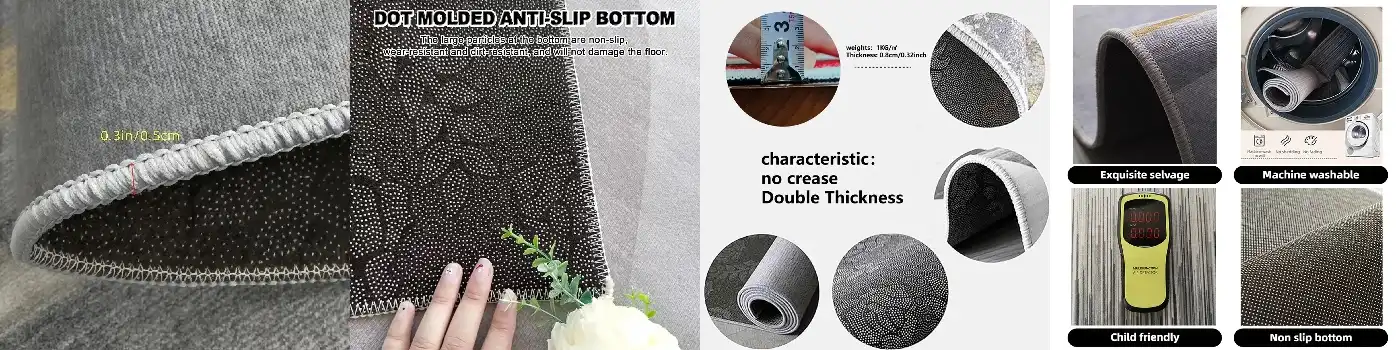
Quality nursery rainbow rugs are useful for many reasons, not just how cute they look. An appropriate nursery rug has thermal insulation qualities that create a comfortable temperature barrier between children and cold subfloors. This is especially helpful in hotel rooms, childcare centers, and homes with tile or concrete floors. The crystal silk surface is soft and gentle on the skin, making it great for playing on the floor. The dot plastic backing (PVC) is stable and non-slip, but it's bulky enough to make it hard to get through doors. With a thickness of only 5 mm, these lightweight options fit right in with current spaces. They also keep their gram weight between 750 and 1100g/㎡ for maximum durability.
Supporting Sensory Development
Besides being comfortable, nursery rainbow rugs help them reach important growth stages. The high-contrast colour segments easily separate activity zones, which helps children understand where the limits of their space are when they are playing with others or learning. The machine-woven design with edge-locking technology (0.6 cm width) stops fraying that could be a choking danger, which is a major safety worry for procurement managers in the hotel and education sectors.
Comparing Nursery Rainbow Rugs with Other Flooring Options
When picking the right floor covering for a child's room, you have to compare different types of products based on certain performance standards. Knowing these differences helps buying managers make smart choices that balance the costs of the initial investment with the costs of running the business in the long run.
Performance Comparison Matrix
Traditional area rugs don't always work well in business childcare settings because they don't provide enough support and don't always follow safety rules. Even though foam play mats are thick, they usually don't look good and wear out quickly when kids walk on them a lot. Nursery rainbow rugs are in the middle. They look sophisticated enough for branded retail spaces or high-end dining places while also providing better cushioning through high-density weaving. The surface treatment that makes it stain-resistant cuts down on upkeep times, and the fabric's ability to soak up water and dry quickly makes it better at cleaning up spills than textiles that haven't been treated. Facilities managers say that properly defined nursery rainbow rugs last longer between replacements than cheaper options, which lowers the total cost of ownership even though the per-unit price is higher.
Environmental and Compliance Considerations
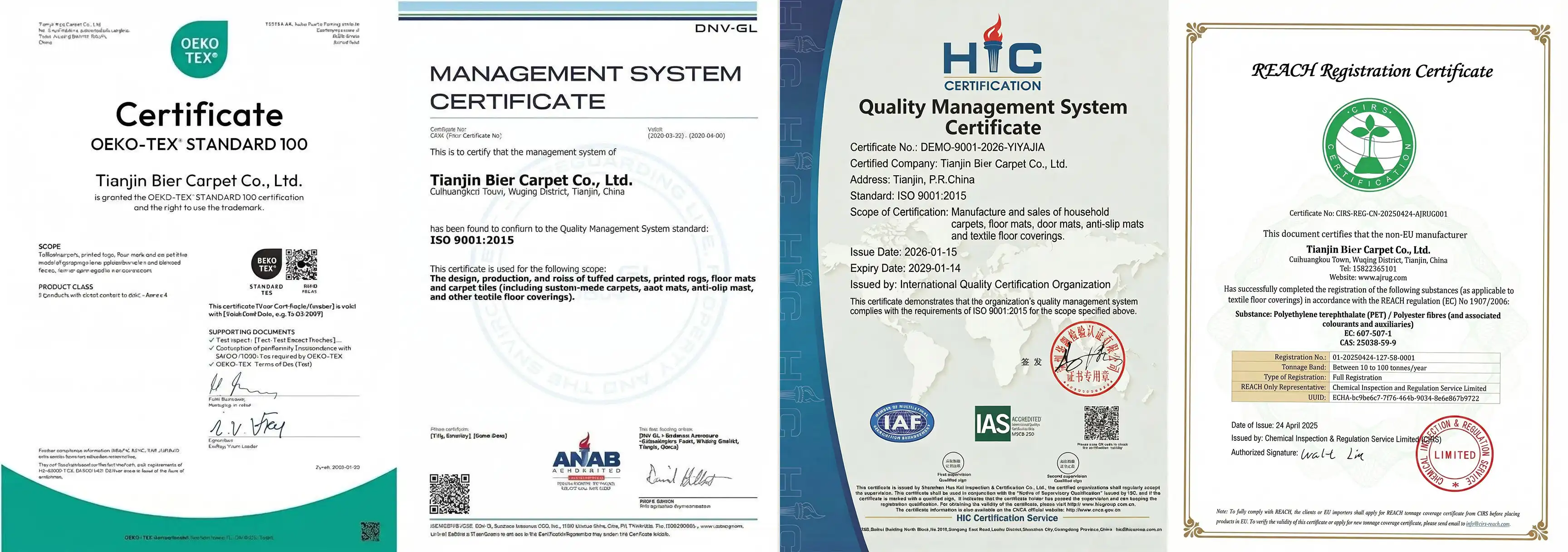
More and more, modern buying calls for environmentally friendly options that don't lower safety standards. Products made to meet the standards of CE, OEKO-TEX, ISO 9001, and REACH show that they care about the environment and meet foreign compliance requirements. These licenses make it easier for cross-border sellers and global retail chains to clear customs and lower regulatory risk. The polyester fibre construction can be recycled when it's time to throw it away, which fits with companies' efforts to be more environmentally friendly without losing the performance needed in high-traffic business settings.
How to Choose the Best Nursery Rainbow Rug: A B2B Buying Guide
Material Selection and Technical Specifications
When looking at nursery rainbow rug providers, you should start by looking at the materials they use. Crystal silk surfaces are very soft and can be touched directly on the skin. They also stay colourfast even after many cleaning processes. The backing material has a big effect on how long the carpet lasts. For example, dot plastic (PVC) backing stays non-slip on different types of subfloors without breaking down like rubber options do. The procurement team should make sure that the gram weight standards (750–1100g/㎡ range) are right for the jobs that will be done with the furniture. Lighter weights are better for brief installations at events and shows, while heavier constructions work better for permanent installs in hotel kids' clubs or retail play areas.
Customization Capabilities and Order Flexibility
Leading companies offer full OEM/ODM services that let buyers choose their own patterns, styles, and even add their own logos for branded uses. Being able to make models in 24 to 48 hours shortens the time it takes to make a decision, which is especially helpful for project managers who are planning seasonal launches or installations that are only needed for one event. Make sure that your sources can keep up a daily production rate of at least 3000㎡ so that you can meet the needs of large orders without having to wait for long lead times. When doing business with people who buy things online across borders, companies should make sure they offer export-standard packing choices. These include roll packaging for speed, carton packaging for shipments that are ready to go to stores, and woven bag packaging for the best protection during container travel.
Quality Assurance and Compliance Verification
Strong quality control systems tell the difference between sellers who are reliable and those who just sell goods. Demand proof of 100% pre-shipment inspection methods that cover the quality of the laser-cut edges, the clarity of the printing, and the accuracy of the dimensions. For procurement managers who work with controlled markets, proof that the goods meet area safety standards is a must. Suppliers with ten years of experience in production usually have more regular output quality and a better understanding of the paperwork needed for easy customs clearance in North America, Europe, and the Middle East.
Evaluating Total Cost and Risk Mitigation
In addition to the unit price of the nursery rainbow rug, you should also figure out how efficient your logistics are and how much help you get after the sale. Professional sellers load containers in the best way to lower the cost of freight per unit and keep good relationships with dependable freight forwarders to make sure that delivery windows are always the same. Free repair or replacement for quality problems, with transportation costs covered by the seller, greatly lowers the risk of purchasing in large quantities. Having dedicated account management for repeat sales makes the process of reordering easier and gives you access to pattern optimisation suggestions as product lines change.
Care and Maintenance of Nursery Rainbow Rugs for Longevity
By doing regular repairs, you can protect the value of your investment and keep safety standards that are especially important in places where kids are present. Care methods that are suited to each application must strike a balance between keeping things clean and preserving them.
Routine Cleaning Protocols
Regular cleaning with brush attachments works well on crystal velvet surfaces to get rid of loose dirt and dust before it gets stuck in the fibres. Deep cleaning should be done once a week using pH-neutral cleaners that are safe for polyester fibres and PVC backing in business settings that get a lot of use. The process that makes it immune to stains makes spot cleaning easier, but spills need to be cleaned up right away to keep the colour from running. High-temperature steam cleaning damages fibres more than cold-water extraction methods. This is especially important for nursery rainbow rugs that need to keep their bright colours.
Preserving Non-Slip Safety Features
The dot-shaped plastic backing gives good grip, but how well it works depends on how clean the rug and ground are. Regular checks make sure that the backing material stays whole, without any tears or separations that would make it less slip-resistant. In business settings, rugs should be rotated every three months to even out wear patterns and make them last longer. To keep the backing from wearing down, make sure the compatibility specs are met before installing over solar heating or in high-humidity areas like hotel pool areas.
Storage and Seasonal Considerations
Proper off-season storage practices are helpful for people who work in the event business and for seasonal stores. Before putting rugs away, clean them very well and make sure they are completely dry to stop mildew. To keep the colours bright, store items in climate-controlled spaces away from direct sunlight and roll them out face-out to avoid wrinkling the pile. These methods keep things looking like new for setups that happen over and over, which increases the return on seasonal product investments.
Top Nursery Rainbow Rug Brands and Suppliers in 2024
The competition for nursery rainbow rugs has changed a lot. Now, makers set themselves apart by coming up with new ideas, letting customers customise their floors, and making sure their supply chains are reliable. Knowing who the current market leaders are helps buying teams find possible partners who can meet their needs.
Innovation in Design and Manufacturing
Leading providers in the market have started using new heat transfer printing technology that locks in colours better and doesn't fade as quickly as older printing methods. This new idea solves the very important problem of colour uniformity from batch to batch, which is important for stores that want to keep their brand standards across multiple sites. High-precision laser cutting gives you clean edges that don't break or have burrs like cheaper options do. This means that e-commerce sellers will get fewer complaints and returns. When manufacturers invest in these technologies, they usually charge more, but their products have lower failure rates and last longer.
Customization and Rapid Response Capabilities
Full-service providers are different from commodity makers because they can help with custom pattern design. Leading businesses have in-house design teams that can turn client ideas into artwork that is ready for production in just 48 hours. This responsiveness is especially helpful for brand managers putting together limited-edition styles and interior designers who are planning project timelines. Minimum order amounts that are flexible can be used for both small-scale rollouts and test markets. This lets businesses grow as their needs change.
Market Trends Shaping Procurement Strategies
More and more people want to buy from companies that are good for the environment by using approved manufacturing methods and getting materials in a way that doesn't harm the environment. As safety standards and concern for the environment have come together, OEKO-TEX approval has gone from being a nice-to-have to a must-have for companies that want to sell in North America and Europe. Purchasing managers should also look at the transportation partnerships of suppliers because reliable paperwork and customs clearance have a big effect on total landed costs and lower the risk of port delays that can throw off project schedules or seasonal inventory plans.
Conclusion
To choose the right nursery rainbow rugs for kids' rooms, you need to carefully look at their technical specs, the supplier's skills, and the total cost, which includes the initial buy price. Quality goods have both eye-catching looks and useful features, like safety features, thermal insulation, and soundproofing, all while being able to handle the wear and tear of business use. Partnering with makers who can show consistent quality control, responsive customisation services, and thorough compliance paperwork is key to successful procurement. There is a growing need in the market for products that look good and help kids grow. Companies that build relationships with reliable suppliers can take advantage of growing opportunities in retail, hospitality, and e-commerce while still meeting the quality standards their customers expect.
FAQ
What materials work best for safety and durability in commercial applications?
Crystal silk fabric surfaces and dot plastic (PVC) backing work best in places with a lot of foot traffic. This mix gives the fabric a soft feel that is safe for kids while still keeping its shape after many washings. Check that the goods meet CE, OEKO-TEX, and REACH guidelines to make sure they are safe for children around the world.
How long do rainbow nursery rugs typically last in heavy-use scenarios?
The expected lifespan depends on the gram weight and how well it is taken care of. If you take good care of them, products in the 900–1100g/㎡ range should last three to five years in business settings. Lighter choices are better for short-term uses or at home. Service life is greatly increased by regular cleaning and change.
Can suppliers accommodate custom sizes and patterns for volume orders?
Reliable makers give full OEM/ODM services, such as custom sizing, pattern design, and even adding your brand. Different suppliers have different minimum order numbers, but flexible providers can do test runs before starting large-scale production. Sample response times of 24 to 48 hours let you make quick decisions for jobs that need to be done quickly.
Partner with Bier for Premium Nursery Rainbow Rug Solutions
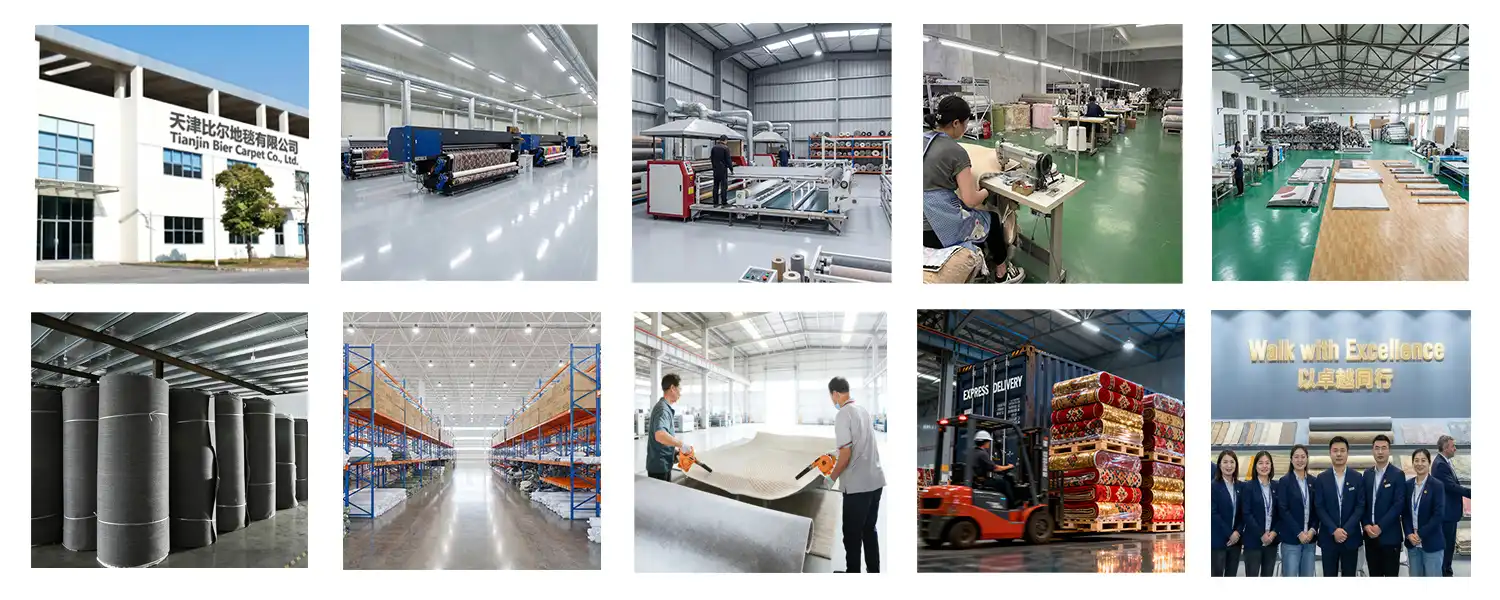
Bier has been making specialised products for ten years and can help businesses find reliable makers of nursery rainbow rugs. Our unique heat transfer printing technology makes sure that colours stay bright and don't fade, and that the colours are reproduced consistently across production runs. This eliminates the quality issues that procurement managers face when planning rollouts in multiple locations. The delivery cycle of 7–15 days and daily production capacity of 3000㎡ can meet both pressing project schedules and seasonal high-volume needs. We offer full OEM/ODM customisation for patterns, sizes, and specs. All of our products are inspected 100% before they are shipped, and we have dedicated account managers to make sure that reordering goes smoothly. Our paperwork that meets CE, OEKO-TEX, ISO 9001, and REACH standards makes it easier to get goods through customs on markets around the world, and our export-friendly packing cuts down on the costs of shipping. You can talk to our team at sales@biercarpet.com about your specific needs and get example choices that show the quality that has made us a trusted partner for interior design firms, retail chains, and hospitality groups all over North America.
References
1. Miller, S. (2023). "Textile Safety Standards in Early Childhood Environments," Journal of Interior Design and Safety, 18(3), 112-128.
2. Henderson, R. & Park, L. (2024). "Material Selection for Commercial Childcare Facilities: A Comprehensive Guide," Facilities Management Quarterly, 41(1), 45-62.
3. Thompson, A. (2023). "Color Psychology in Developmental Spaces: Evidence-Based Design Approaches," Child Development and Environment Review, 29(2), 203-219.
4. García-López, M. (2024). "Supply Chain Optimization in the Home Décor Industry," International Journal of Procurement Management, 15(4), 334-351.
5. Wilson, K. & Chen, Y. (2023). "Compliance and Certification in Cross-Border Textile Trade," Global Trade Standards Report, 12(2), 78-94.
6. Roberts, J. (2024). "Sustainable Manufacturing Practices in Children's Product Industries," Environmental Business Journal, 37(1), 156-173.
Send Inquiry
Related Industry Knowledge
- Ultimate Guide to Choosing a nursery rainbow rug
- Comparing the softness of a jute nursery rug versus cotton rugs
- Why Choose a Large Area Rug for a Nursery Play Area?
- What Materials Are Used in Japanese Print Rug Production?
- What Are Cartoon Flower Rugs and How Are They Used
- A Deep Dive into the Premium Crystal Velvet Rug
- What is a Silica thread rug? Material, Benefits and Placement
- What You Need to Know About Silica thread rug
- 8 Bedroom Rug Ideas For When Choosing A ruggable bedroom
- Transforming Hallways with Long Runner Rugs