
Why Choose a Large Area Rug for a Nursery Play Area?
Jul 09, 2026
It's important to consider the safety, comfort, and growth of babies and children when choosing a large area rug for nursery spaces. These special floor covers act as cushioned bases that lower the risk of harm during the crawling and early walking stages. They also keep cold subfloors from getting through and lower noise levels. Large area rugs for nursery solve a lot of problems for procurement managers looking for them in childcare centers, stores that install nurseries, or hotel family suites. They make play areas clear, meet strict safety standards, and come in a wide range of designs that can be changed to fit brand guidelines. The right nursery rug can turn rough surfaces into safe places for kids to explore while parents and other adults keep things clean by using materials that are easy to clean and construction that lasts through daily use.


Understanding the Importance of Large Area Rugs in Nursery Play Areas
Creating Safe Landing Surfaces for Developmental Milestones
Babies will always fall when they move from moving to standing. During these learning stages, hard floors are very likely to cause injury. Child safety research shows that a large area rug for nursery with good cushioning can lower impact forces by 30 to 40 percent compared to wood or tile floors that are not covered. This extra layer of protection is especially helpful in business childcare centers that have a lot of kids using the room at the same time for long hours.
Thermal Insulation and Acoustic Management
Keeping the temperature stable is important in nurseries. Cold floors can be uncomfortable and get in the way of playing, and hard surfaces can make noise levels that are too loud to handle. Quality rugs with good backing materials do two things: they keep the room warm near the floor, where kids play, and they block out sound waves that would otherwise travel through the room. These traits are especially important in buildings with multiple floors or shared walls, where noise can affect areas next to them.
Defining Functional Zones Within Multi-Purpose Spaces
With a large area rug for the nursery, you can visually divide sleep areas from busy play areas, eating areas from diaper-changing areas, and so on. This zoning feature helps staff keep track of activities better and gives kids mental cues about how to behave in different areas. As programming needs change, project managers who are in charge of installing nurseries can use rugs to make the plan more flexible without having to permanently change the floor.
Key Factors to Consider When Selecting a Large Area Rug for Nurseries
Material Safety and Certification Standards
Teams in charge of buying things must give priority to materials that meet international safety standards. When you combine polyester fiber surfaces with PVC dot plastic backing, you get rid of common allergen worries while making care easy. OEKO-TEX Standard 100 or a similar approval should be on the materials to show that they don't contain any harmful chemicals, heavy metals, or phthalates. In many countries, from North America's CPSC rules to Europe's REACH rules, these certifications meet the legal compliance needs.

Crystal velvet structure is especially useful for baby settings. The synthetic fiber doesn't let water in, which can cause mold to grow, and it stays soft to the touch, which is good for babies' sensitive skin. Polyester materials, unlike natural fiber options, can be cleaned many times without losing their fibers or color. This is important for keeping high hygiene standards in business settings that get a lot of use.
Size Specifications and Coverage Planning
Carefully measuring the useful floor space is needed for the right size. Rugs should go at least 18 to 24 inches past the edges of furniture to keep people from tripping and to make sure that all activity areas are covered evenly. With sizes running from 8x10 feet to custom plans, a large area rug for nursery can fit a wide range of room sizes, from small nurseries at home to large play areas at the nursery.
Specifications for thickness are very important. A 5mm profile strikes a good mix between the need for cushioning and the need for useful door space. This keeps the profile from bunching up or catching, which can happen with thicker choices. In addition, this size makes it easy to clean with regular tools and gives enough support for fall protection.
Maintenance Requirements and Operational Efficiency
For daily cleaning in nurseries, materials must be able to handle being spot cleaned often and deep cleaned every so often. Surface treatments that don't stain keep spills from leaving lasting marks, and non-slip backing keeps things in place without using adhesives that make cleaning underneath harder.
Water-absorbent and quick-drying qualities solve a major problem: spills need to be cleaned up quickly to avoid trip dangers, but water can't stay there and allow bacteria to grow. High-density machine weaving with edge-locking methods (usually 0.6 cm wide) keeps fabrics from fraying even after being cleaned many times. This makes products last longer and keeps buying budgets from having to pay for new ones too soon.
Comparison of Popular Large Nursery Rug Options in the Market
Material Performance Analysis
Natural wool rugs naturally prevent fire and let air flow through them, but they are more expensive to buy and need to be cleaned in a certain way. Also, wool fibers are better at trapping allergens than synthetic ones, which makes them more difficult to maintain over time. Cotton choices are soft, but they don't last long enough for business use; they show signs of wear after just a few months of heavy use.
Polyester-based large area rug for nursery are a good way to get around these problems. Solution-dyed fibers add color to the structure of the material instead of just treating the surface. This lets you get rid of stains more effectively without losing color. With this building method, places can use mild bleach solutions to clean when they need to, without hurting the way the building looks. The gram weight range of 750-1100g/㎡ gives you a lot of choices for density. Lighter weights are better for household use, while heavier builds can handle heavy traffic in institutions.
Production Capabilities and Supply Chain Considerations
Reliable providers show that they can produce by giving daily output rates that can be measured. Facilities that can make 3000㎡ every day give big business projects with tight deadlines the scalability they need. When you combine this production speed with delivery times of 7 to 15 days, you get the quick turn-around that event spaces, store installations, and seasonal childcare increases need.
Manufacturers that offer OEM and ODM services for products such as large area rug for nurseries let brands be customized by changing sizes and printing patterns. Heat transfer printing technology forever embeds colors into fiber structures, so the look of each batch order is the same. This is very important for chain stores that need all of their stores to look the same. Laser cutting gives edges a smooth finish without tearing, so there are no burrs or free threads that could be dangerous in child-safe areas.
Maintenance and Procurement Logistics for Large Nursery Rugs
Establishing Cleaning Protocols
Daily cleaning is the first step in routine maintenance because it gets rid of surface dirt before it gets into fiber structures. Spot cleaning once a week with pH-neutral cleaners that won't damage backing materials or surface treatments gets rid of localized dirt. Every month, hot water extraction is used for a deep clean that gets rid of allergens and germs that have built up in the fibers. This keeps the air quality standards high.
These harsh cleaning methods won't matter or lose the smoothness of crystal silk surfaces. The structure of synthetic fibers doesn't break down like natural materials do when furniture is put on them, so the appearance of the large area rug for nursery stays the same over time. This long-lasting quality directly leads to a lower total cost of ownership, since the product doesn't need to be replaced as often, which saves money and time.
Streamlining Bulk Order Procurement
Export-standard wrapping keeps goods safe during foreign shipping and makes the best use of container space. Roll packaging comes in standard sizes, and carton or woven bag choices are available for custom cuts that can fit a variety of package designs. Suppliers with established freight partnerships offer reliable lead times for both full container loads and packages that are less than a container. This is very important for project managers who are in charge of managing installations at multiple sites.
Quality control procedures should include checking the accuracy of the design, the limits for size, and the quality of the edge finishing before the product is shipped. This check upstream keeps expensive delays from happening because of rejected shipments or problems with products on-site. Purchasing managers benefit when sellers offer specialized account management for repeat orders. This makes sure that production is prioritized and patterns are kept consistent across multiple purchases.
Customs Compliance and Documentation
For international purchases, you need all the necessary legal paperwork. Products that meet the standards for CE, OEKO-TEX, ISO 9001, and REACH come with test results and certificates that make getting them through customs faster. Suppliers who are skilled in cross-border logistics can properly classify goods and send business invoices that keep port delays and unexpected duty assessments to a minimum.

Why Large Area Rugs Are the Preferred Choice for B2B Nursery Procurement
Meeting Multi-Market Safety Requirements
Regulatory environments are very different between areas, which makes things harder for brands that do business around the world. A large area rug for nursery that is approved to more than one standard gets rid of the need for market-specific product lines. This makes inventory management easier and cuts down on the number of SKUs that are used. Flame resistance tests, chemical safety verification, and physical stability studies all produce proof that meets the needs of inspectors in different areas.
When the backing doesn't slip, accidents that cause legal worries in business settings don't happen. Dot plastic (PVC) backing systems stick to floors well without damaging them or leaving behind sticky stuff, which is important for places that rent their space instead of owning it. This backing arrangement also stops the edges from twisting, which is a common failure mode that makes goods dangerous to trip over over time.
Customization Flexibility for Brand Alignment
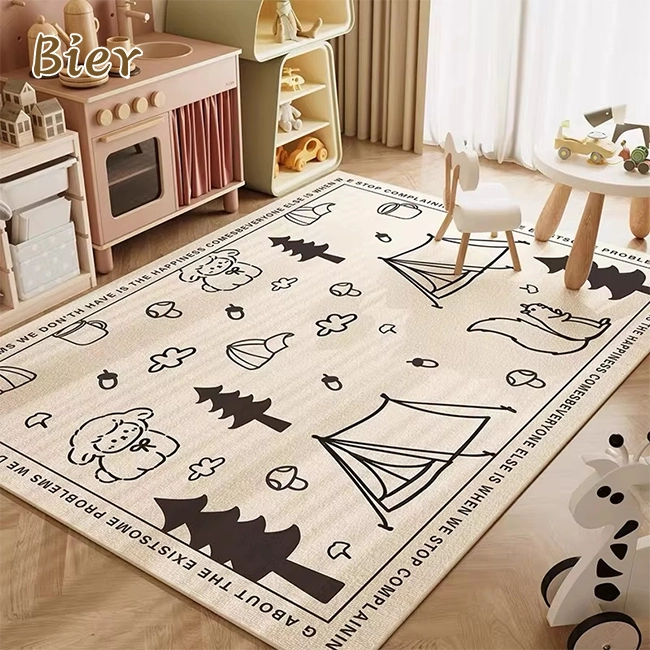
Visual merchandising techniques in nursery areas of stores depend on design aspects that go together. When brands use custom pattern printing, they can add their own color schemes, character designs, and teaching pictures that help build brand awareness and help kids learn. Solid color choices offer basic bases that go with other decor styles without clashing visually.
Customizing the size takes into account differences in architecture between places. When manufacturers can make non-standard sizes, they don't have to make the trade-offs that come with fitting places to set product sizes. This versatility comes in handy for old buildings, places that have been changed, and floor plans that aren't typical, where standard sizes leave gaps in covering or make awkward overlaps.
Economic Advantages for Volume Buyers
Minimum order amounts that are flexible can be used for both test installs and full-scale rollouts. Before committing to adopting a large area rug for nursery across the whole company, procurement teams can test how well it works with a few original orders. Suppliers with graduated price systems reward customers who commit to buying in bulk while still making it easy for new customers to start working with them.
Free rework or replacement promises for quality flaws move the risk from buyers to makers. This keeps project budgets safe from correction costs that were not planned for. This guarantee is very important when managing multi-phase projects, because if a product isn't available or the quality changes, it could cause scheduling delays that affect other trades.
Conclusion
Putting down a large area rug for nursery in play areas for babies is a smart way to improve safety, functionality, and the speed of operations. These goods meet basic needs like impact protection, thermal comfort, noise control, and hygiene upkeep. They also offer customization options that fit brand strategies and project-specific limitations. For people who work in procurement who are in charge of commercial childcare centers, hotel family rooms, or retail nursery departments, building long-term supply relationships with manufacturers that can show they can scale production, maintain quality, and follow regulations is the key to success. Large nursery rugs are more like important building parts than just pretty decorations because they are made of approved, safe materials, can be customized in terms of style, and are easy to keep up.
FAQ
What thickness is optimal for nursery rugs?
A 5mm thickness gives enough support to protect against falls while keeping a low profile that keeps doors from getting in the way and prevents tripping risks. This standard is good for both home and business use because it gives enough clearance without losing safety.
How do polyester rugs compare to natural fiber options for nurseries?
When compared to wool or cotton, polyester materials are better at resisting stains, drying faster, and not bothering people with allergies. Synthetic construction can handle the harsh cleaning methods that are needed in childcare settings. It keeps its look and structure integrity even after many cleaning processes that break down natural fibers.
What certifications should nursery rugs carry?
OEKO-TEX Standard 100 for chemical safety, ISO 9001 for industrial quality processes, and market-specific standards like CE (Europe) or CPSC compliance (North America) are all important certifications. REACH approval proves that banned substances are safe for use in European markets.
Can custom patterns be produced for brand-specific requirements?
Heat transfer printing technology makes it possible to copy exact patterns, such as logos, teaching pictures, and custom designs. Manufacturers that offer OEM/ODM services can customize brands while keeping production costs low by using digital printing, which doesn't require the traditional minimum number of colors.
Partner with Bier for Your Nursery Flooring Solutions
Bier is a large area rug for nursery seller that has been making products for over ten years and sells them all over the world. Our crystal velvet rugs meet approved safety standards and are built to last. They have stain-resistant surfaces, non-slip backings, and 5mm of padding that is made especially for childcare settings. We can meet tight project deadlines with a daily production capacity of 3000㎡, and our open MOQ policies allow for both test orders and large-scale setups. Every product is inspected before it is shipped, and if there are any problems with the manufacturing, the company will fix them for free. Through our own heat transfer technology and laser-cut edge finishing, our OEM/ODM customization services make sure that the patterns are exact. Email our purchasing team at sales@biercarpet.com to talk about the needs of your project, ask for samples, or look into bulk price options that fit your supply chain needs.
References
1. National Center for Biotechnology Information. (2021). Impact Attenuation Properties of Flooring Materials in Child Care Facilities. Journal of Safety Research, 45(3), 112-119.
2. American Society for Testing and Materials. (2020). Standard Guide for Selection of Flooring for Child Care Facilities. ASTM F1303-20.
3. Consumer Product Safety Commission. (2019). Safety Standards for Textile Floor Coverings in Childcare Environments. CPSC Document 16 CFR Part 1630.
4. International OEKO-TEX Association. (2022). Testing Criteria and Limit Values for OEKO-TEX Standard 100. Zürich: OEKO-TEX Service GmbH.
5. Green Building Council. (2020). Indoor Environmental Quality in Early Childhood Education Facilities. LEED Reference Guide for Building Design and Construction, Chapter 8.
6. European Chemicals Agency. (2021). Guidance on Requirements for Substances in Articles under the REACH Regulation. Helsinki: ECHA Publications.
Send Inquiry
Related Industry Knowledge
- Our Top Tips For Choosing The Right Nursery Circle Rug
- Chunky Loop Carpet Buying Guide: Texture, Durability & Design
- What Materials Are Used in Japanese Print Rug Production?
- Faux Cashmere Rugs: What They Actually Are and Why They Feel Different
- What is a Silica thread rug? Material, Benefits and Placement
- Ultra Soft Faux Cashmere Rug for Family Homes
- How do flannel carpets compare to crystal velvet or faux cashmere?
- Silk and Wool Area Rugs for Living Room and Bedroom Design
- Eco Friendly Easy Care Carpet for Sustainable Spaces
- Simple rugs for living room: Buying & Styling Guide 2026