
Textured Loop Carpet Offers Design Flexibility for Commercial Spaces
Sep 11, 2026
When commercial buyers search for flooring that performs under pressure without sacrificing visual appeal, textured loop carpet consistently rises to the top of the shortlist. Engineered with multi-level looped fibers, this construction delivers a structured, dimensional surface that hides wear paths, masks subfloor imperfections, and resists crushing—making it a go-to solution for hotels, corporate offices, retail chains, and exhibition spaces alike. Unlike plush or cut pile alternatives, loop pile carpet sustains its appearance through years of heavy foot traffic, which directly translates to lower lifecycle replacement costs for procurement teams managing large-scale commercial projects.

Understanding Textured Loop Carpet: Characteristics and Benefits
Fiber Composition and Physical Construction
The fiber level is where the function of any loop pile carpet starts. Solution-Dyed Nylon (SDN) 6.0 or 6.6 is used in most commercial-grade products. This type of nylon permanently dyes the fiber while it is being made, so the color stays the same even after UV exposure and harsh cleaning cycles. High-tenacity polypropylene is another popular choice because it doesn't absorb water and doesn't cost a lot. The gauge of the pile itself is between 1/10" and 1/12", which gives this type of construction its stability in terms of size.
In addition to the fibers it comes in, Textured Loop Carpet is known for how well it performs in the business world. Its Texture Appearance Retention Rating (TARR) is better than standard-level loop designs, and its Noise Reduction Coefficient (NRC) effectively reduces noise, which is a real plus in open-plan offices or hotel hallways where noise control is important. The thermal insulation qualities also make underfloor heating work, as long as the tog number stays below the limits set by the manufacturer, which are usually less than 2.5.
Design Versatility for Commercial Environments
With multi-level loop technology, you can see depth that you can't get from a flat, regular surface. Pattern designers use changes in height and density to make geometric patterns, organic textures, and visuals that match a brand's style, all without affecting the pattern's structural integrity. Because of this, the product is perfect for visual merchandising, hotel lobbies, and healthcare hallways where both looks and functionality are important.

How to Choose the Right Textured Loop Carpet for Your Commercial Project?
Matching Construction to Use Case
Before making a final decision, buying managers should make sure that the carpet's construction meets the needs of the room. In business settings with a lot of foot traffic, hallways need to have a high tuft-bind strength that has been checked against ASTM D1335 standards. In hospitality guest rooms, the floors are designed to feel sculpted underfoot and to be strong enough to withstand luggage carts and commercial cleaning cycles. Low-profile, non-slip surfaces that still have the depth of multi-level loop construction to hide dirt are useful in senior living and healthcare facilities.
There is a clear difference between Textured Loop Carpet and Berber carpet or cut-and-loop options. Berber loop offers consistency but little design depth, while cut-and-loop creates sculptural variety at the cost of some longevity. Textured Loop Carpet is the perfect mix between being structured enough for business-grade longevity and visually rich enough to meet brand and design needs.
Supplier Criteria That Protect Procurement Outcomes
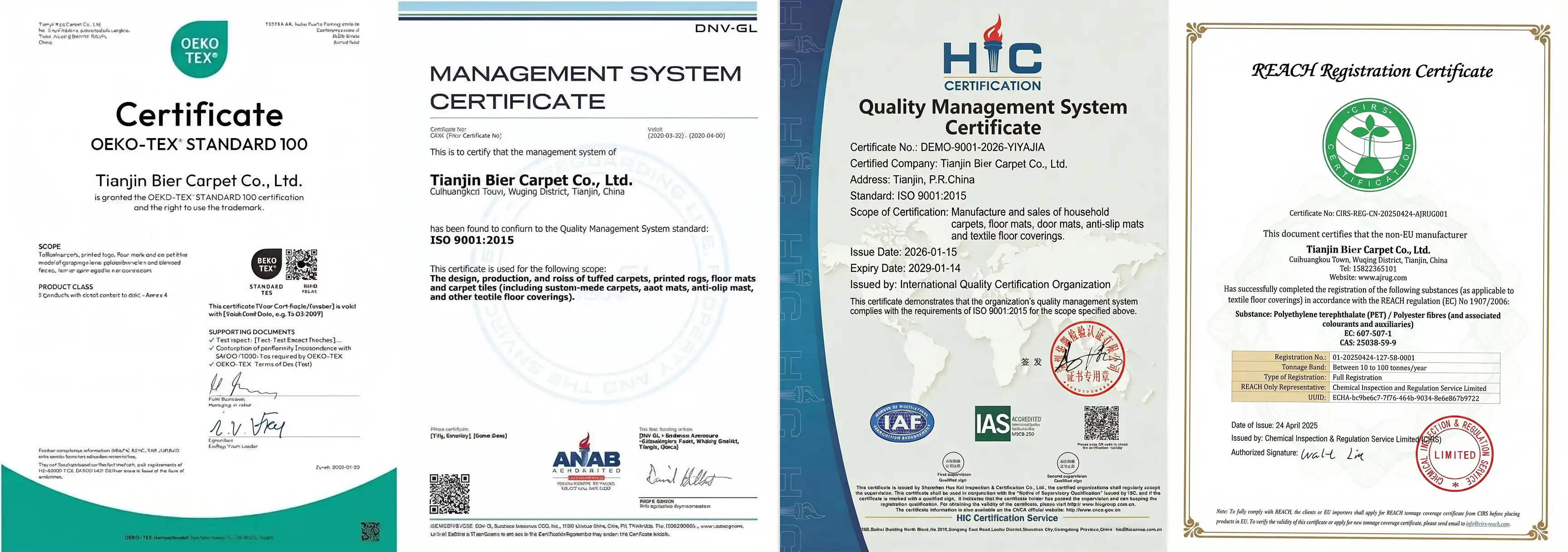
Picking a supplier is just as important as picking a product. Look for companies that have approvals like CE, OEKO-TEX, ISO 9001, and REACH. These show that they follow international safety and environmental standards. Production capacity is also important. A provider that can deliver within a 7–15 day cycle and has clear order scheduling takes away the risk of missing a deadline, which can slow down the progress of a business project. Rapid sample development in 24 to 48 hours shows that a maker is really fast and has a well-established production system.
Installation and Maintenance: Best Practices for Longevity and Performance
For industrial loop pile carpet, placement must be done by a professional. Preparing the subfloor by leveling, priming, and checking for moisture has a direct effect on the security of the dimensions and the integrity of the seams. Skilled installers use the row-cutting method, which hides seams much better than smooth-surface options because it uses the multi-level texture.
As long as the right protocol is set up, ongoing maintenance is easy. Daily cleaning removes dirt from the loop's surface without changing its structure. Every 12 to 18 months, Hot Water Extraction (HWE) pulls out dirt that is buried in the loop's lower levels. If the yarn sprouts, which means that individual loops stick out above the surface, this is standard and not a flaw. Cut it off with sharp shears and move on. The most important thing to avoid is pulling on a stuck loop, which can make the zippering occur. This doesn't happen with products that have certified tuft-bind ratings and seam sealer that is used during installation.

Cost Considerations and Procurement Strategies for Bulk Commercial Purchase
Understanding Price Variables
The type of fiber has the most impact on cost. Solution-Dyed Nylon costs more per unit than polypropylene, but it lasts longer and needs to be replaced less often. This is a trade-off that usually favors SDN in high-traffic areas where total cost of ownership is important. Pattern complexity, pile density, and the amount of OEM customization needed for labeled installs are some of the other factors that affect price. The acoustic and temperature benefits of Textured Loop Carpet often make it worth the extra cost. This is especially true in healthcare and leisure settings where the quality of the air directly affects the experience of those who are inside.
Bulk Procurement Advantages
When you buy in bulk from a reliable maker, you can save more than just money on each unit. Here are the benefits of buying that expert business-to-business buyers always use:
- Export-grade packaging with optimized container loading lowers logistics costs per unit by making the most of container utilization. Pressure- and moisture-resistant packaging protects products from damage during transit.
- Stable FCL and LCL freight cooperation with well-known forwarders guarantees consistent lead times. This is backed up by a professional customs paperwork team that cuts down on port delays and clearance risk.
- Free rework or replacement guarantees for printing, cutting, or dimensional flaws—with the seller covering the transportation costs—mean large orders don't put you at risk financially.
Case Studies and Practical Applications in Commercial Spaces
Textured Loop Carpet has always met both the performance and aesthetic needs of corporate headquarters, hotel chains, and flagship stores. In open-plan offices, the multiple levels successfully hide the wear patterns made by moving caster chairs, which is something that plush rugs can't do after the first year. In hotel settings, the curved surface gives the impression of luxury while being able to handle the harsh cleaning cycles that come with turning over guest rooms.
Custom loop pile carpet with heat transfer-printed designs makes sure that the brand looks the same from one franchise location to the next for retail brands that need to keep the look consistent across multiple locations. When lasers are used for precise cutting, the edges are smooth and clean, with no fraying. This is very important when shaping carpet around branded signs or show pieces. Purchasing managers who have bought from companies that do full-process quality control consistently say that there are fewer batch inconsistencies and less need for rework across rollouts in multiple locations.
Conclusion
Textured Loop Carpet is one of a kind in the world of commercial flooring because it meets the needs of both procurement engineers and brand and design teams when it comes to looks. Its ASTM- and AATCC-approved loop pile construction gives it measurable performance in terms of noise reduction, traffic resistance, and appearance maintenance. If you find the right supplier—one that supports production with the right certifications, quick samples, and supplies that are ready for export—bulk buying stops being a source of practical friction and turns into a safe, low-risk process.
FAQ
How does textured loop carpet compare to cut pile in commercial settings?
In business areas with a lot of foot traffic, loop pile constructions work better than cut pile constructions because the complete loop structure is better at resisting crushing and fiber fatigue. Once cut pile fibers are squished, they rarely rise back to their original height. This is a clear performance gap in hallways and open workspaces.
What maintenance schedule works best for commercial loop pile carpet?
Surface dirt can be removed by cleaning every day. Every 12 to 18 months, Hot Water Extraction gets rid of particles that are trapped in the lower loop levels. Spot cleaning with pH-neutral cleaners works for a short time and doesn't damage the fibers.
Can textured loop carpet be customized with brand patterns or logos?
Yes. With heat transfer printing, bright custom designs are permanently etched into the fiber surface, and laser cutting makes the edges perfectly round. OEM and ODM production can be done with either method, so brand-consistent rollouts in multiple locations are possible.
Is zippering a structural defect?
No, zippering is caused by a loop that got caught and was pulled instead of being cut. Choose products with certified tuft-bind strength and use seam sealer during installation to stop it.
Does textured loop carpet work with underfloor heating systems?
Yes, as long as the tog number stays below 2.5. This lets enough heat escape while keeping the surface comfortable.
Partner with Bier for Reliable Textured Loop Carpet Supply
Bier offers Textured Loop Carpet options for businesses. They have been making these products for 10 years and have CE, OEKO-TEX, ISO 9001, and REACH standards. They also have a 7–15 day production schedule. As a reliable Textured Loop Carpet maker, we offer full OEM/ODM support, 24–48-hour sample development, and supplies that are ready for export. Visit biercarpet.com or email sales@biercarpet.com to get a free sample and personalized price right now.
References
1. Carpet and Rug Institute — Standard for Carpet Installation, CRI 104, 2021.
2. ASTM International — Standard Test Method for Tuft Bind of Pile Yarn Floor Coverings, ASTM D1335, 2020.
3. American Association of Textile Chemists and Colorists — AATCC Test Method 16.3: Colorfastness to Light, AATCC, 2021.
4. Floor Covering News — Commercial Carpet Trends: Performance and Design in High-Traffic Environments, Floor Covering News, 2023.
5. Buildings Magazine — Specifying Commercial Carpet for Long-Term Performance, Buildings Media, 2022.
6. Contract Magazine — Loop Pile Carpet in Hospitality and Healthcare Design, Contract Magazine, 2022.
Send Inquiry
Related Industry Knowledge
- Crystal Velvet Rugs for Elegant Bedrooms and Living Rooms
- Silk Thread Rugs vs Traditional Carpets: Key Differences
- High End Hotel Carpet Combines Durability, Comfort, and Custom Design
- Why Are Petal Rugs Popular for Boutique Hotels and Creative Spaces?
- How Do Manufacturers Ensure Quality in High End Shag Rugs?
- How to Choose a cartoon flower rug for Your Living Room
- Washable rugs for easy hosting & clean up
- Faux Cashmere Rug with Plush Feel and Easy Care
- How Jute Rugs Are The Best Option For Your Home This Summer?
- Carpet Styles Compared: Cut Pile, chunky loop and Berber