
How Can Buyers Use Japanese Print Rugs in Commercial Interiors?
Sep 21, 2026
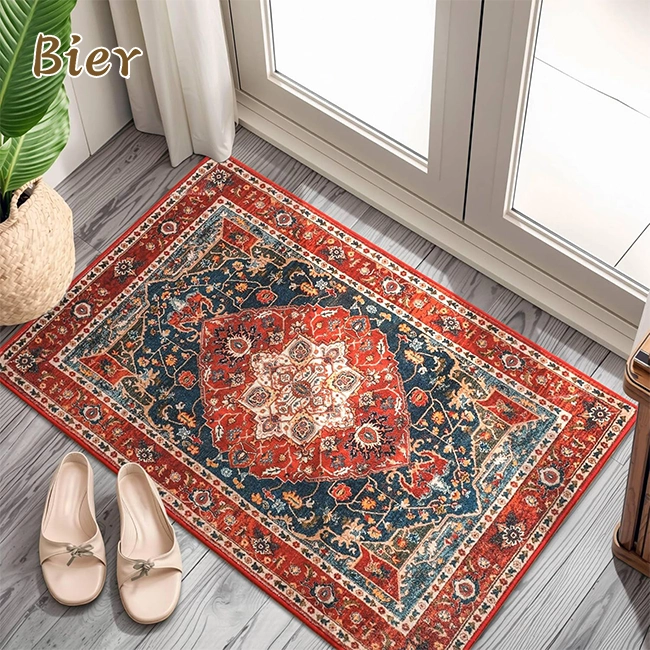
Japanese print rugs bring a distinctive visual identity to commercial spaces while delivering the practical performance that busy environments demand. Whether you manage procurement for a hotel group, oversee sourcing for a retail chain, or coordinate flooring for large-scale commercial projects, a well-chosen Japanese print rug can anchor a space aesthetically and functionally. Built on imitation sisal polyester fiber with a TPR washable base, today's machine-woven options combine cultural depth with measurable durability — making them a sound choice for buyers who need both style and substance at scale.

Understanding Japanese Print Rugs and Their Relevance in Commercial Interiors
Japanese floor coverings, like Seigaiha wave patterns and Wabi-sabi compositions, are based on hundreds of years of design history. When used in business settings, these visual languages show sophistication without the need for expensive decorations. It's appealing for more than just looks.
Why Cultural Design Translates to Commercial Value?
Guest satisfaction and company recall are more likely to be high in places that have a clear visual character. Research on the hospitality industry consistently shows that thoughtful interior design leads to repeat customers. A decorative floor covering with Japanese-style patterns can help create that mood without having to spend a lot of money on renovations.
Durability Aligned With High-Traffic Demands
The polyester fiber construction that looks like sisal used in today's high-performance rugs makes them resistant to wear, tear, and scratching. At 1,000g/m² in weight and 1cm in thickness, these rugs can stand up to heavy foot traffic like in hotel lobbies, store floors, and exhibition halls, where other materials would wear out in months.
Sustainability and Sourcing Alignment
More and more, corporate procurement teams are checking suppliers against environmental standards. Products that follow the rules for OEKO-TEX Standard 100 and REACH give sourcing managers proof they can use for their own ESG reports. When buyers work with ISO 9001-certified makers, they can be sure that the process will be the same for all big orders.

Key Factors to Consider When Selecting Japanese Print Rugs for Commercial Use
Not every stylish rug works as well in a business setting. Before agreeing to a seller or SKU, buyers need to look at a number of technical and logistical factors.
Material and Construction Specifications
The material of the surface of a Japanese print rug directly affects how well it wears. Imitation sisal polyester fiber has a textured, natural look and is better at resisting moisture and keeping its shape than real plant-based materials. The TPR (Thermoplastic Rubber) clean base keeps you from slipping on hard floors, which is an important feature for public areas where liability is an issue.

The most important specs that buyers should check are listed below:
- Surface Material: Imitation Sisal (Polyester Fiber) — scratch-resistant, tear-resistant, and compatible with robot vacuum cleaning
- Backing: TPR Washable Base — provides non-slip friction on tile and hardwood, machine washable at 30°C
- Thickness: 1cm total with 0.6cm edge-locking width for clean, polished borders
- Gram Weight: 1,000g/m² — dense enough for commercial-grade durability without added bulk
All of these requirements lower the cost of maintenance, which is very important for operations managers who have to coordinate cleaning plans across many sites.
Customization Capability for Brand Consistency
Retail chains, hotel brands, and people who put on trade shows all need floor coverings that match their brand's color schemes and design guidelines. OEM/ODM customization, which includes choosing where to put the logo, the colors to use, and non-standard sizes, lets purchasing teams order products that meet specific branding and space needs instead of having to change the layout of rooms to fit what's in stock.

Sizing Flexibility and Production Scale
Standard sizes are rarely used for commercial projects. Suppliers that offer both standard sizes and fully adjustable measurements and can produce 1,000m² per day give project managers the confidence they need to plan for phased installations, or event sets that need to be done quickly.
How to Effectively Integrate Japanese Print Rugs Into Various Commercial Interior Settings?
Japanese-style floor coverings should be placed in different ways depending on the type of setting. To do this right, you need to make sure that the product's features match the needs of the setting and the brand's standards.
Hospitality: Lobbies, Corridors, and Guest Areas
Hotels and resorts can use waterproof, stain-resistant rugs in the reception areas, which are often wet and have a lot of foot traffic. The stain-resistant surface treatment keeps the look with little work every day. The fact that it can be folded up makes it easier to rotate storage for seasonal cleaning, which is helpful for property managers who are in charge of more than one floor.
Retail and Brand Spaces
As a way to help customers find their way around and strengthen the brand of a product group, visual merchandising teams use floor coverings as zoning tools. Japanese-style rugs that have patterns that look the same from batch to batch let chain stores keep the look similar in dozens of sites. A spectrophotometer checks that the colors are the same across production runs and that the Delta E variance stays below 1.0, which is an important standard when brand color accuracy is guaranteed.
Exhibitions and Event Spaces
Buyers at events and trade shows have the shortest delivery windows. A provider that can make samples in 24 to 48 hours and send full orders in 7 to 15 days takes away a big risk in terms of time. The lightweight (1 kg/m²) and folding design of japanese print rug also cuts down on shipping costs and makes it easier for booth builders who are short on time to set up the booth on-site.
Procurement Guide: Where and How to Buy Authentic Japanese Print Rugs for Business Use?
When making these kinds of purchases, unit price is not the only thing that matters. Buyers need to look at the whole relationship with the supplier, including product, logistics, and customer service after the sale.
Evaluating Supplier Credentials
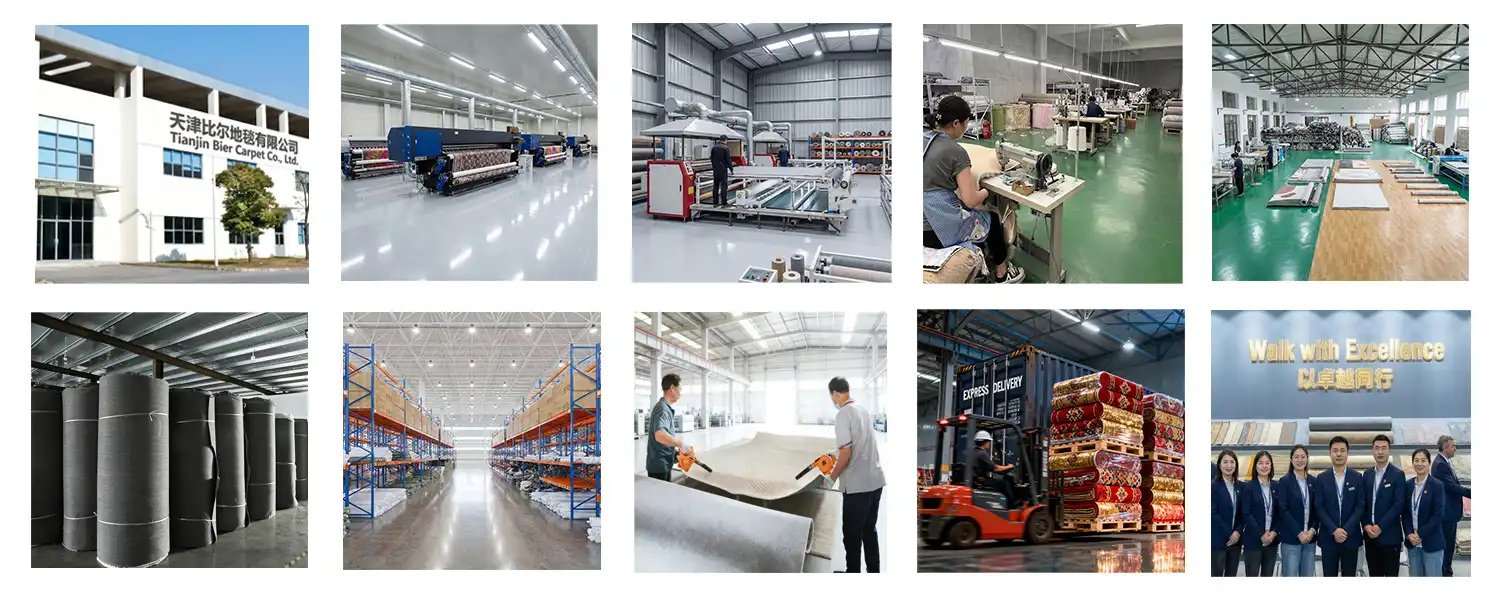
Verified licenses, like CE, OEKO-TEX, ISO 9001, and REACH, show that a company follows well-known quality standards. Large orders are less likely to arrive damaged if the supplier has been making goods for at least 10 years and follows a strict process for inspecting all goods before they are sent.
Logistics and Export Readiness
Export-standard roll packaging, box packaging, and woven bag packaging are all choices for buyers. They can choose the style that best fits their freight route and loads their containers. Port delay risks are lower for manufacturers with established partnerships with freight forwarders and in-house customs paperwork teams. This is a real financial factor for buyers handling just-in-time store replenishment or event installation plans.
Minimum Order and Sampling Process
Buyers can try out new SKUs without having to commit to full container amounts when the MOQ is flexible. The 1:1 sample consistency guarantee cuts down on the time it takes to approve the order and the money that needs to be spent on trials before the bulk order is made. This is because samples must match mass production in design, size, and construction.
Why Japanese Print Rugs Are a Smart Investment for B2B Buyers in Commercial Interiors?
Three things work together to make this type of product a good business choice: a lower total cost of ownership, design flexibility, and a reliable supply chain.
The surface treatment that makes it waterproof, stain-resistant, and washable makes it last longer than regular woven carpets, which soak up water and stain permanently. Because they don't get scratched easily, these rugs can be used in places that allow pets without changing their look. As a result, the less frequent replacements save money per square meter over a three- to five-year lifetime.
From the point of view of the supply chain, a specialized account manager, free rework or replacement for confirmed defects, and proactive pattern improvement suggestions turn the business relationship into a partnership rather than a transaction. This level of service continuity is a real operational asset for buyers who handle recurring orders across multiple properties or seasonal store refreshes.
Conclusion
The need for culturally appropriate, visually uniform, and functionally useful floor coverings that work in a variety of settings is something that Japanese print rugs actively fill. These products are good for hotels, stores, exhibition halls, and business project builders because they are made of polyester that looks like sisal, have a TPR non-slip washable backing, don't stain easily, and can be fully customized through OEM/ODM. If a buyer chooses a maker with verified certifications, clear output capacity, and logistics that are ready for sale, they get more than just a product seller. They get a trusted supply partner.
FAQ
Does the print fade in high-traffic commercial areas?
Heat-set dye technology, on the other hand, bonds color to polyester fibers at the molecular level. Products that meet ISO 105-B02 (Grade 4+) light fastness and ISO 105-X12 rubbing standards keep their patterns even after being used every day and rubbed over 50,000 times by Martindale.
Can the rugs be machine washed?
Yes. The TPR washable base is made to be washed in a machine at 30°C. After washing, lay the item flat to protect the non-slip backing and keep the edges from warping.
Are these rugs safe for children and pet-sensitive environments?
Because it is made of low-pile polyester, it doesn't trap allergens or pet hair. Fibers that have been approved by OEKO-TEX Standard 100 do not contain any sensitizers that are harmful. This means that they can be used in family hotels, pediatric hospitals, and pet-friendly stores.
How quickly can I receive a custom sample?
Samples are made in 24 to 48 hours and are exact copies of the pattern, size, and edge finishing for mass production.
What certifications should I request from the supplier?
Ask for proof that the product meets CE, OEKO-TEX Standard 100, ISO 9001, and REACH standards. Ask for test results that cover formaldehyde/VOC levels and flammability (CPSC FF 1-70 or a similar).
Request a Custom Quote From Bier — Japanese Print Rug Manufacturer
Bier has been making Japanese print rugs for 10 years and has sold them to hotels, retail chains, and business project builders all over the world. We can make changes based on OEM/ODM requests, make samples in 24 to 48 hours, deliver in 7 to 15 days, and follow all CE, OEKO-TEX, ISO 9001, and REACH rules. Before it ships, every order is checked over 100% of the time. Visit biercarpet.com or email our sales team at sales@biercarpet.com to ask for samples and bulk prices.
References
1. Interiors & Sources Magazine, 2022
2. Contract Magazine — Commercial Flooring Trends Report, 2023
3. OEKO-TEX Association — Standard 100 Certification Guidelines, 2023
4. Journal of Interior Design — Hospitality Space Design and Guest Experience, 2021
5. Floor Covering Weekly — B2B Procurement and Commercial Flooring Market Analysis, 2023
6. International Journal of Retail & Distribution Management — Visual Merchandising and Flooring Consistency in Retail Chains, 2022
Send Inquiry
Related Industry Knowledge
- How Does Textured Loop Carpet Compare With Plush Carpet?
- How Heimilisteppum Style Rugs Create Cozy Modern Living Rooms
- Custom Dimensional Rugs Improve Interior Design Value for Hospitality Projects
- What Makes Easy Care Carpet a Smart Choice for Hotel Flooring?
- High End Round Rugs Add Elegant Focal Points to Luxury Interiors
- Why Choose a Large Area Rug for a Nursery Play Area?
- Crystal Premium Crystal Velvet Rug Manufacturer & Supplier in China
- Dimensional rugs: Materials, Dimensions & Styling Principles Explained
- How Jute Rugs Are The Best Option For Your Home This Summer?
- How to Maintain Easy Care Carpet Without Professional Help