
How Do Buyers Evaluate Persian Carpet Quality and Manufacturing Standards?
Aug 25, 2026
When evaluating Persian carpet quality and manufacturing standards, buyers prioritize several critical factors that directly impact product performance and commercial viability. A high quality persian carpet must demonstrate consistent construction, visual appeal, and durability across production batches. Procurement managers examine material composition, manufacturing precision, supplier certifications, and delivery reliability to ensure products meet market expectations. The evaluation process balances aesthetic authenticity with practical considerations like maintenance requirements, cost efficiency, and scalability for bulk orders. Understanding these criteria helps buyers make informed decisions that align with their specific commercial objectives and end-user expectations.
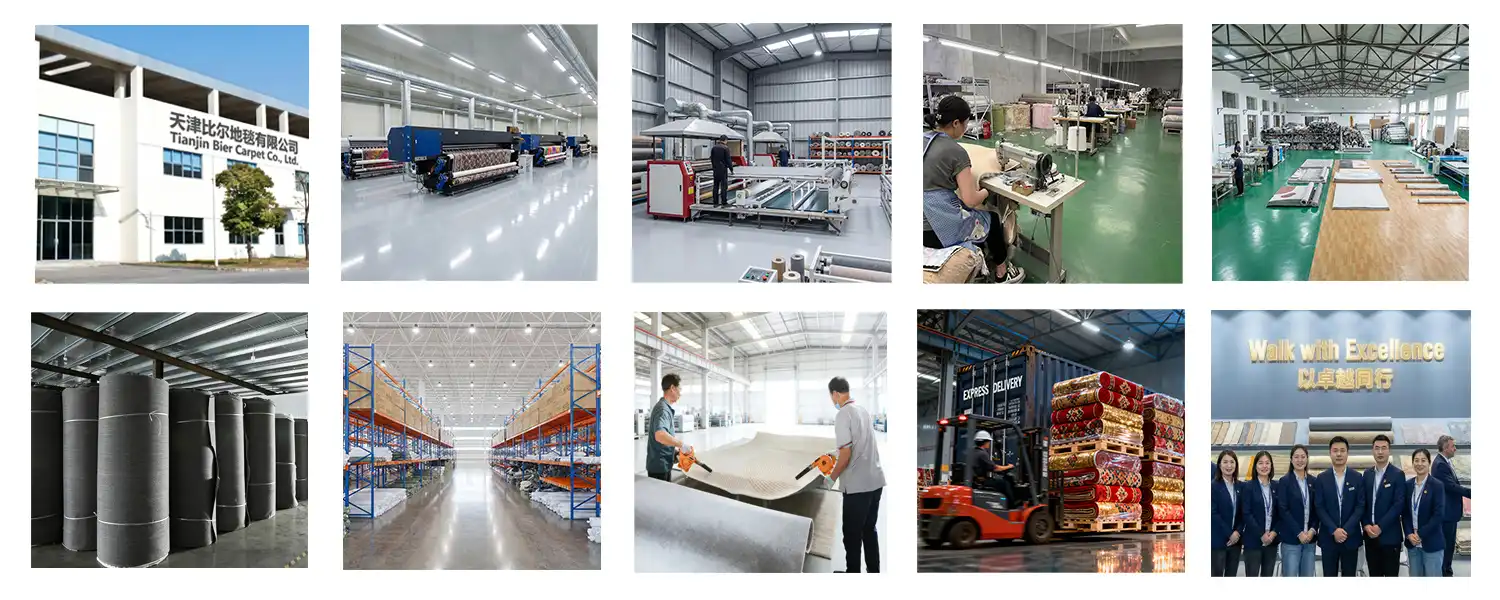
Understanding the Core Quality Dimensions of High Quality Persian Carpets
Figuring out the most important aspects of high quality persian carpets.
Material Composition and Fiber Selection
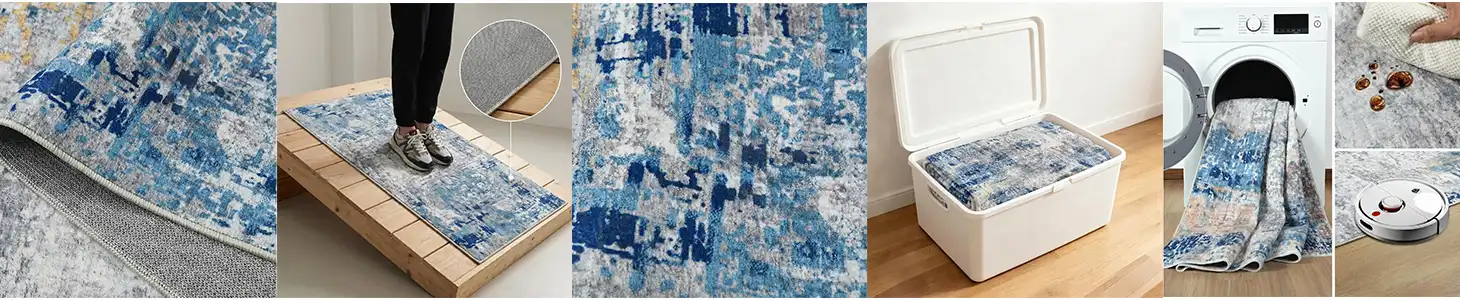
The quality of the material is what carpets are judged on. Traditional Persian designs often use wool, silk, or cotton, which are all valued for how long they last and how beautiful they are. Modern production, on the other hand, has created high-performance options that look just as good but are more useful. Fine fake cashmere surfaces, especially those made of polyester fibers that are 350g/㎡ dense, have the soft, luxurious feel of real materials but are harder to stain and require less upkeep. It doesn't matter what the bottom is made of; washable TPR thermoplastic rubber bases work great on a wide range of flooring types and don't retain moisture like other backings do. Buyers should make sure that the material's specs match the job it's going to be used for—commercial areas need different performance specs than private ones.
Construction Quality and Edge Finishing
Product life and customer happiness are directly linked to how precisely a product is made. Edge-locking methods used in machine-woven rugs give them structural stability that keeps them from fraying even when they get a lot of foot traffic. An edge-locking width of 0.6 cm is the standard for longevity in the industry. It keeps the threads from coming loose after six months, which usually happens with poorly built goods. High-density weaving makes a smooth, compact surface that stays the same shape, which is important for projects that need multiple units to look like they belong together. Pile height specs are very important. 3mm short-pile designs make cleaning easier and keep debris from building up compared to deeper pile designs. A total thickness of 5mm makes sure that carpets sit flat under doorways without causing trip hazards. This is an important but often-overlooked feature that affects how easily carpets can be installed in a wide range of architectural settings.
Pattern Consistency and Authenticity of the Look
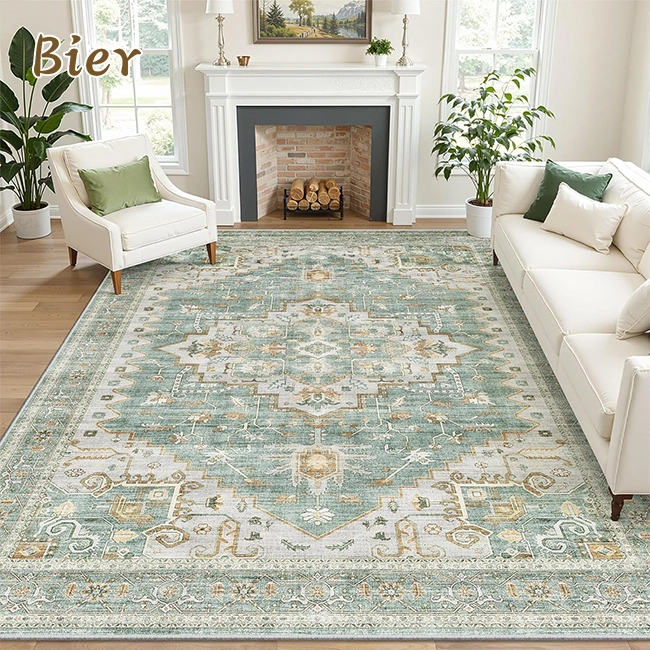
The quality of pattern reproduction is one of the key factors that separates premium flooring products from standard options. With advanced heat transfer printing technology, a high quality persian carpet can achieve detailed Persian-inspired designs with vibrant colors that remain consistent across multiple production batches. During batch evaluations, procurement teams should carefully review pattern alignment at seams, color consistency between different production dates, and the overall accuracy of design reproduction. A professional high quality persian carpet supplier uses specialized printing methods that integrate colors deeply into fiber structures, providing stronger fade resistance compared with traditional surface-applied dyes and helping maintain a premium appearance over time. For hospitality, retail, and commercial projects, purchasing managers need to confirm that a high quality persian carpet manufacturer has the ability to reproduce specific design elements consistently, because brand identity often depends on maintaining the same visual standards across multiple locations. A reliable high quality persian carpet provider can offer flexible customization options, including logo integration, customized colors, and unique patterns, allowing carpets to become valuable brand assets rather than simple floor coverings. By choosing an experienced high quality persian carpet partner, businesses can achieve better design consistency, stronger visual impact, and long-term value. Premium high quality persian carpet solutions combine artistic details, advanced manufacturing technology, and reliable customization capabilities to meet the needs of luxury hotels, commercial spaces, and upscale residential projects.
Key Criteria for Evaluating Persian Carpet Manufacturing Standards
Production Capacity and Quality Control Systems
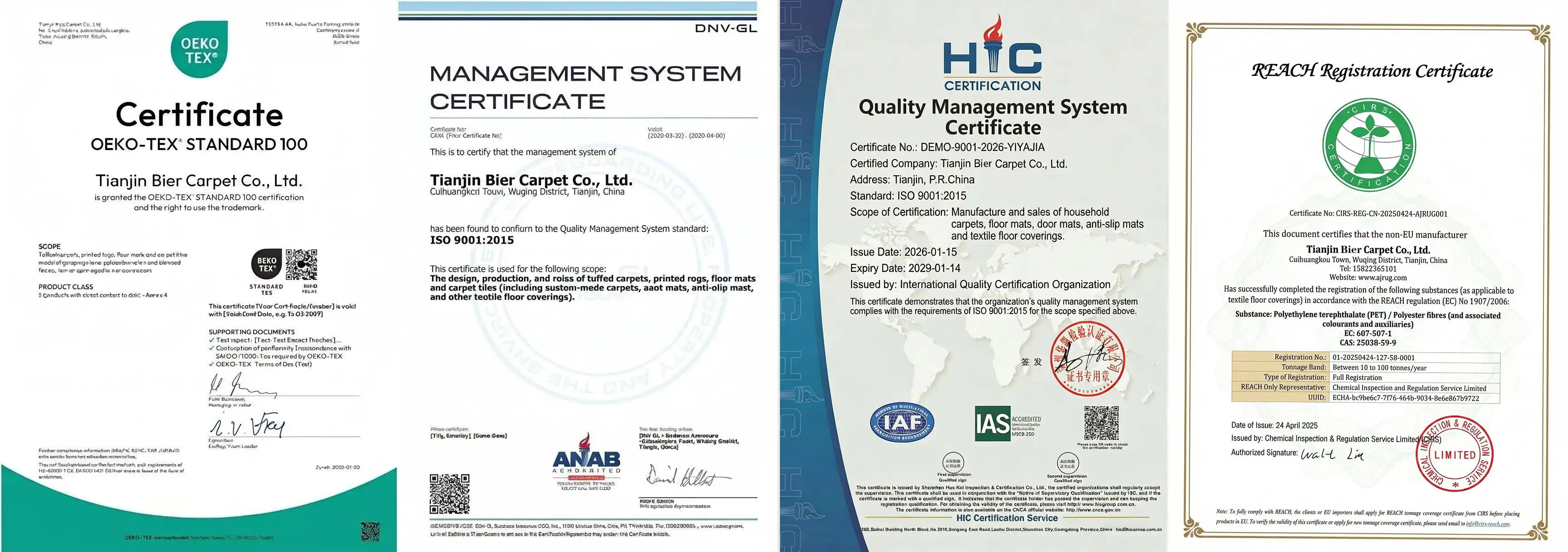
Scale of production is directly related to how reliably orders are filled. Facilities that make 2000 square meters of goods every day show that they have the tools to handle large business orders without lowering quality standards. To make sure that failure rates stay below acceptable levels, full-process quality control systems keep an eye on goods from the time they are inspected for raw materials to the time they are packaged. Buyers should ask about specific checking procedures; reputable makers test for colorfastness, make sure the dimensions are correct, and check the integrity of the edges before allowing shipping. Wet rub tests make sure that dyes won't run when cleaned, which is especially important for light-colored rugs in places with a lot of foot traffic. Suppliers who have ISO 9001 certification show that they are committed to structured quality management. However, certification doesn't mean that a product will work in a certain situation.
Modern Manufacturing Versus Traditional Methods
Knowing how something is made helps buyers set realistic goals for how much customization they can get and how long the lead time will be. Authentic artisan pieces with unique character variations are made by traditional hand-knotting. These pieces are good for high-end installations where individuality justifies higher prices and longer production times. Modern mechanized methods provide consistent quality on a large scale, making them perfect for projects that need hundreds of square meters of the same specs. Tight tolerances can't be reached by handcrafting, but machine weaving can. This makes dimensional stability very important for setups with complicated plan needs. The argument isn't about which method is better; it's about which method is best for which job. For example, hotels with 200 rooms need production efficiency that artisan workshops can't provide, but boutique stores may value handmade exclusivity even if it means higher unit costs and longer wait times.
Compliance Certifications and Market Access
Accessing global markets requires compliance with regional safety, environmental, and textile regulations. A certified high quality persian carpet supplier ensures that products meet international requirements and provides the necessary documentation for successful cross-border trade. CE approval demonstrates that a high quality persian carpet meets European health, safety, and environmental protection standards, which is essential for buyers targeting the EU market. OEKO-TEX certification confirms that textile materials used in a high quality persian carpet are free from harmful substances, helping companies meet increasing social responsibility expectations and consumer safety concerns. REACH compliance further proves that the chemicals used during the manufacturing process follow European Union regulations, reducing the risk of customs rejection and unexpected shipment delays. Procurement teams purchasing high quality persian carpet for international projects should require suppliers to provide complete documentation packages, including test reports, compliance certificates, and material safety data sheets. A professional high quality persian carpet manufacturer spreads certification costs across larger production volumes, allowing certified products to offer better long-term value compared with lower-cost alternatives that may face compliance issues. Choosing a reliable high quality persian carpet partner with strong certification capabilities helps businesses reduce market entry risks, improve supply chain stability, and achieve successful global distribution.
How Buyers Can Systematically Evaluate and Compare Persian Carpets
Defining Application-Specific Requirements
Before choosing a carpet, you should know where it will be used and what kind of performance you expect it to give. Durability and ease of upkeep are more important than decorative detail in commercial hospitality settings. A 3mm pile height lets cleaning staff vacuum quickly while still meeting standards for look. TPR sides with a high coefficient of friction are important for safety in retail settings because they don't slip and hurt customers. For residential uses, a wider range of aesthetic preferences can be met, and machine-washable materials that last longer between replacements are still a plus. When OEM sellers sell to furniture stores, they need to be able to customize a wide range of styles without having to meet minimum order amounts that tie up working capital. Making thorough requirement specs that include things like traffic levels, cleaning schedules, and aesthetic standards lets you compare suppliers objectively, not just based on price.

Evaluating Supplier Technical Capabilities
If a supplier can reliably meet custom requirements, it depends on how well they can do technical production. Laser cutting technology lets you precisely trim edges and make custom shapes, which is useful for building projects that need to be of odd sizes. Heat transfer printing depth affects the level of pattern complexity that can be used. Suppliers that offer 24- to 48-hour sample turnaround show responsive development processes that shorten the time it takes to get seasonal collections on the market. Instead of looking at standard product lines, buyers should ask for samples that match their exact needs. This is because sample quality tells you what the batch production will be like. Shipping volumes are cut down a lot when packaging can be folded up. This has a direct effect on the logistics costs of international procurement. Optimizing container loading shows organizational skill that leads to reliable delivery schedules, which are very important for project-based buyers who have to coordinate timelines from multiple vendors.
Comparative Cost-Benefit Analysis
When figuring out a price, you need to look at the total cost of ownership, not just the unit purchase price. Products that can be washed in a machine save money on long-term upkeep costs compared to products that need to be cleaned by a professional. At 1000g/㎡, lightweight builds lower shipping costs without lowering durability, which is especially important for buying things across the country. If a supplier offers free repair or replacement for quality problems, it's like insurance against batch failures that could cause projects to be late. When buyers compare Turkish, Chinese, and Persian-style carpets, they should think about how long it takes to make the carpets and how much it costs to keep the carpets in stock. Just-in-time purchasing methods with 7–15-day shipping cycles can lower warehouse costs. Flexible minimum order numbers let you see how the market reacts to a product before committing to full container loads. This lowers the financial risk of launching a new product.
Navigating the Purchase: Sourcing, Logistics, and Supplier Trust
Establishing Reliable Sourcing Partnerships
Beyond evaluating the product itself, selecting a supplier also requires assessing whether the long-term partnership will be reliable and beneficial. Companies with more than 10 years of industry experience have demonstrated the ability to remain stable through economic changes, reducing the risk of business interruptions during ongoing projects involving high quality persian carpet. Dedicated account management ensures that important project details, design requirements, and product specifications remain consistent across multiple orders, eliminating the need to repeatedly communicate the same information. An experienced high quality persian carpet supplier can provide valuable recommendations for pattern improvements, material adjustments, and production optimization, becoming a development partner rather than simply a transactional seller. This support is especially valuable for buyers who do not have specialized textile expertise. Clear production schedules, order tracking systems, and responsive communication help prevent misunderstandings during international procurement of high quality persian carpet. Regular supplier audits also verify that manufacturing conditions meet ethical labor standards and responsible production requirements, protecting brand reputation from supply chain risks that increasingly influence customer decisions. Choosing a trusted high quality persian carpet manufacturer with strong management capabilities, transparent processes, and professional support helps businesses build stable supply relationships and achieve long-term success. A reliable high quality persian carpet partner provides not only premium products but also continuous cooperation, quality assurance, and operational confidence throughout the entire procurement process.
Logistics and Export Documentation
Buying carpets from other countries takes a lot of complex logistics planning, which is something that suppliers who aren't used to it often get wrong. Export-grade packaging made of pressure-resistant and moisture-proof materials keeps goods from getting damaged in transit, which makes them useless when they get there. Shipping costs per unit are directly affected by how efficiently containers are loaded. Skilled sellers figure out the best designs that make the most of the space inside the container while also avoiding damage from compression. The accuracy of customs paperwork determines whether shipments go through ports without any problems or have to pay expensive fees and wait for inspections. Maintaining ties with dependable freight forwarders by suppliers ensures consistent shipping in a way that internal buying teams can't do on their own. Payment security structures that balance the needs of suppliers for cash flow with the needs of buyers to protect themselves from risk require discussion skills that are best learned early in the relationship rather than when there is a pressing need to place an order.
Value-Added Services and Long-Term Support
Strategic suppliers are different from commodity vendors because they offer services other than making products. Maintenance tips that make carpets last longer protect buyers' investments and make sure customers are happy, which leads to return business. Compliance support that helps you deal with changes in regional regulations helps you avoid mistakes that could cost a lot to fix when you enter a new market. When suppliers pay for the shipping costs of returning faulty goods, it shows that they trust quality control systems and makes the process of resolving complaints easier. Pattern trend reports sent out on a regular basis help buyers keep up with changes in design tastes. This is useful information for stores and designers who don't have their own market research teams. These value-added services make it more expensive to switch suppliers, which keeps relationships stable. This is good for both parties because it lowers transaction costs and makes planning easier.
Case Studies and Best Practices: Real Buyer Experiences and Success Stories
Hospitality Sector Implementation
A mid-sized hotel company had to keep replacing carpets in high-traffic lobby areas because they were wearing out and getting stained too quickly. Traditional wool carpets cost a lot, but they needed to be cleaned by a professional every three months and showed wear patterns after 18 months. When I switched to machine-woven imitation cashmere carpets with TPR backing, I only had to vacuum them once a month, and I didn't have to replace them for another three years. Because the carpets dried quickly, they could be cleaned overnight without disturbing the guests, which directly increased operational efficiency. Because they could be customized, carpet patterns could include hotel logos, turning useful things into marketing tools. This example shows how modern manufacturing technologies can work better than traditional materials in business settings that value durability and ease of upkeep over true craftsmanship.
Retail Chain Standardization
A furniture store with 47 locations had a hard time keeping its brand's look consistent across all of its shops because its previous carpet source sent different batches. Putting in place strict procurement rules, such as requiring pre-production samples, dimensional tolerance specifications, and colorfastness testing, got rid of 90% of variance problems. By choosing a supplier whose daily production capacity was higher than the order requirements, batch consistency was ensured because the whole orders were finished in a single production run instead of being spread out over several dates. Setting up audit schedules every three months made sure that quality standards were still being met, catching small changes in the process before they affected the products that were delivered. The store's experience shows how important it is to have proactive quality control tools instead of dealing with defects after the shipment arrives.
Conclusion
When evaluating Persian carpet quality, buyers need to balance visual authenticity with practical performance in real-world applications. The material composition, manufacturing precision, supplier certifications, and production expertise all influence the overall performance of a high quality persian carpet in different purchasing environments. Modern manufacturing technologies allow a high quality persian carpet to achieve detailed Persian-inspired designs while often providing better consistency, durability, and scalability than traditional production methods, especially for commercial projects that require large quantities. A reliable high quality persian carpet supplier can provide stable quality control, flexible customization, dependable transportation, and professional support services that go beyond simple product delivery. Building long-term partnerships with experienced high quality persian carpet manufacturers helps procurement teams reduce risks, improve project efficiency, and achieve better value throughout the product lifecycle. By choosing a trusted high quality persian carpet provider, businesses can obtain products that combine elegant design, reliable performance, and consistent supply capabilities for hospitality, retail, and premium residential applications. A professional high quality persian carpet partner delivers not only attractive flooring solutions but also comprehensive procurement support that helps customers meet long-term operational goals.
FAQ
How can I verify carpet quality before placing bulk orders?
Ask for samples that are exactly what you want, including the materials, pile height, and pattern details. You can test the colorfastness of the carpet on your own by rubbing a damp white cloth over the surface. Any color transfer shows that there is a risk of dye bleeding. To make sure that tolerances are met, measure the measurements exactly. Look closely at the edge construction to make sure that the weaving is locked and there are no broken threads. Reliable sellers send samples within 48 hours and cover the costs of samples for qualified buyers. This shows that they believe in the quality of their products and want to earn customers through ability, not just low prices.
What delivery timelines should buyers expect for custom orders?
Standard production processes for well-known suppliers with enough capacity to make the goods last between 7 and 15 days. Customizations that are very complicated and need new patterns may make the wait time 3–4 weeks. Sample production usually ends between 24 and 48 hours. Buyers should make sure that the lead times they are given include both the time it takes to make the product and the time it takes to ship it to the destination port. When compared to vague timeline estimates, suppliers who offer clear production schedules with updates on key milestones offer better visibility. There are options for rush orders, but they usually come with higher prices that buyers should negotiate when they first talk about the contract, not when they are in a hurry.
Partner with Bier for Your Persian Carpet Supply Needs
Bier has been making high quality persian carpets for over 10 years, focusing on high-end designs with a Persian flair that meet strict international quality standards. As a reliable high quality persian carpet manufacturer, we make sure that each order has the same level of quality by using our own heat transfer printing and laser cutting technologies. Our daily production capacity of 2000 square meters meets the needs of bulk buyers, and we can deliver within 7 to 15 days. We also offer flexible customization to meet the needs of unique branding, and we don't have any unreasonable minimum orders. Full approvals in CE, OEKO-TEX, ISO 9001, and REACH make it easier for you to sell your products in markets around the world. Email our team at sales@biercarpet.com to talk about your unique needs and get free samples that show how committed we are to making the best products possible.
References
1. Textile Institute. (2021). Quality Standards in Modern Carpet Manufacturing: Materials, Processes, and Testing Protocols. Manchester: Textile Institute Publishing.
2. International Facilities Management Association. (2020). Commercial Flooring Procurement Guide: Evaluating Durability, Maintenance, and Total Cost of Ownership. Houston: IFMA Research Reports.
3. American Society for Testing and Materials. (2022). ASTM D5252: Standard Practice for the Operation of the Tetrapod Walker Apparatus for Testing Carpet and Other Textile Floor Coverings. West Conshohocken: ASTM International.
4. European Committee for Standardization. (2019). EN 1307: Textile Floor Coverings—Classification of Pile Carpets. Brussels: CEN Standards Publications.
5. World Floor Covering Association. (2023). Global Carpet Market Analysis: Trends in Manufacturing Technology and Buyer Preferences. Dalton: WFCA Industry Reports.
6. Journal of Interior Design. (2022). "Evaluating Synthetic Alternatives to Natural Fibers in Commercial Textile Applications." Journal of Interior Design, 47(3), 112-128.
Send Inquiry

Related Industry Knowledge
- Custom Long Corridor Carpet Enhances Hotel Hallways with Better Acoustics
- What Makes Dimensional Rugs Ideal for High-Traffic Hospitality Areas?
- What Features Define High End Outdoor Rugs for Commercial Projects?
- What Should Hotels Consider When Purchasing High End Carpet?
- How Do You Style A nursery rainbow rug?
- Everything You Need to Know About simple rugs for living room
- Why Consider Buying a Jute-proof rug? 9 Reasons Why!
- How do flannel carpets compare to crystal velvet or faux cashmere?
- 8 Bedroom Rug Ideas For When Choosing A ruggable bedroom
- Eco Friendly Easy Care Carpet for Sustainable Spaces