
How Recycled Material Throw Rugs Support Sustainable Interior Design
Sep 02, 2026
Recycled material throw rugs represent a powerful solution for sustainable interior design, particularly through eco friendly washable rugs made from renewable and reclaimed fibers. These floor coverings reduce landfill waste, minimize carbon emissions during production, and support circular economy principles. Purchasing managers in hospitality, retail, and commercial design now prioritize these products to meet corporate sustainability mandates while ensuring visual consistency and durability. Recycled content rugs made from materials like PET plastics, reclaimed cotton, and thermoplastic rubber deliver measurable environmental benefits without compromising performance, making them ideal for businesses seeking responsible sourcing strategies that align with green building certifications and customer expectations.

Understanding Eco Friendly Washable Rugs: Materials and Sustainability
Modern sustainable floor coverings are made from carefully chosen materials that are both good for the environment and work well enough for commercial use. The move toward disposable and reusable parts meets the needs of more and more purchasing managers who want to show that their products are environmentally friendly.
Core Materials Driving Environmental Performance
Several important types of materials are now used in sustainable rug making. Recycling polyethylene terephthalate (R-PET) from used plastic bottles cuts down on our reliance on oil and keeps trash out of the seas and dumps. Reusing cotton fibers from textile industry waste keeps useful materials from going to waste. At the end of their lives, natural jute and wool blends break down naturally. Modern thermoplastic rubber (TPR) bases don't slip and don't have the harmful plasticizers that are in traditional PVC backings. When compared to virgin synthetic fibers, these material choices cut water use during production by up to 40%, which is an important factor for supply chain managers looking at lifecycle impacts.
Certifications That Matter for B2B Procurement
Third-party proof is needed to make sure that sustainable textiles are of good quality. The Global Recycled Standard (GRS) verifies the amount of recycled content and keeps track of materials as they move through the supply chain. OEKO-TEX Standard 100 makes sure that products don't contain more than 300 harmful substances. This protects people who use the products in sensitive places like childcare centers and hospitals. ISO 9001 approval shows that manufacturing methods are consistent, which cuts down on batch-to-batch differences that cause problems for big business projects. Following REACH rules makes sure that chemicals sold in Europe are safe. These certifications take the guesswork out of it for purchasing managers who have to reduce risk and make sure they follow the rules in multiple places.

Durability Requirements for Commercial Applications
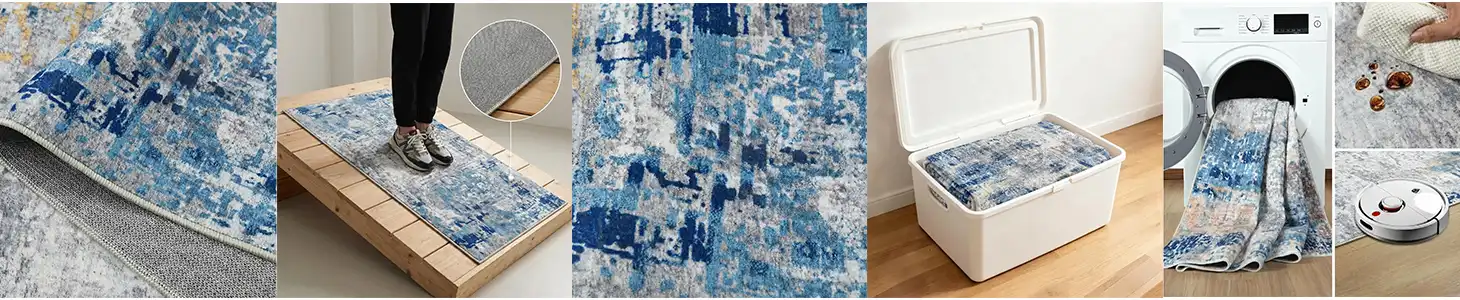
In places with a lot of foot traffic, rugs need to be able to be cleaned over and over again without losing their shape or fibers breaking down. Machine-woven construction with edge-locking technology stops fraying, which is a common problem with cheaper options. Short-pile designs with thicknesses between 3 mm and 5 mm don't get crushed when furniture is put on them, and they're also easier to clean. When 350g/ of fake cashmere polyester fibers are mixed in, they give the fabric a luxurious feel that is similar to natural fibers. This meets the visual needs of high-end retail and hotel settings. This mix of sustainability and performance meets the two needs of modern procurement teams: taking care of the environment without sacrificing operational needs.
Benefits of Recycled Material Throw Rugs in Sustainable Interior Design
Adopting floor coverings made from recycled materials has measurable benefits for the environment, operations, and finances. It's clear that supply chain managers and project planners in business interior design have found these benefits to be very helpful.
Measurable Environmental Impact Reduction
Through clear measurements, recycled material rugs like eco friendly washable rugs help companies meet their social duty goals. Using recycled plastics cuts down on the use of crude oil by about 0.5 liters per square meter of rug made. Compared to making manmade materials from scratch, manufacturing uses 30 to 50 percent less energy. Carbon footprint assessments show cuts of 2 to 4 kg CO₂ equivalent per square meter, which supports the requirements for LEED certification and the Science-Based Targets program. These numbers let procurement managers put a number on the sustainable efforts in their yearly reports. They turn vague environmental claims into data that can be used in the boardroom to support buying choices.
Functional Advantages for High-Demand Spaces
In addition to being good for the earth, these mats solve real-world problems. The washable TPR base keeps the high coefficient of friction on tile and hardwood floors, which lowers the risk of slip-and-fall accidents in public places. Hypoallergenic polyester fibers keep dust mites from living in them, which improves room air quality and is a key part of meeting the WELL Building Standard. The 3mm pile height keeps vacuum cleaners from getting tangled up and keeps doors from getting stuck, which can happen with thicker options. The fact that it can be washed in a machine saves money on professional cleaning costs, and the fact that it dries quickly cuts down on downtime during maintenance cycles. Hotels say they have to replace rugs 60% less often than with standard choices, which has a direct effect on their running costs.
Long-Term Cost Efficiency Through Durability
Total cost of ownership calculations show that washable rugs that last longer are better when buying in bulk. When you combine high-density machine weave with edge-locking construction, the product will last up to five to seven years in heavy industrial use. Standard machine washing at 30°C and easier cleaning methods get rid of the need for expensive chemicals and specialized tools. Event and exhibition spaces can manage their seasonal inventory with ease when they have storage that folds up without creasing. When used on a large scale in retail franchises or hotel chains, these factors create a strong financial case that goes along with environmental concerns. This makes sustainability officers and CFOs happy during the purchasing approval process.
Comparison of Eco Friendly Washable Rugs vs Traditional and Synthetic Rugs
To compare environmentally friendly options to regular ones, you need to look at how they are made, how well they work, and how much they cost over their whole life. This study gives procurement teams models for comparing things that are based on data.
Lifecycle Environmental Differences
Traditional wool blankets need a lot of water and land. Sheep farming releases methane into the air, and pasture land cuts down trees. Traditional synthetic rugs made from new petrochemicals keep us reliant on fossil fuels. On the other hand, recovered content rugs use old materials in new ways, skipping the mining stages. According to textile industry lifecycle assessments, making R-PET polyester uses 59% less energy than making virgin polyester. This means that the energy intensity of manufacturing goes down by a large amount. Solution-dyeing methods, in which colors are mixed in during fiber extrusion instead of being added in post-production baths that use a lot of water, reduce the need for chemical dyes. These changes to the process lead to measurable drops in the amount of wastewater and air pollution released, meeting the needs of Scope 3 carbon accounting requirements for buyers from other countries.
Performance Metrics in Commercial Settings
Testing for durability shows that goods made from recovered materials like eco friendly washable rugs have surprising benefits. The polyester fiber structure in fake cashmere surfaces keeps its color better after cleaning (achieving Grade 4+ on the ISO 105-C06 scales) than real fibers, which fade in the sun. Martindale tests show that recovered polyester keeps its shape after more than 50,000 rounds, which is the same as or better than nylon standards for abrasion resistance. When it comes to temperature stability, the TPR backing is better than PVC options. It keeps its grip from 5°C to 40°C without plasticizer movement that damages floor finishes. Mold can't grow in humid places because the material can remove moisture, which is very important for tropical resort installations. These technical standards show that useful needs don't have to be sacrificed for sustainability.
Market Pricing and Value Analysis
At first glance, the prices of eco-friendly, machine-washable rugs are about the same as those of mid-range traditional rugs, with bulk orders usually costing between $15 and $35 per square meter. However, value estimates change a lot when upkeep and replacement intervals are taken into account. Traditional rugs that need to be dry cleaned every year at an expense of $8 to $12 per square meter add up to $40 to $60 in maintenance costs over five years, while alternatives that can be washed in a machine only cost the cost of electricity. Capital expenditures happen half as often when repair cycles are 7 years instead of 3 years for budget synthetics. As part of volume purchasing deals, delivery optimization and containerization efficiency changes are often made. These can cut the cost of logistics by 10-15% per unit. When purchasing managers look at how much a building will cost over its entire life, they always decide that recycled clean rugs are the best investment.
How to Source and Procure Eco Friendly Washable Rugs for Businesses?
For strategic sourcing to work, you need to look at the skills of the suppliers, the product specifications, and the support infrastructure. This process makes sure that operational needs and sustainability goals are in line with each other.
Key Evaluation Criteria for Supplier Selection
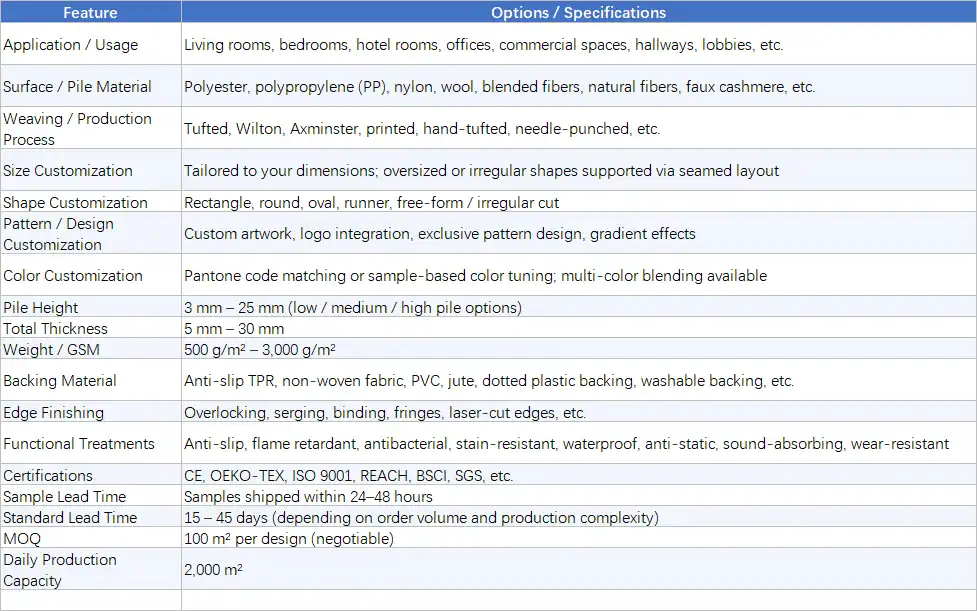
Material proof is the first step in judging quality. Instead of believing marketing promises, ask for GRS certification papers to prove recycled content amounts. When planning large-scale rollouts, production ability is important; suppliers who can make 2000 square meters of products every day reduce the risks to the project timeline. Brand alignment depends on how customizable the product is. The best partners offer pattern creation through heat transfer printing technology and size adaptation to non-standard building measurements. Dimensional stability testing (shrinkage below 3% over 10 wash cycles according to ASTM D3774), delamination resistance testing to see how well the adhesive sticks, and flammability compliance to CPSC FF 1-70 standards should all be part of the inspection process. These technical specifications keep expensive specification errors from happening during the installation phase.
Procurement Negotiation Strategies
Good contract terms for eco friendly washable rugs protect the buyer's interests while letting the seller do their job. When you make a volume promise, you can access tiered price structures. For example, orders over 5000 square meters often get 12–18% off of spot purchases. The delivery schedule should include production wait times (usually 7–15 days), along with penalties for delays that happen outside of the agreed-upon times. Sample provision terms make sure that accepted prototypes and mass production are exactly the same, which keeps expensive rework from having to be done. In after-sales deals, it's important to spell out how to fix problems. Good providers will cover the costs of shipping the item back and replacing it if there are printing mistakes, incorrect measurements, or problems with the edge finishing. Payment plans that balance 30% down payments with 70% when the container is loaded protect cash flow and keep suppliers committed. These parts of the contract set up accountability systems that are necessary for long-term partnership success.
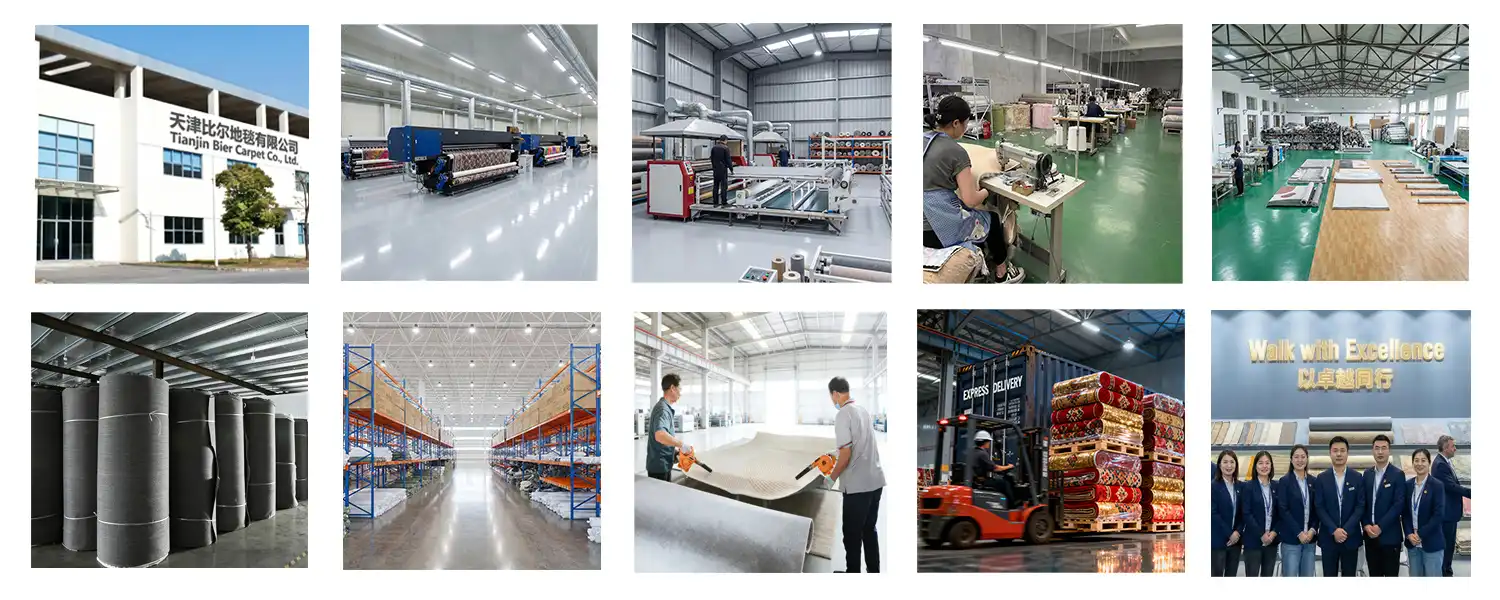
Introducing a Reliable Manufacturing Partner
To find the best supplier, you need to know how to differentiate their capabilities. Well-known companies offer fast sampling (within 24 to 48 hours) and production that can be scaled up or down, so you don't have to choose between speed and volume. Using advanced technology, like laser cutting for smooth lines and special heat transfer methods for designs that won't fade, makes sure that the quality is the same every time. Export-grade packing and the right amount of weight in each container keep items safe during transport and speed up the shipping process. Support for compliance documentation makes it easier to clear customs in markets in Europe, North America, and the Middle East. Dedicated account management makes the production schedule clear and suggests ways to improve patterns ahead of time for yearly changes. These service layers change seller relationships from one-time purchases to long-term partnerships that help businesses meet their changing needs.
Best Practices for Maintaining and Cleaning Eco Friendly Washable Rugs
The right care instructions make sure that products last as long as possible and keep their good looks. This protects the money you spent on them and keeps the surroundings healthy by allowing them to be used for longer.
Step-by-Step Cleaning Guidelines
Regular vacuuming with normal suction settings is the first step in routine upkeep. The 3mm pile height stops fiber extraction while freeing trapped particles. Machine washing should be done at 30°C (86°F) with mild detergents that don't change the pH level and don't have optical brighteners that break down polyester dyes. Commercial washers shouldn't handle more than three 6-square-meter rugs at once so that the fibers can move around properly. Spin cycles get rid of extra moisture quickly, cutting the drying time down to 2 to 4 hours on standard settings or 6 to 8 hours for air drying. Do not use chlorine bleach or fabric softeners. Bleach destroys the structure of the fibers, and fabric softeners build up dust that makes the TPR backing less sticky. This washing method keeps the structure's integrity through more than 50 cleaning processes without changing its shape.
Preventing Common Maintenance Mistakes
Avoiding harmful actions is key to keeping an operation going for a long time. When drying with high heat above 60°C (140°F), the polyester fibers get squished together and the TPR backing breaks down. Always use low or medium heat settings. Direct sunlight during drying keeps heat from building up in one place, which would cause localized shrinkage. You should never try to iron polymer parts because even mild temperatures can melt them. For business setups, move rugs around every three months to make sure that high-traffic areas get the same amount of wear. If you spill something on your carpet right away, blot it instead of rubbing it, which will spread the color deeper into the pile structure. These preventative steps keep the look consistent across multiple missions and save money on repair costs that could have been avoided.
Real-World Performance Validation
Case studies from the hospitality industry show how well maintenance protocols work. A small hotel company with 150 rooms put recycled rugs in guest rooms and public areas that could be washed once a month. Over three years, the property reported no rug replacements due to wear or stains that couldn't be fixed. This is in contrast to the 18-month replacement cycles that were common with traditional options. Maintenance staff said that the new procedures saved them 40% of the time needed for the old vacuum-only procedures that needed professional deep cleaning every three months. After the changes were made, guest happiness rates for how clean their rooms were went up by 8%. This was because allergen control got better. These results show that with the right care, sustainable products can be turned into better operational solutions.
Conclusion
Recycled material throw rugs like eco friendly washable rugs have been shown to be good for the environment, your home, and your wallet. This is why they are an important part of eco-friendly interior design. Verified recycled material, washability, and commercial-grade durability all work together to solve major buying problems and meet business responsibility requirements. These products meet strict performance standards in hospitality, retail, and commercial settings thanks to careful material choice, supplier evaluation, and maintenance protocols. As green building certifications and stakeholder expectations for sustainability rise, purchasing managers gain a competitive edge by being the first to use recycled washable rug solutions that lower carbon footprints without affecting operations. The benefits based on data that are talked about in this analysis give us the information we need to make smart, responsible decisions about procurement.
FAQ
How long do recycled material rugs last compared to traditional options?
High-quality recycled polyester rugs with machine-woven construction and TPR backing stay structurally sound for 5-7 years under heavy commercial traffic, which is longer than the 3–4 years that most synthetic alternatives last. Regular washing and other forms of proper maintenance keep things looking good and extending their useful life.
Can these rugs be customized for large commercial projects?
Reputable manufacturers allow full customization, which includes designing patterns through heat transfer printing, changing sizes to fit architectural needs, and adding logos to keep the brand's look consistent. For custom work, the minimum order quantity usually starts at 500 square meters, but this can be changed.
What certifications validate sustainability claims?
Certification by the Global Recycled Standard (GRS) checks the amount of recycled material and the supply chain. OEKO-TEX Standard 100 makes sure that there are no harmful chemicals. ISO 9001 shows that the quality of the products is always the same. REACH compliance confirms chemical safety for European markets. Always request documentation rather than accepting unsubstantiated marketing claims.
Partner with Bier for Sustainable Rug Solutions
Bier specializes in eco friendly washable rugs manufactured from recycled materials, offering purchasing managers a reliable partner for sustainable procurement. Our 10-year manufacturing expertise delivers consistent quality across bulk orders, backed by CE, OEKO-TEX, ISO 9001, and REACH certifications. With production capacity reaching 2000 square meters daily and 7-15 day delivery cycles, we eliminate timeline risks for commercial projects. Our OEM/ODM services include rapid 24-48 hour sampling, heat transfer pattern customization, and flexible minimum order quantities. Export-grade packaging and dedicated logistics support ensure smooth international shipments. Contact our procurement team at sales@biercarpet.com or visit biercarpet.com to explore how our eco friendly washable rugs supplier capabilities support your sustainability objectives with measurable results.
References
1. Fletcher, Kate. Sustainable Fashion and Textiles: Design Journeys. Routledge, 2014.
2. Muthu, Subramanian Senthilkannan. Handbook of Recycled Textiles. Woodhead Publishing, 2016.
3. Niinimäki, Kirsi, et al. "The Environmental Price of Fast Fashion." Nature Reviews Earth & Environment, vol. 1, no. 4, 2020, pp. 189-200.
4. Patagonia Works. The Responsible Company: What We've Learned from Patagonia's First 40 Years. Patagonia Books, 2016.
5. Smith, Pamela, and Richard Blackburn. "Sustainable Textile Design and Processing." Journal of Cleaner Production, vol. 198, 2018, pp. 1394-1406.
6. United States Environmental Protection Agency. Sustainable Materials Management: Non-Hazardous Materials and Waste Management Hierarchy. EPA Publication, 2019.
Send Inquiry


Related Industry Knowledge
- Crystal Velvet Carpet Advantages and Maintenance Tips Explained
- How 10x14 Modern Rugs Enhance Large Area Interior Design Projects
- How to Choose the Right Christmas Tree Stand Mat for Christmas?
- Premium Christmas Tree Stand Mat for Modern Christmas Decorations
- Eco-Friendly Rugs: How to Make Sustainable Home Choices
- Chunky Loop Carpet for Modern Homes: Durable & Stylish Flooring
- Eco-Friendly Rugs: Why Washable Rugs Are a Sustainable Choice
- Carpet Styles Compared: Cut Pile, chunky loop and Berber
- How to Maintain Easy Care Carpet Without Professional Help
- Choosing the Perfect ruggable bedroom