
How Should Buyers Size Large Area Rugs for Nursery Projects?
Sep 30, 2026
Sizing a large area rug for nursery projects correctly is one of the most practical decisions a B2B buyer makes. The standard guideline is to leave 18–24 inches of bare floor around the rug's perimeter, while the rug itself should cover the primary activity zone—typically 8×10 ft or 9×12 ft for standard nursery rooms. Getting this right protects infants from hard floor contact, anchors furniture placement, and reduces trip hazards. For commercial buyers sourcing across multiple projects, precise sizing also cuts material waste and simplifies logistics.


Understanding the Importance of Proper Rug Sizing for Nurseries
Safety Starts at the Floor
A blanket that is the wrong size can be dangerous. Some things that can be dangerous are edges that curl under furniture legs and rugs that are too small, which leave the hard floor visible in places where kids are moving. The American Academy of Pediatrics says that falls are one of the most common ways for babies younger than 12 months to get hurt. A baby floor covering that fits well cuts down on that exposure.
Layout Efficiency and Furniture Anchoring
Cribs, rocking chairs, and changing tables can all be seen together if the rug is the right size for the room. This makes the space feel planned instead of jumbled. When interior design companies and hospitality builders supply more than one nursery room, having units of the same size makes installation easier and cuts down on the time needed for each room.
Cost and Waste Control for Bulk Buyers
It costs a lot to order the wrong size in volume. Too much material leads to loss, and rugs that are too small mean that new orders have to be placed, which delays the production schedule. To keep their budgets safe, procurement managers in charge of big commercial nursery projects like child care centers, hotel family suites, and pediatric clinics need to lock in exact size requirements before production starts.
Key Factors to Consider When Sizing Large Area Rugs for Nursery Projects
Measuring the Room and Traffic Zones
First, measure the room as a whole. Then, take 18 to 24 inches off of each wall. Make a plan of the main path people take, which is usually between the door and the crib, and make sure the rug covers that path. To keep the edges from moving, furniture legs should sit on the rug instead of next to it. Before sending in your requirements, write down the measurements in either centimeters or inches, based on the format used by your provider.
Recommended Dimensions for Different Nursery Types
An 8x10-foot Large Area Rug for Nursery is usually the right size for a normal 10-by-12-foot baby room. A lot of commercial child care places with open play floors ask for 9x12 feet or special cuts. Custom-size orders are helpful for hotel family rooms with odd plans. Bier offers both standard and fully unique sizes, and can produce up to 3,000 yen per day to meet the needs of large-scale projects.
Material and Thickness Specifications That Matter
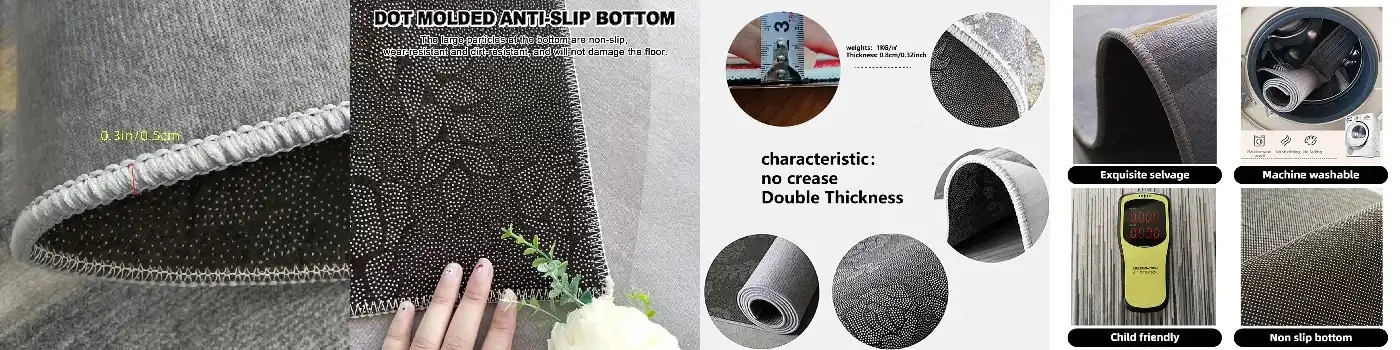
It's important to know that thickness affects both safety and door space. The crystal velvet polyester choice in Bier's nursery rug line has a total thickness of 5 mm, which is thin enough to slide under normal doors without catching and still gives you a soft place to fall. The dot plastic (PVC) backing makes it stable and non-slip without using glue, which is important for keeping sensitive standards in places where babies are. The gram weight can be changed from 750 to 1,100 g/ depending on the softness needs of the project.
Comparative Analysis: Large Area Rugs vs. Small Rugs in Nurseries
Coverage, Warmth, and Sound Absorption
Large nursery floor coverings cover the wall next to them in a way that small accent mats just can't. They keep out cold subfloors, which is important in hotels and other commercial buildings with concrete slabs, and they lower background noise, which helps babies sleep better. Studies in pediatric environmental design have found a link between babies younger than 18 months and better growth in sleep areas that are quieter.

Cleaning and Maintenance Comparison
It's easier to wash smaller rugs in a machine, but big rugs made of the right materials close the gap a lot. Crystal velvet polyester fiber soaks up water and dries quickly. Spills can be blotted up instead of soaked because the surface is treated to prevent stains. High-density machine weave with a 0.6 cm edge-lock also stops fibers from fraying, which means that the product will need less upkeep over its lifetime.
Pattern and Aesthetic Alignment
It's easy to move small rugs around, but big nursery area rugs look better and work better with themed or branded interior programs. Custom pattern printing on a large-format rug gives a better brand impact to retail brands and hotel chains that need to make sure that all of their sites have the same design. With OEM/ODM flexibility, Bier supports solid color, printed, and fully custom pattern designs. This lets brand managers make sure that all batch orders look exactly the same.
These differences make it easy for buying teams to make choices. When the goal is to cover the floor in an active area for babies for a long time, a well-designed large rug always works better than a bunch of smaller ones.
Procurement Strategies and Best Practices for Large Nursery Rugs
Identifying a Supplier With the Right Certifications
When it comes to baby use, safety is a must. Check to see if the company that sells you Large Area Rug for Nursery products is certified by CE, OEKO-TEX, ISO 9001, and REACH. These qualifications show that the product has been tested for chemical safety, colorfastness, and physical stability. Bier's products meet all four standards and come with full test reports and export paperwork, which makes it easier to get goods through customs when they are going to the U.S.

Leveraging Custom Sizing and Sample Confirmation
Making sure the right dimensions are locked in before mass production starts is the best way to avoid having to do expensive repairs. Within 24 to 48 hours, a reputable Large Area Rug for Nursery supplier should make a sample that is an exact copy of the final product in terms of pattern, size, and construction. Bier gives away free samples before buyers place large orders. This gives buyers a real reference point for QC sign-off and shortens the time it takes for approval.
Maximizing Value Through Bulk Order Planning
There are a lot of good reasons to buy things, and you should include these in your order strategy:
- Flexible MOQ: bier offers adjustable minimum order quantities suited to both project-based and ongoing retail replenishment buyers.
- Competitive bulk pricing: Volume orders benefit from lower per-unit cost while maintaining consistent quality across the entire batch.
- Export-ready packaging: Roll packaging, carton, or woven bag formats are available, each optimized for container loading efficiency to reduce per-unit logistics cost.
These buying benefits help people who need a steady supply during yearly changes, new product launches, or a lot of e-commerce delivery. With a delivery cycle of 7–15 days and a 100% inspection before shipping, Bier lowers the risk in the supply chain on a large scale.
Maintenance and Longevity of Large Area Rugs in Nurseries
Safe Cleaning Methods for Infant Environments
To keep the surface treatment and hypoallergenic qualities of baby rugs, only clean them with pH-neutral, non-toxic products. Don't use cleaners with enzymes because they can break down polyester fiber over time. Dry vacuuming is enough for daily maintenance. Crystal velvet mats have a stain-resistant process that lets you quickly blot up spills without having to scrub.
Cleaning Frequency for High-Traffic Commercial Settings
Every day, the surfaces of childcare centers and hotel family suites should be cleaned, and every 6 to 12 months, the floors should be cleaned more deeply. Polyester fiber dries very quickly, which cuts down on the time it takes to dry after being washed, which is important in busy business nurseries. In particular, this is important for property owners who run 24/7 businesses.
Inspection and Timely Repair Protocols
Check the edge integrity, backing adhesion, and fiber density every three months with a visual inspection. The 0.6 cm edge-lock stitching on Bier's goods doesn't fray even after being cleaned many times, and if stress spots are found early, they can be fixed specifically before they cause structural problems. Through Bier's after-sales program, you can get a dedicated account manager who can help you with warranty claims or replacement coordination if there are quality issues.
Conclusion
Getting the right size Large Area Rug for Nursery saves babies, speeds up the fitting process, and stops waste during the buying process. The realistic standard is 8x10 to 9x12 feet, with 18 to 24 inches of floor space. This rule applies to both home and business nurseries. Choosing the right materials, making sure they meet standards, and trusting the provider are all equally important factors. Bier has been making things for 10 years, so they can be a production-ready partner for buyers who need to cover nursery floors on a large or small scale. They can offer unique sizes, guaranteed quality, fast turnaround, and full export support.
FAQ
What is the most common rug size for a standard nursery room?
Most people say that an 8x10-foot rug is best for a 10x12-foot room. It completely surrounds the main action area while still leaving enough floor space around the edges.
What pile height is safest for infants?
It is best to have a low to medium pile of about 5mm. It gives babies a soft place to land for tummy time without making them unstable while they learn to stand.
Can I order a custom size for irregular nursery floor plans?
Yes. Through its OEM/ODM service, Bier can make products in any size. You can change the size, color, and design, and you can get a model in 24 to 48 hours.
What certifications should a nursery rug supplier hold?
Check to see if it meets CE, OEKO-TEX, ISO 9001, and REACH standards. These cover things like chemical safety, environmental standards, and accuracy in size, which are all very important for baby goods sold in the U.S.
How do I prevent the rug from sliding on hard floors?
Bier's crystal velvet baby rugs don't slip because they have a dot plastic (PVC) backing that doesn't need extra sticky pads that could trap allergens.
Source Your Next Large Area Rug for Nursery Project With Bier
Large Area Rug for Nursery maker bier has been in business for 10 years, is certified by OEKO-TEX and ISO 9001, and delivers within 7 to 15 days. We offer free samples, one-on-one pre-sales advice, and all the paperwork needed for shipping. Our team is ready to help you find what you need, whether you need standard sizes or fully custom specs for a business nursery rollout. You can get a quote right now by emailing sales@biercarpet.com or going to www.biercarpet.com.
References
1. American Academy of Pediatrics. Injury Prevention and Control: Falls. 2022.
2. OEKO-TEX Association. OEKO-TEX Standard 100: Testing for Harmful Substances. 2023.
3. U.S. Consumer Product Safety Commission. 16 CFR Part 1630: Standard for the Surface Flammability of Carpets and Rugs. 2021.
4. International Organization for Standardization. ISO 9001: Quality Management Systems — Requirements. 2015.
5. Carpet and Rug Institute. Carpet Selection Guide for Commercial and Residential Applications. 2022.
6. European Chemicals Agency. REACH Regulation: Registration, Evaluation, Authorisation and Restriction of Chemicals. 2023.
Send Inquiry

Related Industry Knowledge
- What Should Buyers Look for in Cute Playroom Rugs?
- Premium Crystal Velvet Rug for Upscale Hotel and Retail Interiors
- How to choose a nursery rainbow rug for kids bedroom?
- Custom Dimensional Rugs Improve Interior Design Value for Hospitality Projects
- How 10x14 Modern Rugs Enhance Large Area Interior Design Projects
- How to Refresh Your Space With a Rose Flower Rug?
- Fade-Resistant Premium Crystal Velvet Rug for Long-Lasting Use
- Choosing dimensional rugs
- Everything You Need to Know About Jute Rugs
- Why Easy Care Carpet Is Perfect for Modern Living