
Jute-Proof Rugs Support Durable Design in Hospitality Projects
Sep 24, 2026
When a hotel lobby or resort corridor needs flooring that holds up under thousands of footsteps daily while still looking polished, the right rug choice makes all the difference. A jute-proof rug built from imitation sisal polyester fiber answers that challenge directly. It delivers the warm, organic texture that interior designers want without the moisture sensitivity, fiber shedding, or browning that natural jute brings. Over the past decade, procurement teams across the hospitality sector have shifted toward these performance-engineered floor coverings precisely because they balance aesthetics with long-term operational reliability.


Understanding Jute-Proof Rugs: Features and Benefits
What Sets the Material Apart?
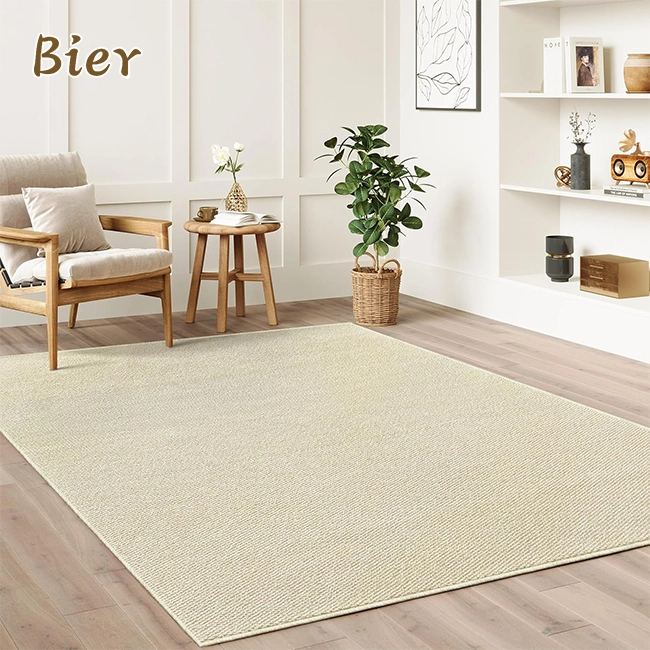
This rug's surface is made of polyester fibers that look like sisal. They are woven very tightly, with an edge-locking width of 0.6 cm. Natural jute takes about 20% of its own weight in water and breaks down in high humidity. Polyester fiber, on the other hand, absorbs almost no water. That one difference gets rid of the risk of mold, keeps the structure from bending, and stops the cellulosic yellowing that makes natural-fiber rugs in business settings wear out faster.

Surface Treatment and Backing System
The surface is treated to make it stain-resistant, which makes it easy to wipe up spills before they get deeper. Under the pile is a TPR base that can be washed and doesn't slip on hard floors. The TPR backing can be washed in any water, which cuts down on the cost of work for deep cleaning in places with a lot of guests. With a thickness of 1 cm and a weight of 1,000 g/m², the building feels solid underfoot and doesn't make doors or transition strips dangerous places to trip.
Performance Numbers That Matter
The daily production rate is 1,000 m², which allows for large-scale hotel rollouts with no scheduling breaks. The rug won't tear or scratch easily, which is important in family hotels and vacation rentals that allow pets. It's very useful for event venues and exhibition contractors because it can be folded flat and stored between seasons. Before shipping, every unit is inspected 100% of the way, and the product meets CE, OEKO-TEX, ISO 9001, and REACH standards. These are all certifications that quality assurance teams usually look for before accepting a new seller.

Selection Criteria for Jute-Proof Rugs in Hospitality Projects
Durability and Traffic Tolerance
Areas with a lot of foot traffic, like hotel hallways, restaurant waiting areas, and conference center halls, are very hard on floors. In these conditions, synthetic fiber rugs that have been tested and rated above 20,000 Martindale abrasion cycles last a lot longer than natural jute rugs. The fake sisal construction I talked about above keeps its weave structure even after being compressed many times. This means that it will need fewer replacements and cost less overall over a three- to five-year project period.
Comparing Flooring Options
Wool rugs are soft, but they need to be dry cleaned and cost more per unit. Sisal rugs have a natural look, but they don't like getting wet. Standard polyester mats don't absorb water very well, but they might look plasticky in high-end interiors. A practical middle ground is the imitation sisal jute-proof rug. It has an organic look and feel, can handle water without damage, and is cheap enough to buy in bulk for businesses. It's always hard for purchasing managers to find other materials that work well with this combination of budget and design brief.

Custom Sizing and Bulk Flexibility
Standard residential dimensions are rarely used in hospitality projects. Different types of areas need different sizes of footprints, like a resort pool deck, a named restaurant chain, or a convention center hallway. This item comes in both standard sizes and features that can be changed completely. OEM/ODM services include printing logos, choosing colors, and changing the size. With a flexible MOQ for bulk sales, project managers can spread out purchases across multiple sites without having to commit too much inventory. Within 24 to 48 hours, samples that are the same pattern, size, and build as mass production are sent out. This cuts down on the cost of trials and speeds up the decision-making process.
Maintenance and Longevity: How to Care for Jute-Proof Rugs?
Daily Cleaning Protocols
The TPR base can be washed, which makes regular upkeep easy. Standard upright or cylinder vacuums can be used by housekeepers to clean the surface without pulling the fibers. Quickly wiping up liquid spills with a clean cloth works well, and the surface is stain-resistant, so most food and drink stains don't stick to the fiber permanently. This cuts down on how often the rug needs to be deep-cleaned by a professional, which lowers the cost per square meter over the rug's useful life.
Moisture Management in Commercial Spaces
One of the main reasons natural-fiber rugs in hotels and restaurants fail is that water builds up under them without being controlled. Since both the polyester fiber surface and the TPR base don't absorb water, water doesn't move up from wet concrete subfloors or pool decks. Checking the backing often for stuck-on trash keeps the non-slip grip working right and stops the border locking stitch from wearing out too quickly.
Preventive Care to Extend Service Life
Moving rugs around in hallways with a lot of foot traffic every three to six months makes the pile wear more evenly. Keeping extra rolls in export-standard packaging, which comes in roll format, carton, or woven bag, keeps the surface in good shape between uses. When event venues use rugs for more than one show, they should fold them along the original grain of the weave and avoid making sharp crease lines. This keeps the rug's shape and gives it a professional, flat look on the floor.
Real-World Applications and Case Studies in Hospitality
Hotel Lobby and Corridor Deployments
Boutique hotels and vacation companies in the US have seen a drop in the number of times they need to replace their rugs after moving from natural jute to fake sisal alternatives. A mid-range hotel chain with 18 sites in the Southeast said that they were able to increase the average rug lifespan from 14 months to over 30 months by using a synthetic sisal-style rug with a clean TPR backing. There were no changes made to the way it looked or to their current natural-tone interior design idea.
Restaurant and Retail Applications
The stain-resistant surface of jute-proof rug is important to restaurant owners because spills happen all the time in food service settings. Stores that are part of a chain use solid-color business rugs to frame areas where brands are displayed and direct customer flow. Solid-color options help keep the brand's look consistent across multiple stores, which is something that brand and creative managers say is one of the most important things that drives procurement. Pattern-to-pattern color matching across large orders meets the standard for quality consistency that retail purchasing teams look for.
Event and Exhibition Use Cases
Exhibition workers who have to place things quickly, like how the format is lightweight and bendable. The rug is easy for small construction teams to handle at 1 kg/m². Custom size makes sure that booth areas are exactly the same, so there is no waste on-site. Within 48 hours, event planners can get a quick sample that lets them confirm the visual direction before committing to full production runs. This is normal in the event production industry, where lead times are short.
Purchasing and Procurement Guide for Jute-Proof Rugs
Evaluating Supplier Capability
When buying a lot of commercial floor coverings, the project's timeline is set by the supplier's production capacity and quality systems. With a daily output of 1,000 m², it's possible to roll out big hotels and stores in multiple locations. Confirmed certificates like CE, OEKO-TEX, ISO 9001, and REACH give QA teams a written basis for compliance. Full test reports and export paperwork make it easier to get goods into the US and other regulated markets without having to pay extra for testing by a third party.
Logistics and Export Readiness
Export-standard packing in the form of a roll, a box, or a woven bag keeps the product safe during ocean freight and the last mile of delivery. The more efficiently containers are loaded, the less each unit of logistics costs. Purchasing managers who are working with limited project budgets will see this as a real savings opportunity for large orders. With a shipping window of 7 to 15 days from the end of production, partnerships with well-known freight forwarders keep wait times stable. One-stop customs statement support lowers the chance of port delays that could mess up the opening times of hotels or the times when events are set up.
Strategic Procurement Recommendations
When procurement managers place bulk orders for business rug projects, these are the most important things they should do:
- Request 1:1 production samples first. Samples ship within 24 to 48 hours and match mass-production quality exactly in pattern, dimension, and weave density, so QA review is accurate before large-volume commitment.
- Negotiate flexible MOQ by project phase. Flexible minimum order quantities allow phased deployment across multiple properties without excess inventory, reducing storage costs and capital tied up in stock.
- Confirm all compliance documentation before shipment. CE, OEKO-TEX, and REACH certificates should accompany the first order to avoid customs delays and meet building material approval requirements in commercial construction projects.
As is normal in the hotel industry for long-term supplier relationships, these steps lower the risk of buying in three areas at the same time: quality, transportation, and compliance.
Conclusion
In business hospitality, rugs that look like sisal are being replaced with synthetic ones because they are more practical: natural materials have secret upkeep costs that add up over time. Those costs can be avoided by getting a jute-proof rug with a fake sisal surface, a stain-resistant treatment, and a washable TPR backing. With 10 years of experience in manufacturing, a 100% pre-shipment inspection, and full compliance with international standards, this product group supports long-lasting flooring programs that match the style of hotels, restaurants, shopping chains, and event spaces.
FAQ
Does imitation sisal shed like natural jute?
Natural plant fibers break down into short-staple bits, but continuous strand polyester fibers don't. After the rug is put down, fiber dust won't build up around the edges, which is important in hotel rooms and other places where air quality standards apply.
Can these rugs be used in wet areas such as pool decks?
Both the TPR base and the polyester surface are very good at keeping water out. But water that stays under the rug for a long time is not a good idea. Before installation, make sure that the base has enough drainage for use on a pool deck or spa passage.
What customization options are available for brand-specific projects?
Both OEM and ODM services let you choose a solid color, put your name on the product, and change all of its dimensions. The size specs exactly match the needs of the project, and samples can be made within 48 hours so that the brand can approve them before mass production starts.
How does bulk pricing work for large hospitality contracts?
MOQ designs that are flexible can handle project completion in stages. For large orders, the unit price is discussed directly with the account team. Dedicated account managers help with repeat orders and offer advice on how to improve processes throughout the entire lifecycle of a project.
What certifications does this product carry?
The product meets the standards set by CE, OEKO-TEX Standard 100, ISO 9001, and REACH. Every order comes with a full test report to help with building material approval and customs clearance paperwork.
Partner with Bier for Your Next Commercial Rug Program
For more than 10 years, Bier has helped catering buying teams all over the United States. As a reliable jute-proof rug maker, we make 1,000 m² every day, deliver in 7 to 15 days, and offer full OEM/ODM customization from the model to the shipping. Every sale comes with an inspection before it ships, compliance paperwork, and help with export procedures. You can email our sales team at sales@biercarpet.com or go to our website at biercarpet.com to ask for a sample and talk about your project needs.
References
1. Textile World — 2022. "Performance Standards for Commercial Floor Coverings in High-Traffic Environments."
2. Journal of Interior Design — 2021. "Sustainability and Durability Trade-offs in Hospitality Flooring Selection."
3. Floor Covering News — 2023. "Market Trends in Synthetic Natural-Look Rugs for Commercial Applications."
4. International Journal of Hospitality Management — 2020. "Operational Cost Analysis of Flooring Materials in Hotel Properties."
5. AATCC Review — 2022. "Colorfastness and Abrasion Resistance Testing Protocols for Contract Textiles."
6. Contract Magazine — 2023. "Procurement Strategies for Large-Scale Hospitality Interior Projects."
Send Inquiry
_1778307532595.webp "Stylish Kitchen Mats")
Related Industry Knowledge
- Why are jute nursery rugs the Ultimate Natural Home Decor Icons?
- Custom Dimensional Rugs Improve Interior Design Value for Hospitality Projects
- Why Are Petal Rugs Popular for Boutique Hotels and Creative Spaces?
- Custom Chunky Loop Carpet Enhances Hotels and Offices with Premium Flooring
- Christmas Tree Stand Mat Makes Holiday Cleanup Much Easier
- Why Round Rugs Are the Ideal Choice for Children's Rooms
- Nursery Rainbow Rug for Soft and Colorful Kids Room Decor
- Wool and Silk Rugs: What the Fiber Blend Changes in Real Interiors
- Transforming Hallways with Long Runner Rugs
- Faux cashmere rug: what does it look like? How to choose the right artefact according to the decor of the room?