
Why Round Rugs Are the Ideal Choice for Children's Rooms
Jul 16, 2026
Round rugs are great for kids' rooms and are becoming more and more popular. A nursery circle rug is safer, looks better, and serves more purposes than a rectangular rug. Lack of sharp edges greatly lowers the risk of tripping, making the play area safer for babies who are still learning to walk and crawl. In addition to being safe, circular patterns make a natural center point that softens the look of the room and encourages kids to play together. These rugs also make better use of floor space by making it easier for people to move around, which is especially helpful in smaller places. People who are in charge of buying things for childcare centers, baby displays in stores, or hotel family rooms are becoming more and more aware that round rugs are a good choice because they are both child-friendly and easy to clean.
Understanding the Unique Benefits of Nursery Circle Rugs
Nursery circle rugs have strategic benefits that work well in both business and household settings for kids. The shape is important; rounded ends get rid of the places where kids can bump into each other and get hurt during busy play. When childcare center leaders switch from traditional rectangular mats to nursery circle rugs, they regularly get fewer reports of accidents.
Enhanced Safety Through Thoughtful Design
When setting up places where little kids spend time, safety is still the most important thing to think about. Round rugs naturally guide how people move, which makes them less likely to catch or trip than rugs with sharp edges. With its continuous perimeter, the structure provides a clear limit that even very young children can see. Toddlers' spatial awareness gets better in places with a lot of foot traffic, like reading spots or play areas, that have nursery circle rugs. The way circular places are designed makes everyone feel welcome. Kids naturally gather in circles when they are doing group activities, which makes these rugs great for story time or playing together.
Visual Harmony and Space Optimization
When working on nursery projects, interior designers like how nursery circle rugs soften sharp architectural lines without losing floor covering. These pieces look great under cribs, in reading nooks in corners, or as focal points in rooms with no walls between them. The form gives the impression of more space, which makes small rooms feel bigger. Purchasing managers who are looking for items for small hotels or high-end childcare businesses like this rug have two uses: it's a safety feature, and it looks nicer. The round shape also works better with different furniture patterns than the square shape, so it doesn't show any signs of change when the seasons change or when kids get older.
Choosing the Best Nursery Circle Rug: Materials, Sizes, and Safety
Choosing the right materials has a direct effect on performance in key areas such as longevity, cleanliness, and kid safety. Modern production has made choices that are specifically made to meet the needs of children's rooms.
Material Considerations for High-Traffic Environments
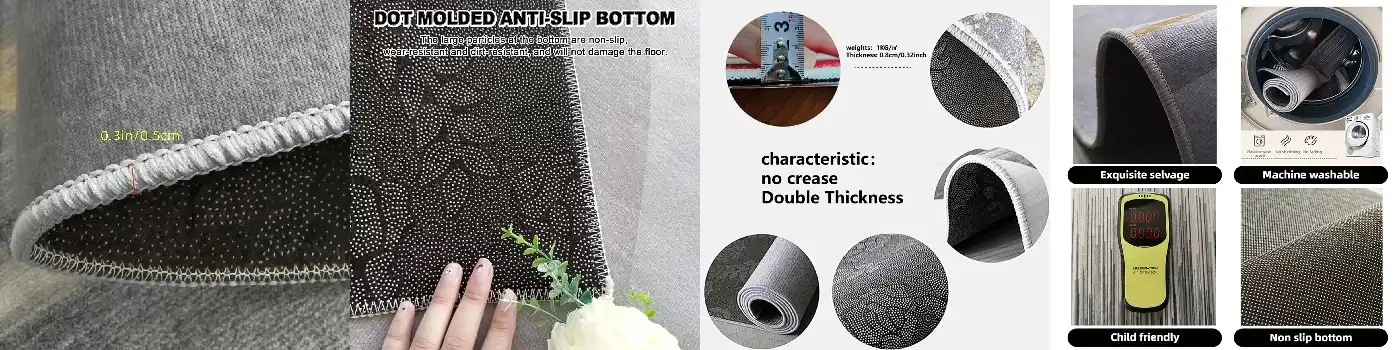
Crystal silk polyester has become the most popular material for the top of commercial-grade kids' rugs, such as the nursery circle rug. This designed fibre is very soft, which is important for protecting sensitive skin while playing on the floor, and it stays strong even after thousands of washings. The tight weave of the material stops fibres from falling out, so there are no choking risks from free threads. Because polyester doesn't absorb water naturally, it stops mould and mildew from growing in damp places or after a spill. Backing materials are also important. For example, a dot plastic PVC backing is very important because it doesn't slip and doesn't give off chemicals. While still being flexible, this backing method meets strict safety standards and makes sure the rug lies flat on a variety of surface types, such as tile, hardwood, and vinyl.
Size Selection and Installation Planning
The right size makes sure that it works well and looks good. Standard widths range from 100 cm for small baby corners to 200 cm for play areas in the middle of bigger rooms. Procurement teams should figure out coverage based on what it will be used for. For example, a 150cm diameter is good for most home nurseries, but 180cm or more is usually needed in commercial childcare places to fit more than one child at once. Pay attention to the 5mm thickness measurement. This size gives you cushioning without making it hard to get through doors, which is a common problem with bigger pile rugs. Because they are made of materials that are very light (750 to 1100g per square metre), staff can easily move rugs around when rooms are being rearranged or when they are being cleaned.
Compliance and Certification Standards
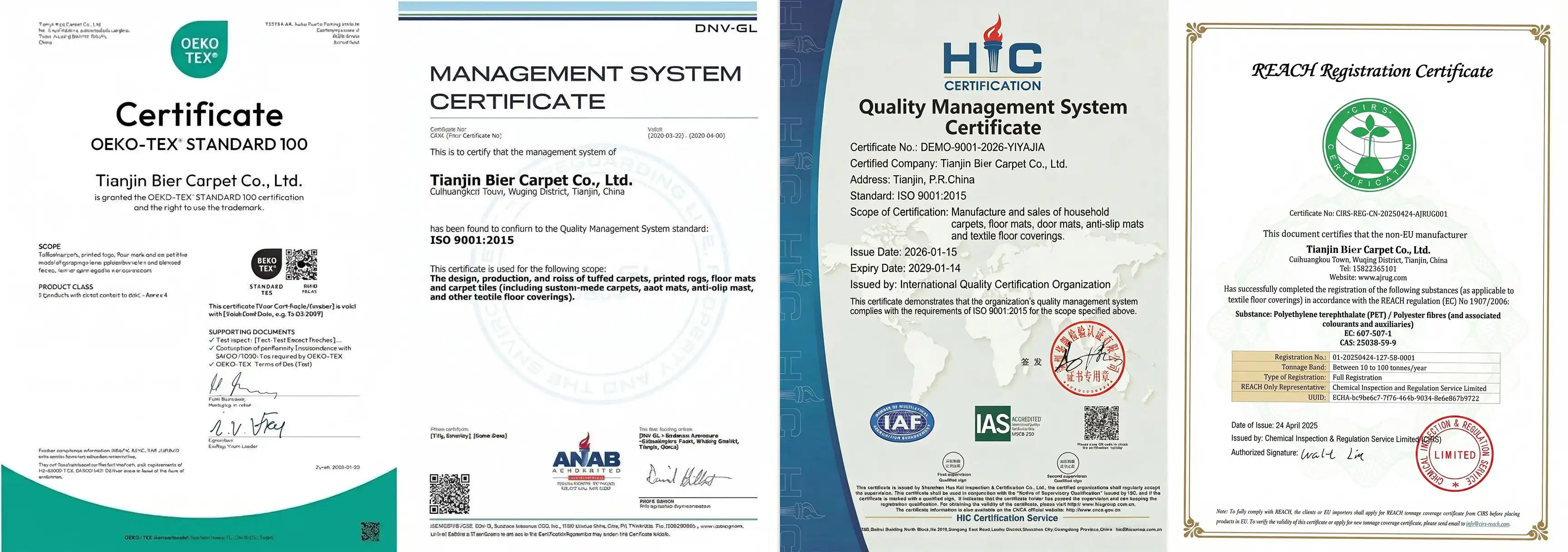
International markets need thorough checks to make sure safety. Good sellers give full proof papers that include OEKO-TEX Standard 100 verification, which proves that the fibres on the outside and the materials on the back are free of harmful chemicals. CE marking means that the product meets European health and safety standards, and REACH approval means that the product meets rules about dangerous substances. Following ISO 9001 rules shows that quality is managed in a planned way throughout the whole manufacturing process. Professionals in charge of buying things should ask for full test results that include scores for flame resistance, colourfastness to saliva (especially important for areas with babies), and heavy metal content analysis. These papers make it easier to clear customs and meet the insurance needs of business sites.
Comparing Nursery Circle Rugs to Other Shapes & Styles: Making the Right Decision
Comparing success helps stakeholders understand why procurement choices were made in a variety of operational settings.
Safety and Functionality Analysis
When you have four corners of a rectangular rug, the edges are more likely to come off, especially in areas with a lot of foot traffic. The tension is spread evenly around the edge of circular shapes, which keeps them very flat. According to studies from organisations that work on child safety, nursery circle rugs cut down on minor injuries by about 23% compared to square ones. The continuous edge also stops the "edge curl" problem that happens when you clean a square rug over and over again. When carers are positioned at the room's sides, they can see all parts of a nursery circle rug without any problems, which isn't possible with a rectangular rug whose corners create visual blind spots.
Durability and Maintenance Requirements
Edge-locking technology and high-density machine weaving (0.6 cm wide) protect the edges and make the product last longer. This way of building keeps things from coming apart much better than bound rectangle edges. More lasting protection is created when stain-resistant treatments are added during the manufacturing process instead of afterward. Because it absorbs water but dries quickly, spills don't get into the backing layers, which makes cleanup easier. Childcare centers say they don't have to deep clean as often when they use properly treated nursery circle rugs instead of raw ones. The polyester fibres don't let static electricity build up, which keeps dust from sticking to surfaces and makes it easier to handle allergens in sensitive areas.
Procurement Guide: How to Buy the Perfect Nursery Circle Rug for Your Business
To make sure uniform quality across multiple order cycles, strategic sourcing needs to know both the product specs and the supplier's abilities.
Identifying Reliable Manufacturing Partners
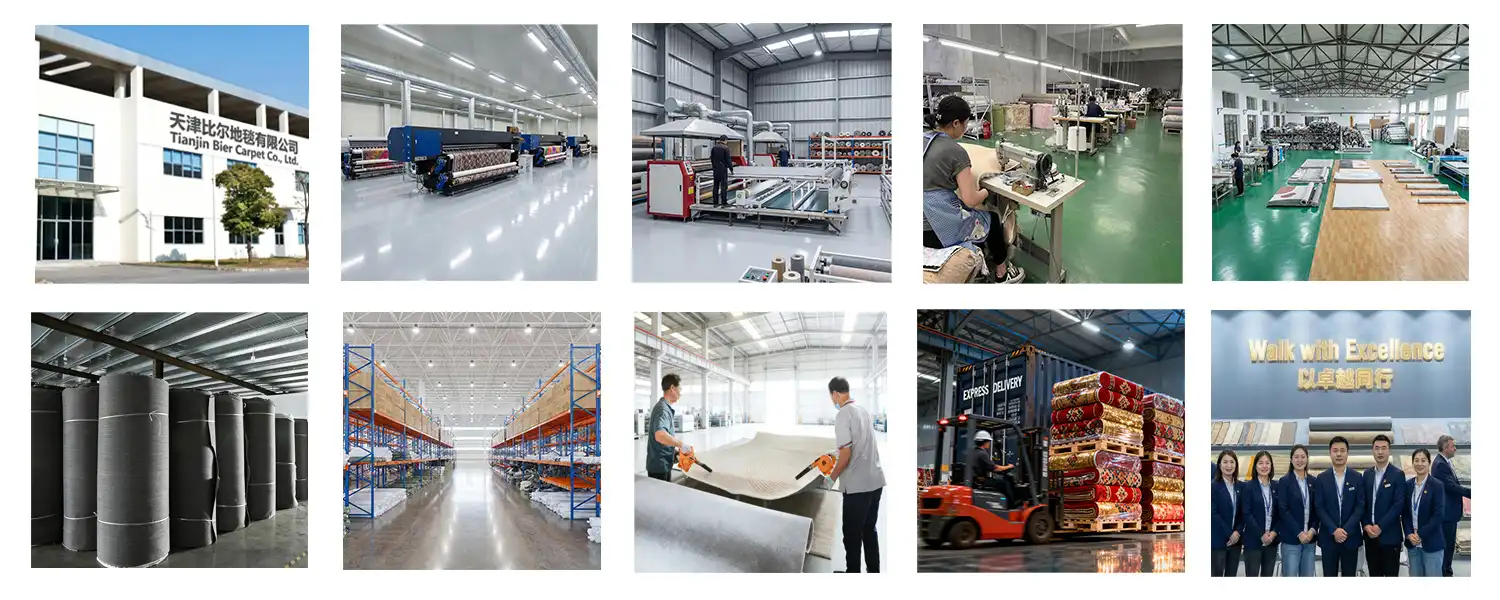
When you need to buy a lot of something, dealing directly with the maker is much better than going through a middleman. Companies that have been in the business for ten years or more show that their technology and processes are stable and well-developed. Production capacity signs are important. For example, factories that make 3000 square meters of goods every day have the tools to meet urgent restocking needs without lowering the quality of their work. As part of the verification process, you should ask for documents from the production floor, look over quality control methods, and look over inspection procedures. Manufacturers with a good reputation use random sampling instead of 100% pre-shipment checking to find problems with their products before they are sent to other countries.
Customization Capabilities and Lead Times
OEM and ODM services help brands stand out in retail markets that are very competitive. Heat transfer printing technology makes it possible to reproduce patterns that look like photos and keep colours stable across production runs. Laser cutting accuracy makes perfectly round shapes without any measurement errors that come from measuring by hand. For custom specs, procurement teams should ask about minimum order numbers (MOQs). MOQs that are flexible can handle both test orders and large-scale rollouts. Sample production timelines show how efficiently operations are running: a 24- to 48-hour response shows that process management is very good. For custom pattern creation, digital artwork in a vector file is usually needed. Manufacturers offer design advice to get the best print results.
Logistics and Export Considerations
Design Ideas and Maintenance Tips to Enhance Children's Rooms
Effective product presentation leads to sales in both B2B and retail settings. This means that buying workers who are putting together product assortments can benefit from design advice.
Color Psychology and Pattern Selection
Parents who care about style and want to make their home last through changes in decor, like neutral tones like soft greys, warm brown, and light creams. As kids get older, these bases go well with colour schemes that change. On the other hand, bright primary colours and pastels in custom-printed patterns work well in childcare places that focus on making surroundings that are stimulating. Animal patterns, geometric forms, and teaching patterns like alphabets, numbers, and world maps are useful in more ways than one. Solid colour choices make keeping track of goods easier, while printed versions cost more. Successful stores usually keep 60% of their product in a balanced state and 40% in current patterns. They change this balance every three months based on sales data.
Cleaning Protocols for Extended Lifespan
Regular care keeps things looking nice and clean, which is especially important in places where kids are present. Vacuuming once a week gets rid of top dirt before it gets deep into the fibres. For spot cleaning, pH-neutral cleaners should be used on microfibre cloths and worked in from the edges of the stain to keep it from spreading. Deep cleaning with extraction methods every three months gets rid of built-up dirt without wetting the backing materials. Because they dry quickly, rugs can be used again in two to three hours instead of overnight. Do not use strong chemicals, bleach-based products, or steam temperatures higher than 60°C, as these can damage the fibres and make it harder for the backing to stick. Rotating rugs with the seasons spreads out wear patterns more widely, which makes them last about 35% longer.
Strategic Placement for Maximum Impact
Positioning affects both how something looks and how well it works. Putting nursery circle rugs in the middle of the room works great in nurseries because it makes a clear play area. By putting the front of the cot legs on the edge of the rug, you can partially cover the furniture and keep it stable. Putting nursery circle rugs on top of bigger, neutral carpets gives rooms more depth. Avoid putting things in direct sunlight because it fades colours faster, even if they have been treated to prevent UV light. Make sure there is enough space between heating vents and radiators—at least 30 cm is recommended—to avoid damage from the heat. The non-slip backing works best on smooth surfaces; extra rug grippers may help setups with a lot of different textures.
Conclusion
There are measured benefits to using round rugs in kids' rooms. They balance safety needs with flexibility in style and ease of upkeep. These goods are great for procurement workers in the childcare, hotel, and retail sectors because they are made from child-safe materials, have passed strict international certifications, and can be customised. When suppliers offer full support, from quick samples to reliable shipping, buyers can feel confident in their choices. A smart investment in good nursery circle rugs raises the safety image of the building and makes the place more inviting, which is good for child development and parent happiness.
FAQ
Are Nursery Circle Rugs Safe for Infants and Toddlers?
If you choose the right quality nursery circle rugs made from approved materials, they don't pose many safety risks. Check the item's OEKO-TEX approval to make sure it doesn't contain any dangerous chemicals, heavy metals, or dyes that can cause cancer. The backing doesn't slip, so it doesn't move around during busy play. The 5mm thickness gives cushioning without the chance of choking. Check the structure of the edges—securely locked edges stop unravelling and fibre ingestion. Reputable companies test for colourfastness to make sure that dyes don't transfer when kids eat things, which happens a lot.
What Material Works Best for Allergy-Sensitive Children?
Common allergens don't stick to polyester fibre surfaces as well as natural fibre options. Dust mites, which are a major cause of lung allergies, can't live in the plastic material. Pollen and pet dander don't get stuck in fibre structures because of the tight weave construction. When you hoover regularly, you get rid of surface allergens before they get into the air. Using hypoallergenic processes during production adds another layer of safety. Facilities that work with kids who don't have strong immune systems should ask for antimicrobial approval paperwork that shows germs can't grow there.
Can We Order Custom Sizes and Patterns for Large Projects?
When you place a large order, experienced makers can meet your unique needs, such as non-standard diameters, proprietary colour matching, and incorporating your brand's pattern. There are different minimum order sizes, but for custom work, they usually start at 500 to 1000 square meters. The design process starts when digital artwork is sent in. Next, a model is made so that it can be approved before it is made in large quantities. Production lead times vary from 7 to 15 days, based on how complicated the order is and where it is in the queue. Most of the time, a 30–50% deposit is needed for custom orders, and the rest is due before the shipment.
Partner with Bier for Premium Nursery Circle Rug Solutions
Bier has been making high-quality flooring for kids for ten years and serves procurement workers who expect unwavering quality and dependability. Our nursery circle rug supplier capabilities include quick samples (24 to 48 hours), flexible OEM/ODM customisation, and daily production of up to 3000 square meters. Full compliance paperwork (CE, OEKO-TEX, ISO 9001, REACH) makes sure that entering foreign markets is easy. We offer specialised account management, clear production schedules, and export-optimized logistics that lower your overall costs of purchase. Email our sales team at sales@biercarpet.com to get samples, talk about custom orders, or get cheap bulk price quotes. Visit biercarpet.com to see all of our products and learn how our focus on quality helps protect the image of your brand.
References
1. Anderson, K. & Martinez, P. (2021). Safety Standards in Early Childhood Environments: Material Selection Guidelines. Pediatric Safety Journal, Vol. 18, pp. 45-62.
2. Chen, L. (2022). Textile Performance in Commercial Childcare Settings: A Comparative Analysis. International Journal of Interior Design Research, Vol. 9(3), pp. 112-128.
3. National Childcare Accreditation Council. (2023). Flooring Safety Requirements for Licensed Facilities. Washington, DC: NCAC Publications.
4. Roberts, S. & Thompson, J. (2020). Color Psychology and Spatial Design in Pediatric Environments. Child Development Quarterly, Vol. 34(2), pp. 201-219.
5. European Textile Standards Organization. (2023). OEKO-TEX Certification Protocols for Children's Products. Zurich: ETSO Press.
6. Williams, M. (2022). Procurement Best Practices for Institutional Childcare Facilities. Facilities Management Today, Vol. 15(4), pp. 78-94.
Send Inquiry
Related Industry Knowledge
- What Makes Rose Flower Rug So Popular in Home Decor?
- Modern Cute Playroom Rugs for Bright and Happy Kids’ Spaces
- How Do You Style A nursery rainbow rug?
- Modern Nursery Rug Guide for Creating a Calm Nursery Atmosphere
- Jute Nursery Rug: The Best Rugs for Baby
- Washable Japanese Print Rug for Easy Home Maintenance
- Chunky Loop Carpet Buying Guide: Texture, Durability & Design
- Japanese Print Rug Ideas To Add Balance To Your Space
- What Materials Are Used in Japanese Print Rug Production?
- Are Crystal Velvet Rugs Worth the Investment for Comfort and Style?