
Sustainable Rugs: How Eco-Friendly Materials Make a Difference
Jun 18, 2026
Although it should be at the top of our list when we try to be more eco-friendly, flooring doesn't always come to mind. Sustainable rugs, especially eco-friendly washable rugs, represent a significant change in how companies and people think about indoor design. These items meet both the needs for good looks and being good to the environment by using environmentally friendly materials and having easy-to-use upkeep features. Unlike traditional floor covers that add to trash in landfills and indoor air pollution, eco-friendly washable rugs are a cleaner, longer-lasting option that fits with how people buy things these days. Because they can be cleaned over and over again without breaking down, they are perfect for high-traffic business areas and lower the total cost of ownership.
Understanding Eco-Friendly Washable Rugs: Materials and Benefits
Defining Washable Sustainable Floor Coverings
Eco-friendly washable rugs are made from recycled or reusable materials and can be washed in a machine many times without losing their shape. Traditional carpets need to be cleaned with chemicals, but these goods can be washed at home or in an industrial setting. This makes upkeep a lot easier and has a much smaller impact on the environment.
Material Innovation in Sustainable Rug Production
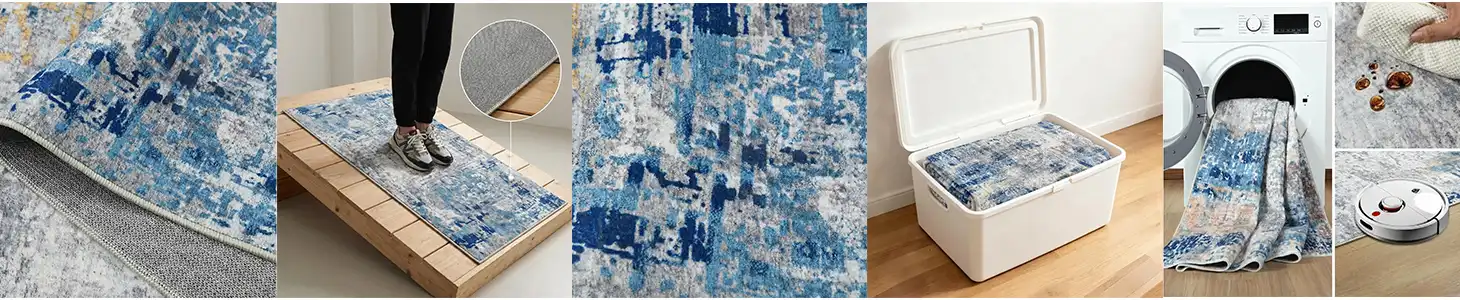
Different types of materials are used to make modern, eco-friendly washable rugs. Recycled polyester fibers, which come from used plastic bottles, are strong and don't color easily. Organic cotton lets air flow through and is soft. Jute and wool are naturally strong, and the modern TPR thermoplastic rubber backing can be used instead of PVC to make choices that are safe and can be recycled. Imitation cashmere surfaces, which are usually made from high-quality polyester fibers with a density of 350g/㎡, have the look and feel of real cashmere while still being washable. A normal construction has a 3mm short-pile height that keeps dust from building up and helps it dry quickly, along with a 5mm total thickness that is still light enough not to cause problems with door passage.
Commercial and Environmental Advantages
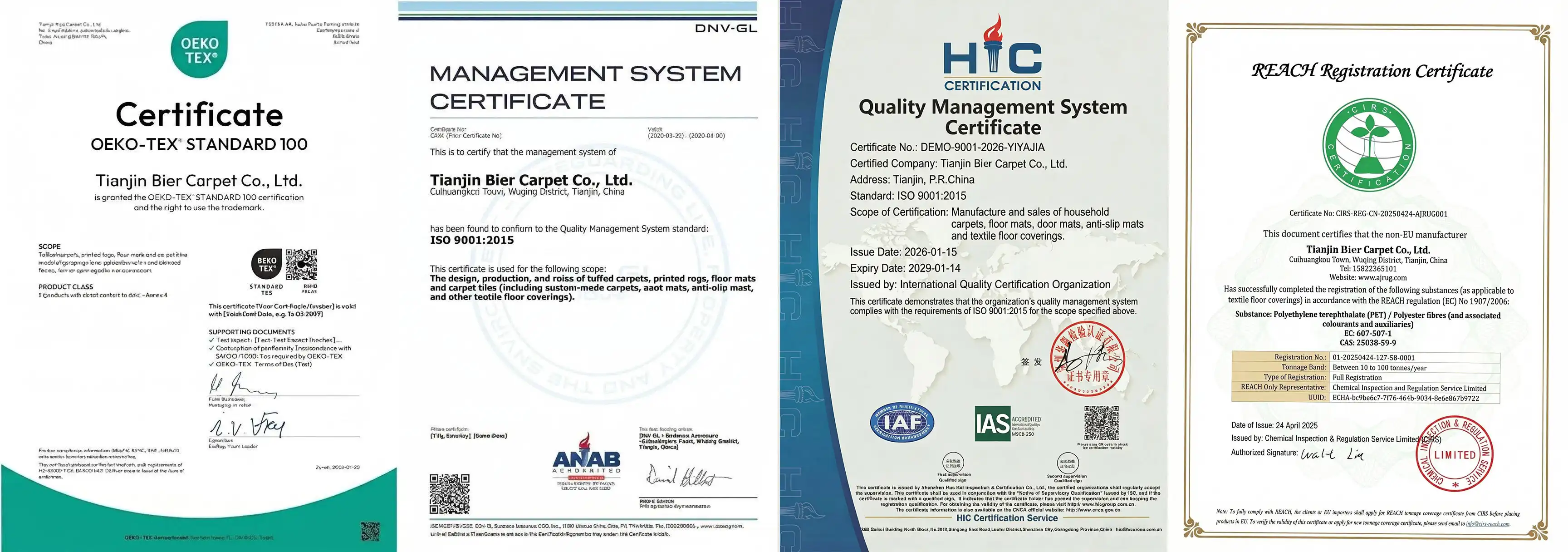
Eco-friendly washable rugs solve a lot of problems at once when it comes to buying things. They get rid of the VOC emissions that come from synthetic rugs, which makes the air quality inside businesses, hotels, and hospitals better—an important thing to think about for places that need to be certified for "Green Key" or LEED. The design that can be washed in a machine cuts down on upkeep costs by 40–60% compared to hiring a professional steam cleaner, and the locked-edge construction keeps the fabric from tearing after many wash cycles. Products that have been certified by OEKO-TEX Standard 100 are free of more than 300 harmful chemicals. This means that they can be used in places like pediatric hospitals and hotels that have strict health rules.
Dispelling Common Misconceptions
Many people are hesitant to buy clean rugs because they think they won't last as long or look as good. Good goods have a backing made of cross-linked TPU or vulcanized natural rubber that keeps its friction coefficients after 50 or more wash cycles, which is a lot longer than cheap PVC options. Solution-dyed yarns have Light Fastness scores of Blue Wool Scale 6+, which means that the color will stay the same even after being exposed to UV light for a long time. The lifespan study shows that eco-friendly washable rugs last 3–5 years in business settings, while non-washable synthetic options only last 18–24 months, even though they cost more at first.
How to Choose the Right Eco-Friendly Washable Rug for Your Business Needs
Identifying Application-Specific Requirements
Decisions about purchases need to be in line with how things work. In hospitality settings, eco-friendly washable rugs need to be stain-resistant and easy to clean quickly. Short-pile designs with heat transfer printing are perfect for making sure that the pattern is the same in all of these places. To avoid liability problems, retail chains need custom patterns that match their brands and a non-slip backing. Event places, on the other hand, want lightweight, foldable choices that are easy to set up and take down. Moderate-pile builds are good for offices because they block out noise and are treated to be anti-static.
Critical Certification and Compliance Standards
Buyers should give more weight to goods that have well-known sustainability certifications. The OEKO-TEX Standard 100 makes sure that there are no harmful chemicals, and the Global Recycled Standard (GRS) approval makes sure that the recycled content is real, usually needing at least 50% post-consumer material. ISO 9001 compliance makes sure that the standard of production stays the same across large orders, and REACH approval makes sure that products can be sold in Europe. For hospitality uses, flammability tests according to CPSC FF 1-70 guidelines are still needed. Color Fastness to Crocking ratings (ISO 105-X12) stop dye from transferring to the subflooring.
Evaluating Durability and Performance Metrics
For high-traffic areas, the tensile strength must be higher than 300N, and ASTM D3774 says that after 10 wash cycles, the fabric should shrink by less than 3%. Pile height between 3 and 8 mm strikes a good mix between comfort and cleaning effectiveness, and tests for backing delamination resistance make sure that the glue stays strong during mechanical agitation. Procurement managers should ask for pre-production samples that will be put through rapid wear testing in a controlled lab environment that will simulate two to three years of business use.
Balancing Cost and Value in Bulk Procurement
Structures for volume prices have a big effect on total spending. When you buy from a factory directly, you skip the middleman and save 25–35% on each unit, especially for orders bigger than 1,000 square meters. When suppliers offer flexible minimum order amounts, test deployments can happen before full-scale agreements are made. Transportation economy is important. Foldable packing cuts the volume of containers by 40% compared to rolled options, which directly lowers the cost of operations. Payment terms like "30% deposit now, balance due upon inspection" lower the risk while still allowing for flexible cash flow.
Maintenance and Longevity: Caring for Eco-Friendly Washable Rugs
Establishing Cleaning Protocols for Commercial Use
Cleaning methods that are right for the material are the first step in effective upkeep. Natural wool blends need to be washed by hand to keep them from felting, while synthetic fiber blends can be washed in cold water with light, biodegradable soaps. Standard procedure includes shaking off loose dirt, using enzyme-based cleaners to treat spots, washing in a machine at 30°C (86°F), and letting the clothes dry flat to keep their shape. Fabric softeners and chlorine bleach should not be used in commercial laundry rooms because they damage fiber bonds and backing grip.
Preventing Wear in High-Traffic Zones
A strategic location makes products last a lot longer. Rotating rugs every three months spreads out wear patterns evenly, and using several smaller pieces instead of one big installation lets you replace only the worn parts. Layered arrangements are good for entrance areas because a disposable mat can catch large trash before foot traffic gets to the main, long-lasting rug. Regular cleaning at the right pressure levels (which can be changed based on the height of the pile) keeps particles from getting embedded, which speeds up the breakdown of fibers.
Addressing Hygiene in Health-Sensitive Environments
Healthcare sites and child care centers need to be able to use heat to kill germs. Low-heat tumble dryers (below 60°C/140°F) are designed so that eco-friendly washable rugs can be dried without damaging their structure. Using silver-ion technology or natural essential oils for antimicrobial treatments stops germs from growing between cleaning rounds. Health officials and insurance companies are happy with proof of how often and how you clean, especially in places with strict cleanliness rules.
Market Overview and Supplier Insights: Sourcing Eco-Friendly Washable Rugs
Current Market Landscape and Pricing Analysis
The market for eco-friendly washable rugs has grown a lot. Prices for business-to-business buyers range from $8 to $25 per square meter, based on the type of material used and the level of customization needed. Most of the time, recycled fiber options are 15 to 20 percent less expensive than organic natural options. However, in high-end hospitality settings, lifetime value figures tend to favor organic natural options. Bulk prices get better over time. Orders of 1,000 square meters get you 10-15% off, and orders of 5,000 square meters or more get you 20–25% off and priority ordering for production.
Evaluating Supplier Manufacturing Capabilities
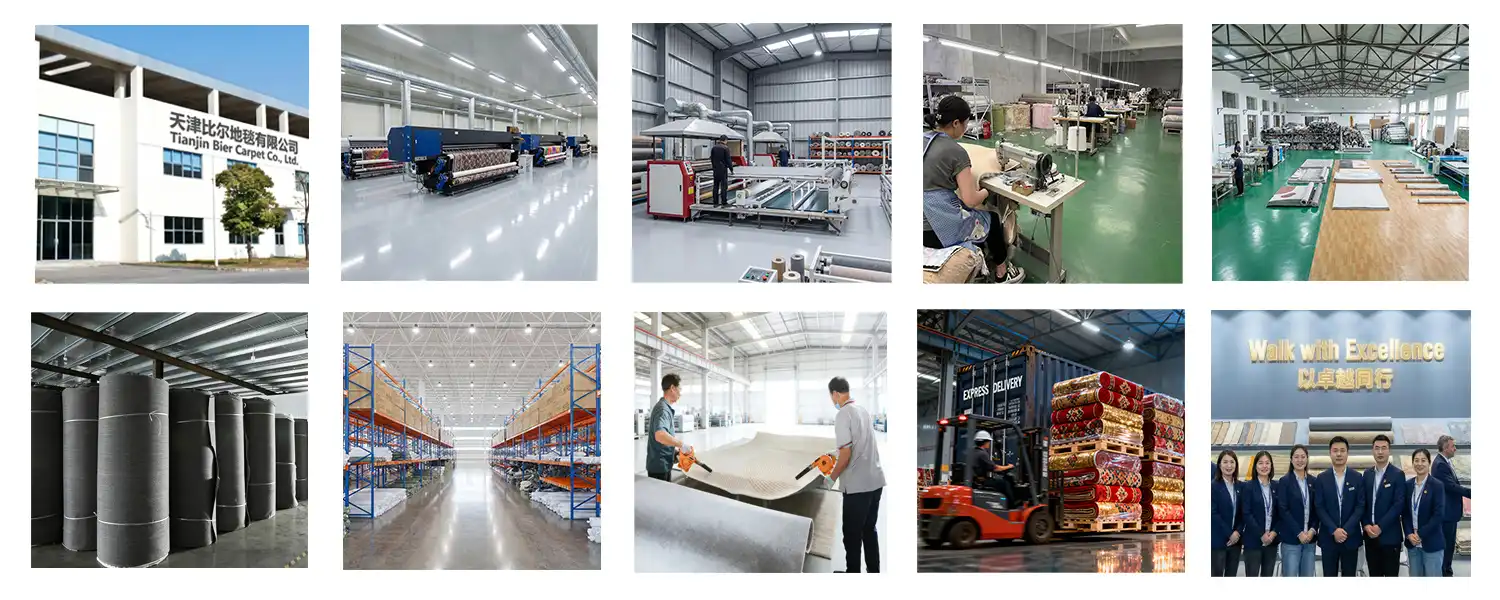
Leading manufacturers show certain organizational skills. Production capacity is important—facilities that can make 2,000 square meters per day can meet tight project deadlines and yearly demand spikes. Advanced heat transfer printing technology makes sure that patterns stay bright and don't fade, and that colors match exactly from batch to batch. This is very important for brand settings that need to look consistent. With laser cutting, you can get edges without burrs and custom forms that you can't get with standard die-cutting. Maintaining thorough quality control systems that allow batch tracking helps keep failure rates below 0.5%, which cuts down on expensive repair orders.
Value-Added Services Streamlining Procurement
In addition to making products, the service infrastructure decides the viability of a relationship. Quick sample development in 24 to 48 hours shortens the time it takes to make a decision, especially for event-driven orders that need approval before they are made in large quantities. Dedicated account managers give clear information about the production state and pattern improvement suggestions based on feedback from the application. Export-grade bulk packing and optimal container filling make the best use of space, which cuts the cost of freight by 15–30% per unit. Delays in clearance can be avoided by getting help with all of your customs paperwork and regulations in one place. For example, a maker who has been exporting for 10 years is likely to have built relationships with dependable freight forwarders who can guarantee predictable lead times for both FCL and LCL orders.
Case Study: Hospitality Chain Deployment
A medium-sized hotel chain bought 8,000 square meters of custom-branded, eco-friendly washable rugs, which cut their upkeep costs by 52% over 36 months compared to their old non-washable inventory. The supplier's OEM/ODM flexibility let us add logos and make the sizes fit each room perfectly, and the 7–15 day shipping times worked with our staged makeover plans. Free replacement of 23 pieces with premature edge wear showed dedication to quality assurance, which built trust in the long-term relationship.
Future Trends in Sustainable Rugs: What Procurement Managers Should Expect
Material Science Breakthroughs
New bio-based fibers made from bamboo cellulose and agricultural waste are helping manufacturers develop eco-friendly washable rugs, offering durability comparable to synthetic fibers while remaining fully biodegradable. Closed-loop recycling methods let companies get back used rugs, break down the fibers chemically, and make new goods without using any new materials. Nanotechnology surfaces can remove stains and clean themselves without using harmful fluorochemicals, meeting both efficiency and environmental needs at the same time.
Supply Chain Evolution Toward Circularity
Forward-thinking providers use circular economy models that focus on product-as-service designs. Rental programs for temporary setups (like displays for events or the holidays) cut down on trash and provide steady lines of income. With take-back programs, old goods are sent back to the companies that made them so that the materials can be reused instead of being thrown away in a dump. Blockchain-enabled supply chain openness lets buyers check claims of sustainability by looking at production records that can't be changed. This meets the needs of growing corporate due diligence requirements.
Shifting Procurement KPIs and Accountability
Environmental, Social, and Governance (ESG) factors are becoming more and more important in buying choices. Along with standard cost and quality measures, procurement teams now look at suppliers' carbon impact per unit, water use during production, and labor practice licenses. As a result of Scope 3 pollution reporting rules, buyers have to figure out how their products affect other products. This means that buyers should choose eco-friendly washable rugs that last longer and use fewer resources for upkeep. Sustainability scorecards rate suppliers based on how much green energy they use, how much waste they divert, and how easily their packages can be recycled.
Strategic Recommendations for Procurement Teams
To build strong supplier relationships, you need to work with innovative manufacturers on a regular basis. Setting up preferred seller ties with companies that have CE, OEKO-TEX, ISO 9001, and REACH certifications lowers the risk of not following the rules in many markets. Framework deals that last more than one year and include volume promises keep prices stable and make sure that production capacity is used during times of high demand. Sharing application comments and performance data during collaborative product development lets providers improve their products to meet changing buyer needs. Diversifying your source portfolio across different geographies lowers the risk of disruption while keeping prices and service levels reasonable.
Conclusion
Eco-friendly washable rugs have gone from being a special eco-product to a common way to buy things that care about the environment, save money, and run efficiently all at the same time. New materials that use recycled materials and modern production methods give commercial-grade performance without lowering their environmental credentials. The ability to wash changes the economics of upkeep and meets hygiene standards in tough settings. Buyers who put certification compliance, source production capacity, and value-added services at the top of their list of priorities will be able to get the most out of the lifecycle value of a product while also improving their company's ESG goals. As principles of the circular economy change the way supply chains work and calls for more openness grow, working together with skilled makers who can offer customization options and logistical know-how becomes a key way to stay ahead of the competition.
FAQ
What certifications should I verify when sourcing sustainable washable rugs?
OEKO-TEX Standard 100 should be your first choice for chemical safety because it confirms that goods don't contain any dangerous substances. The Global Recycled Standard (GRS) certifies that recycled material is real, and ISO 9001 makes sure that the standard of manufacturing is always the same. To get into the European market, you have to follow REACH, and some uses may need flammability tests according to CPSC FF 1-70 standards.
Can washable rugs maintain appearance standards in luxury hospitality settings?
With today's advanced production methods, eco-friendly washable rugs can compete with traditional high-end floor covers in terms of texture and style. Imitation cashmere surfaces with a 350g/㎡ density feel like high-end materials, and solution-dyed yarns keep their color brightness after 50+ washes. With laser cutting, you can get exact edge finishing, and heat transfer printing lets you make patterns that are more complicated and unique while still following brand standards across all franchise sites.
Partner with Bier for Reliable Eco-Friendly Washable Rugs Supply
As an experienced company that makes eco-friendly washable rugs, Bier gives B2B buyers the production skills and service facilities they need to make purchases go smoothly. With 10 years of experience in production, we can quickly customize your order. Samples are ready in 24 to 48 hours, and full orders are finished in 7 to 15 days, thanks to our daily capacity of 2,000㎡. Our heat transfer printing and laser cutting methods ensure design consistency and quality, and our many certifications, such as CE, OEKO-TEX, ISO 9001, and REACH, make sure that we meet the standards of all global markets. We offer OEM/ODM services that are flexible and have low minimum order amounts. Our export-grade packing is optimized, and we offer dedicated account management to support long-term partnerships. Get in touch with sales@biercarpet.com to talk about your needs for environmentally friendly flooring and get free samples that show how committed we are to quality and service greatness in the market for eco-friendly washable rugs.
References
1. Fletcher, K., & Tham, M. (2019). Earth Logic: Fashion Action Research Plan. The Textile Institute Journal of Sustainable Fashion.
2. McDonough, W., & Braungart, M. (2021). Cradle to Cradle: Remaking the Way We Make Things (Updated Edition). North Point Press.
3. Niinimäki, K., Peters, G., & Dahlbo, H. (2020). "The Environmental Price of Fast Fashion." Nature Reviews Earth & Environment, 1(4), 189-200.
4. Sustainable Furnishings Council. (2022). B2B Procurement Guidelines for Sustainable Interior Textiles. Industry White Paper Series.
5. Textile Exchange. (2023). Preferred Fiber and Materials Market Report: Global Recycled Standard Trends. Annual Industry Analysis.
6. United States Environmental Protection Agency. (2021). Indoor Air Quality and Sustainable Building Materials: Commercial Applications. EPA Office of Research and Development.
Send Inquiry

Related Industry Knowledge
- Sustainable Rugs: How Eco-Friendly Materials Make a Difference
- Why Consider Buying a Jute-proof rug? 9 Reasons Why!
- Affordable Flannel Carpet Supplier for Bulk Orders
- Everything You Need to Know About Jute Rugs
- Export Quality Silica Thread Rug for Retail Distributors
- The Ultimate Guide to Jute-proof rug
- Luxury Silk and Wool Area Rugs in Modern Persian Styles
- Soft Flannel Carpet Rug for Bedroom Flooring
- Faux cashmere rug: what does it look like? How to choose the right artefact according to the decor of the room?
- Simple rugs for living room: Buying & Styling Guide 2026